Between maps and missiles: The emerging logic of Gulf–Iran strategic confrontation

Opinion 28-05-2026 | 08:54

Between maps and missiles: The emerging logic of Gulf–Iran strategic confrontation

As asymmetric warfare, geopolitical revisionism, and fragile deterrence reshape the region, the Gulf confronts a new era where security is no longer assumed but actively constructed through resilience, alliances, and strategic denial.


Between maps and missiles: The emerging logic of Gulf–Iran strategic confrontation
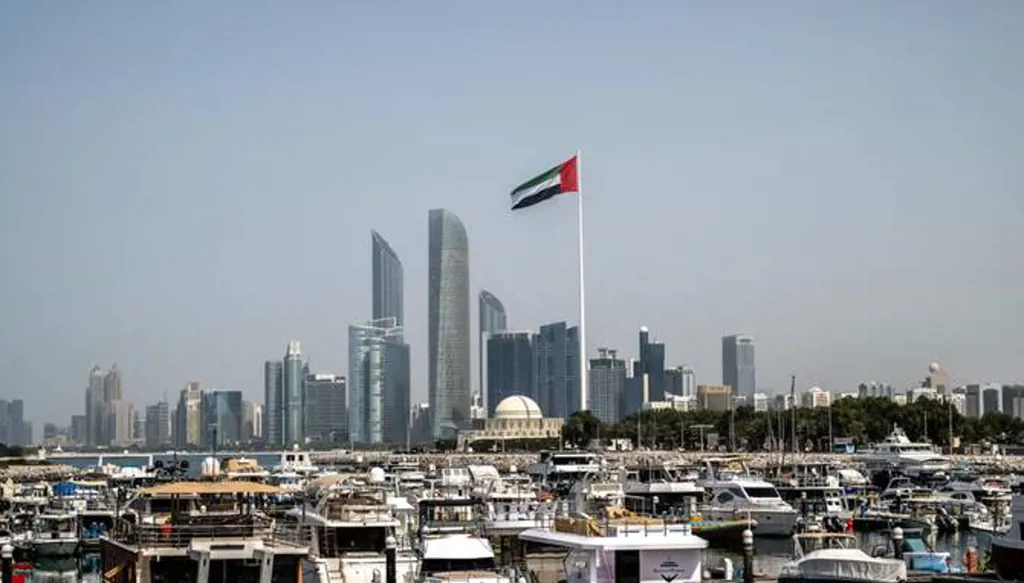
The United Arab Emirates was not born from abundance alone, but from a combination of wisdom and the diversification of national security sources (AFP).
Smaller Bigger

There are moments of transformation in which maps are more eloquent than armaments. A missile announces an immediate threat, but a map announces a strategy.


The evidence is that the Islamic Revolutionary Guard Corps issued on 4 May 2026 a new map of the Strait of Hormuz, expanding Iran’s alleged territorial waters up to 200 kilometers. According to the map, this extends from Qeshm Island to Umm Al Quwain and from Jabal Mubarak to Fujairah.


In doing so, Iran is not merely testing the entire strategic order of the Gulf and the world, but is attempting to test and explore its actual fortifications and who will confront it regionally and internationally.


Yes, Iran is seeking to redefine the geopolitical geography of the Gulf, where an officer in the Revolutionary Guard described Hormuz not as a maritime passage but as a broad military operational zone under Iranian sovereignty and within its operational scope. The language was bureaucratic, but the implication was revolutionary and ideological.


For the Arab Gulf states, this war and this map represent the end of the era of benign neighborhood relations and the beginning of an era of redrawing opportunities and risks and reshaping alliances in the region.


After 1971, the Gulf political economy relied on the assumption that the demand for energy and the international globalization system would combine to reduce risks. But in this war, strategic geography returns to cast its shadow. This embodies the contradiction between a globally vital Arab Gulf and a geographically threatened one.


Iran is now seeking intensively to exploit international and regional disorder, a fragmented world, a less predictable West, and a reckless failing Iran aiming to spread its ideological darkness across the region, betting on reshaping the strategic psychology of the Hormuz dilemma from a logic of fear and coercion.


The war in Ukraine has revealed fundamental shifts in the current strategic military environment, where relatively simple and low cost means of warfare threaten extremely expensive deterrence systems.


In contrast, Iran is attempting to institutionalize ambiguity in its intentions. To achieve this, Tehran does not need to permanently close the Strait of Hormuz, but rather to threaten navigation so that the global economy becomes dependent on Iran’s approval.


In its attempts to encircle the Gulf states, Fujairah has become the primary target of Iranian aggression, as the pipeline running from the Emirate of Abu Dhabi to Fujairah constitutes a vital insurance policy against Iranian strategy. In turn, Fujairah becomes a national security asset and a space for sovereign maneuver.


In 1968, Britain withdrew, and some believed it was a strategic shock that the Gulf states would never recover from and that they would not endure. At that time, union was the strategic response, as the United Arab Emirates was not born from abundance alone, but from a combination of wisdom and the diversification of national security sources.


Now, the strategic imagination of the UAE and other Gulf states will not miss this challenge, turning it into new opportunities to strengthen power and development.


The lesson is clear


Since a tanker carrying the US flag struck an Iranian mine in 1987, followed by the invasion of Kuwait, it has become clear that great powers do not eliminate the vital risks produced by an aggressive Iranian system. The lesson is that deterrence after an attack is not enough. There must be a restraint that prevents the attack in the first place, because necessity cannot be confused with certainty.


The United States is no longer the same strategic actor it was in 1991. It is dismantling the globalization it itself created as the foundation of the international order of 1945. An America that is selective, hesitant, and consistently late cannot alone be the pillar of strategic deterrence for the Arab Gulf.


Tehran understands that the West is unreliable and cannot be solely depended upon to build a sustainable regional order. While China watches a world full of uncertainty, the fragmentation of globalization does not mean the end of interdependence for the Gulf states.


It is necessary, but never sufficient. It must be supported by automatic national deterrence and regional strategic solidarity.


Yes, it is a dangerous world, especially when you sit on a strategic artery.


From missiles to drones to militias and then financial and cyber tools, Iran persists in using asymmetric power methods in what is known as the salami tactic. This tactic is based on cutting the elements of the power of adversaries and neighbors and dismantling their deterrence slice by slice until they are coerced and Iranian regional dominance is consolidated. It invests in the opportunity created by hesitant deterrence and Western market rationality to apply calibrated pressure, surrounded by ambiguity and precise thresholds, supported by reversible escalation tests reinforced by negotiating leverage. In this way, the nuclear shadow becomes the most dangerous tool aimed at excluding major powers in order to impose hegemony under what is called Iranian peace, built on Iranian regional dominance. Thus Iran continues to strengthen proxy wars, maritime, aerial, and cyber intimidation.


In the Iranian mindset, the nuclear umbrella will restrain major powers and allow proxy wars to continue. An unconventional invasion, more tools of deterrence and coercion, proxy wars and gains that do not allow resolution but instead reinforce uncertainty.


It is both a warning bell and a strategic opportunity at the same time. The Ukraine war has demonstrated characteristics that allow Arab Gulf states to rebuild a parallel regional security system.


Drone warfare, communications, cyber capabilities, artificial intelligence, and the ability to innovate rapid methods to compensate for losses must be turned into a counter weapon against Iranian strategy. This can significantly reduce the costs of compensating for imbalances in the international system, close capability gaps, and strengthen the defensive and deterrent capabilities of the Arab Gulf states.


In this way, wealth becomes a tool for manufacturing resilience, confidence, and decisive deterrence, after Iran sought to turn it into a strategic trap.


The United Arab Emirates can undoubtedly do this, given its rapid administrative responsiveness, financial depth, and deep integration into the components of the technological revolution supported by complex infrastructure and diplomatic flexibility.


These challenges also highlight the importance of diversifying Gulf, regional, and international alliances in a way that achieves a minimum level of operational coordination in air and maritime domains and creates a local and regional production system.


In the end, Gulf deterrence should reinforce Iran’s conviction that the cost of its aggression will be immediate and extremely high. Strategic partnerships in Asia also represent a key option as an organized dialogue that balances energy and security, investment and resilience, maritime coordination, and diplomatic pressure against coercive control over trade routes. Diplomacy becomes weak with Iran without resilience that Iran clearly understands and recognizes the failure of its coercive adventures.


Between engagement and deterrence lies the central dialectic of the coming Gulf order and the deprivation of Iran of the benefits of coercion while preserving channels of negotiation. Denial, absorption, bypassing, retaliation, and shaping are the core of the future Gulf strategy.


While Iran seeks to create an atmosphere of strategic submission across the region, the Gulf states respond by disabling Iran’s ability to conduct aggression and assert dominance. It is a combination of discipline and resilience, confidence in self-capability, and wisdom.