

Rising border tensions push Iraq’s armed factions and drone activity into regional spotlight
Former diplomat warns that weak border control and armed faction presence are fueling regional security concerns and increasing pressure on Baghdad to act.



 Messenger
 Whatsapp
 Threads
 Email
Email
 Print
Print
 X
X
 Facebook
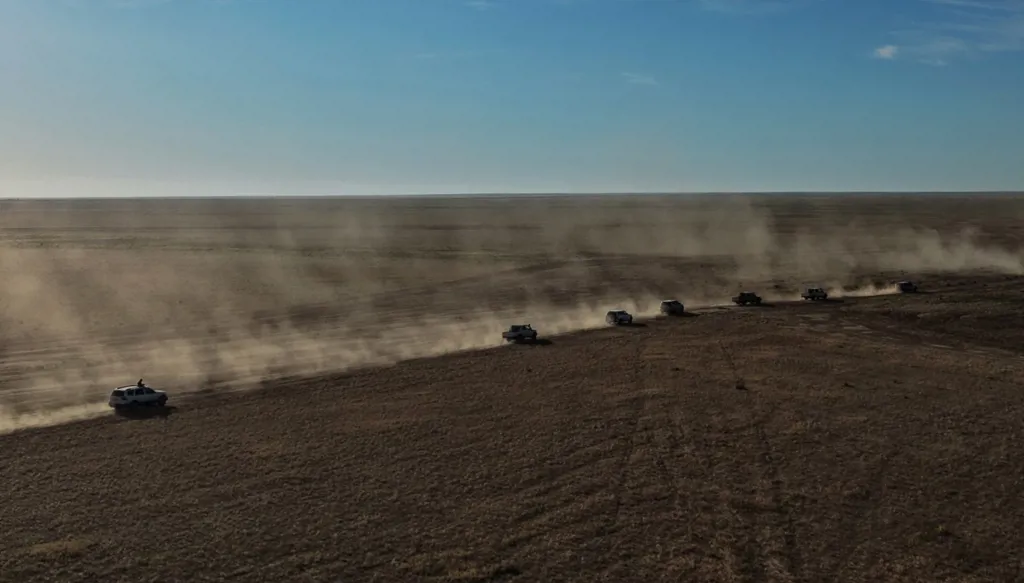


In light of rising security tensions along the Iraqi borders with Kuwait, Saudi Arabia, Syria, and Jordan, the issue of the spread of Iran-aligned armed factions operating under the “Popular Mobilization Authority” has returned to the forefront of the political and security scene in Baghdad, as one of the most sensitive and complex issues in Iraq’s relations with neighboring countries.
According to diplomatic and security sources who spoke to Annahar, the issue of removing these factions from the border strip has become part of the list of repeated demands that neighboring capitals have conveyed to the Iraqi government in recent weeks, amid growing concerns that Iraqi territory could be used as a launching point for drone attacks targeting sites deep in the region, including vital facilities in Saudi Arabia and the United Arab Emirates, according to what those countries stated in previous official statements.
Will Iraqi committees announce the results of their investigations?
The sources added that, in parallel with this escalation, Baghdad has moved to open an official investigation track through a committee formed by the government to examine the circumstances of those attacks and identify those responsible, in an attempt to contain political and security repercussions that go beyond internal borders and directly affect Iraq’s regional relations and its position within Middle East security balances.
Despite some time having passed since the committee was announced, no final results or public details about its findings have been released so far, which raises further questions about the effectiveness of the measures taken.
The issue of redeploying regular forces other than the Popular Mobilization Forces, especially army units and border guards, stands out as an option under consideration to strengthen control over the long and geographically complex border strip and to reduce the freedom of movement of those factions.
This comes within a broader security approach aimed at re-regulating border security dynamics, easing regional concerns, and in a context of increasing diplomatic pressure on Baghdad to take tangible steps on the ground that reflect a real commitment to state sovereignty and to preventing the use of its territory for any cross-border operations.
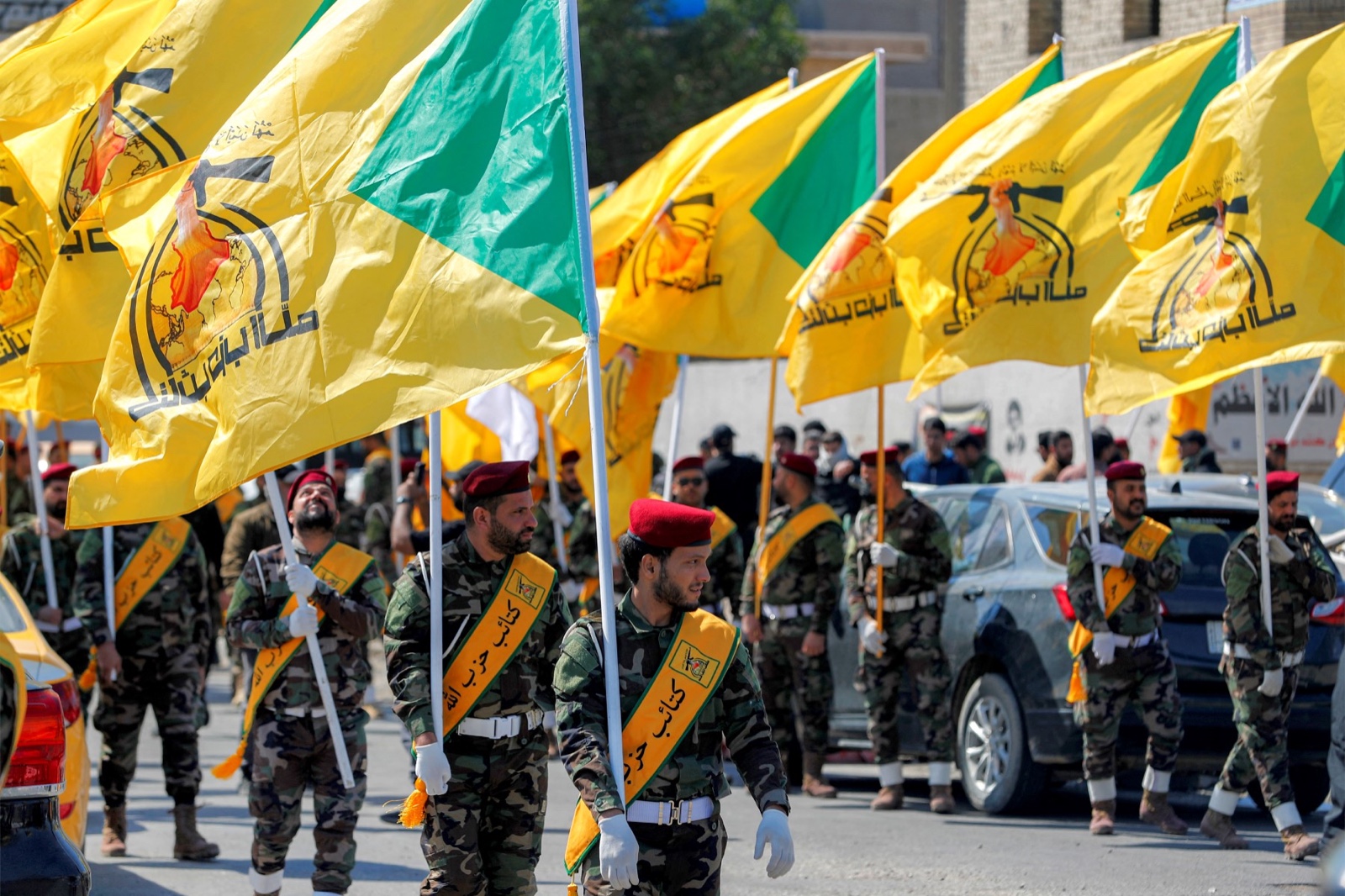
The former Iraqi diplomat Ghazi Faisal told Annahar that “the continued presence of armed factions under any name near the border strip with Kuwait, Saudi Arabia, Syria, and Jordan represents a direct and complex threat to regional security, in light of the growing capabilities of these groups in using drones and expanding the scope of their operations beyond borders.”
Faisal believes that “the problem is not only the presence of armed groups outside official control, but also their geographical positioning near open border crossings and vast desert areas, which provides an ideal environment for launching or passing drones without immediate detection or interception.
This reality places Iraq at the heart of a sensitive regional security equation in which sovereignty considerations intersect with the requirements of shared security with neighboring countries.”
How will Baghdad respond?
He added that “the repetition of attacks announced by regional countries in previous periods, and the accompanying allegations of the existence of launch platforms or operational routes originating from within Iraqi territory, have raised the level of concern among neighboring capitals and led to increasing official demands to redeploy regular forces along the border and to remove any undisciplined formations from those areas.”
He stressed that “the danger of the situation lies in the possibility of exploiting the geographical nature of the long and complex borders, along with weak full control in some sectors, which allows for the launch or transfer of advanced technologies such as drones without effective central oversight. The continuation of this pattern could negatively affect Iraq’s diplomatic relations and place it under increasing international and regional pressure.”
Commenting on the announcement by the Iraqi authorities of the formation of investigative committees into these incidents, especially after strong criticism from Gulf countries over repeated attacks originating from Iraqi territory, Faisal said that “forming investigative committees into some incidents is an important step in principle, but it remains insufficient unless it is translated into clear field measures, most notably the full enforcement of state authority over the border strip and the redeployment of regular forces in a way that prevents any activity outside official frameworks.”
The former Iraqi diplomat stressed that “the current stage requires an integrated security and political approach, starting with border control and not ending with reorganizing the relationship with the factions, all the way to ensuring that Iraqi territory is not used as a platform for any cross-border threat. This represents a real test of the state’s ability to impose its sovereignty and protect its regional stability.”
Between internal sovereignty considerations and the requirements of regional stability, Iraq finds itself facing an extremely sensitive file in which security, political, and diplomatic dimensions overlap. It is seen as a direct test of the state’s ability to assert full control over its borders and reshape its relationship with its regional environment on more stable and balanced foundations.