

Eid in Gaza: No joy, no meat, only rising costs and empty tents
As Eid al-Adha arrives in war-ravaged Gaza, displaced families struggle with soaring prices and severe shortages, unable to afford meat, clothes, or even basic holiday traditions once central to celebration.



 Messenger
 Whatsapp
 Threads
 Email
Email
 Print
Print
 X
X
 Facebook
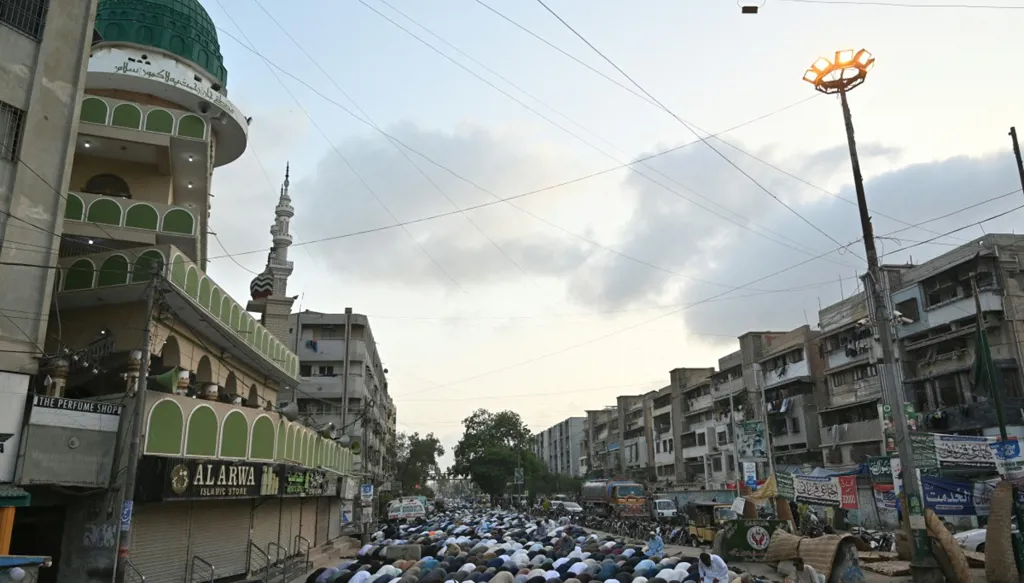


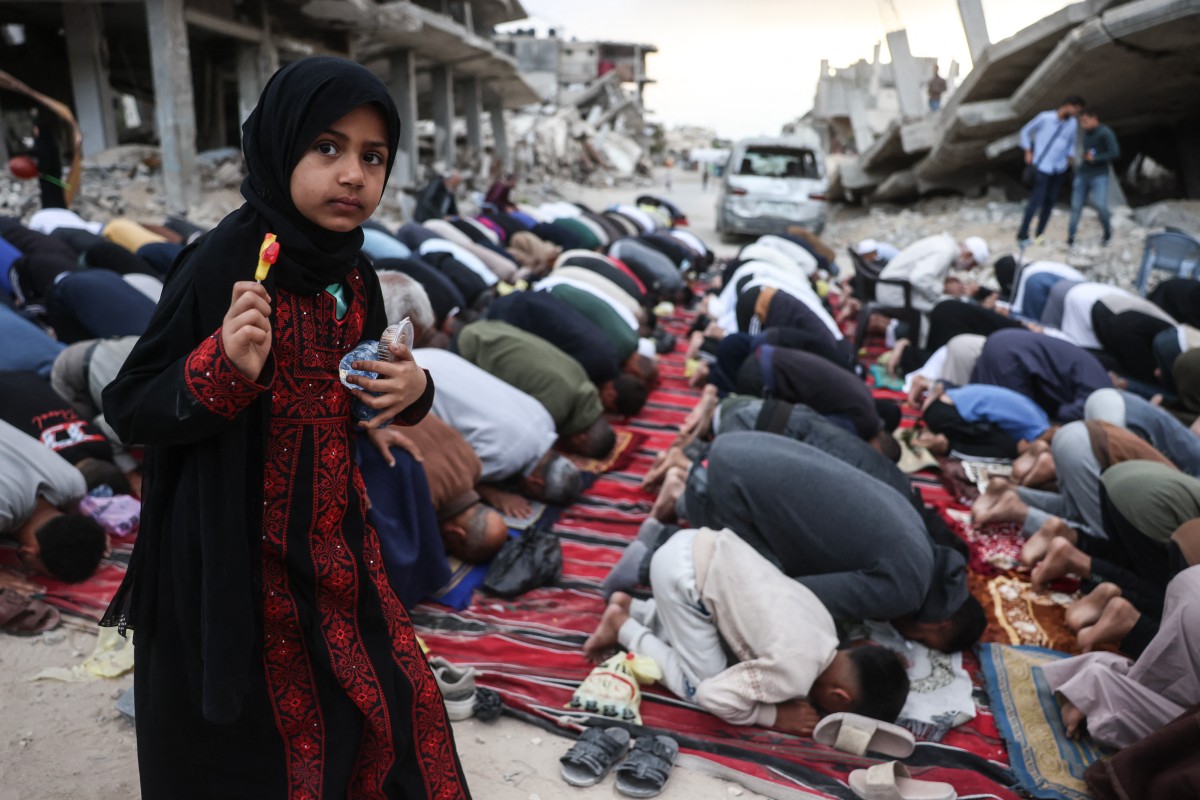
The usual joy of celebrating Eid al-Adha is absent this year in the Gaza Strip, which has been devastated by war. Its residents are unable to buy new clothes for their children or purchase sacrificial animals, either because they are unavailable or because they are too expensive. Their tents also lack the familiar smell of traditional cakes and sweets.
Nadia Abu Shammala (40), who was displaced from northern Gaza to Deir al-Balah in central Gaza, says: “I go to the market just to look; I cannot buy anything because whenever I ask about prices, I return heartbroken.”
She adds: “Eid al-Adha comes this year without any of the familiar signs of joy we are used to in Gaza, due to the effects of the war, the extreme price increases, and our inability to provide even the most basic needs for our children. As a result, joy is absent and the atmosphere of the holiday is gone.”
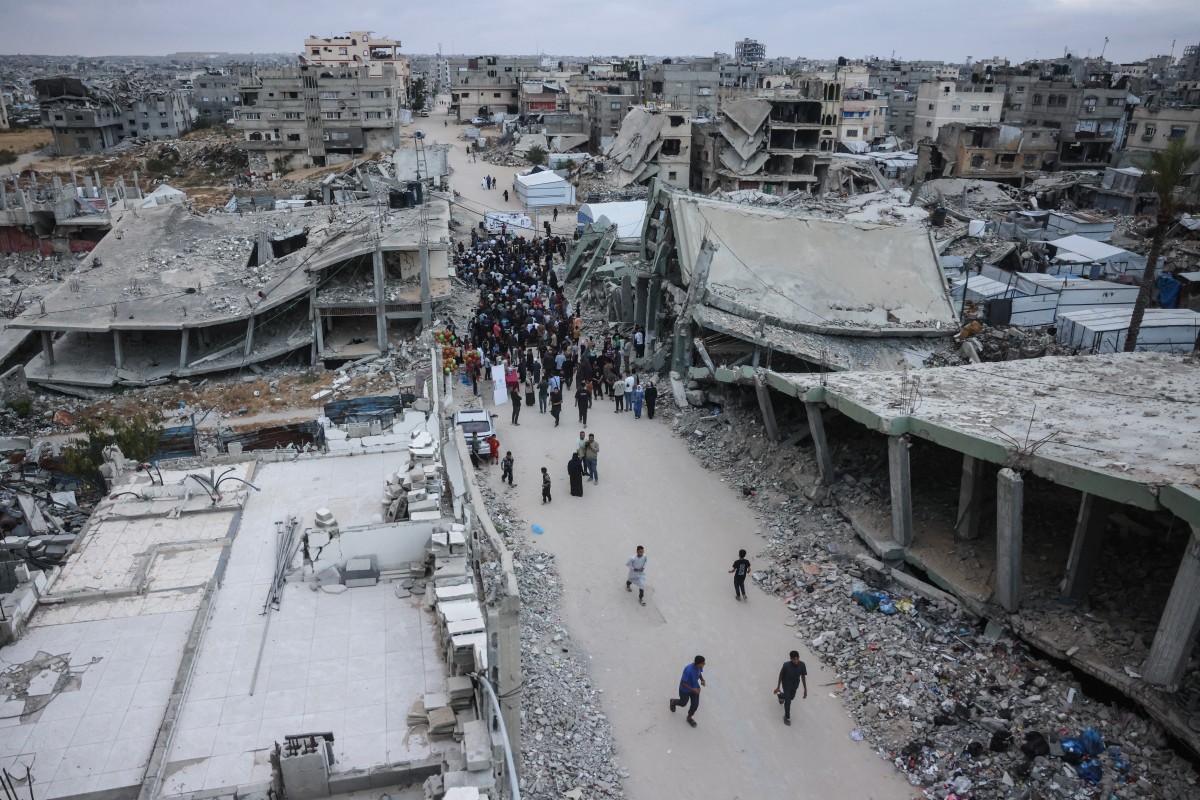
The ceasefire agreement, which came into effect on October 10, has led to a significant halt in fighting after two years of war that began following Hamas’s attack on Israel on October 7, 2023.
However, the agreement has not brought a complete end to the violence, as at least 871 Palestinians have been killed since the start of the truce, according to the Gaza Health Ministry, which operates under Hamas authority and whose figures the United Nations considers reliable.
Abu Abdullah al-Masdar (59), from Deir al-Balah, believes that “the ceasefire is a big lie,” but adds: “We are still trying in all cases to create joy for the children. My brother and I shared the cost of buying a sacrificial sheep for 13,000 shekels (about 5,000 dollars).”
The man, who used to work in real estate, continues: “I know the price is extremely high, but I decided to sacrifice this year. There are no signs of Eid at all; it is a sad occasion.”
Scarcity of sheep
Sheep prices have come as an unpleasant surprise to residents of the Gaza Strip. Ahmed Abu Salem (50), from Gaza City, says: “The prices of sacrificial animals this year are shocking. We never imagined that the price of one would reach 4,000 or 5,000 dollars. We have never seen such prices in our lives.”
While noting that “people used to make sure every year to buy sacrificial animals,” he adds bitterly: “Today we are unable even to buy a single kilogram of meat for our children.”
The spokesperson for the Gaza Ministry of Agriculture, Raafat Asaliya, explains that “sacrificial animal prices are witnessing an unprecedented increase this Eid due to the complete absence of imports, the death of large numbers of livestock because of the war, and the rising costs of breeding, feed, and transportation.”
He notes that “the price of a sheep, which before the war was about 1,000 shekels, now ranges between 11,000 and 15,000 shekels” (between 3,900 and 5,300 dollars).
Abu Salem says: “We can barely provide daily food; we are still living in tents and prices are unimaginable.” He points out that “the cost of a set of children’s clothes (shirt and trousers) exceeds 100 dollars,” describing it as “fantasy-level” for him, especially as he is a father of four children.
He is echoed by Siham Al-Omari, 36, also displaced from northern Gaza to Deir al-Balah, who likewise misses the joy and atmosphere of Eid because “clothing prices are very high. The price of trousers and a shirt for a small child equals a week’s food budget.”
She adds, while living in a tent: “There is no joy and no smell of kaak. Worries dominate every home. High prices have exhausted us, and vegetables, chicken, and meat are not available in the markets.”
Kaak in the tents
Abu Ahmed Wafi (42), a displaced person from eastern Khan Younis in the south of the Strip to its west, says: “The markets are full of kaak (traditional biscuits/cookies), maamoul (traditional filled pastries/cookies), and sweets. We used to prepare them at home, but prices have become very high, and there is no cooking gas even to bake them in the tent.”
However, one family managed to prepare a limited amount of kaak and maamoul in their tent west of Khan Younis. The mother and her daughter sat on the ground and placed the kaak rounds on a tray, before a man baked them in a clay oven.
Yet Nadia Abu Shammala, who lives in a tent west of Deir al-Balah, says sadly: “We used to wait for Eid from year to year to eat meat and sacrifice like other people, but now even those who used to sacrifice every year can no longer afford even a small amount of meat.” She adds: “We are still living in tents, amid worries, fear, and exhaustion, without any of the joyful signs we used to know.”
According to the United Nations, around 1.7 million of Gaza’s 2.2 million residents are still living in inadequate displacement camps, amid the destruction of their homes. More than half of the 365-square-kilometer territory is also under Israeli military control.