

Yemen between unity’s collapse and regional power struggles
Yemen’s fragmentation, foreign influence, and the struggle for regional control reshape its future beyond unity.



 Messenger
 Whatsapp
 Threads
 Email
Email
 Print
Print
 X
X
 Facebook
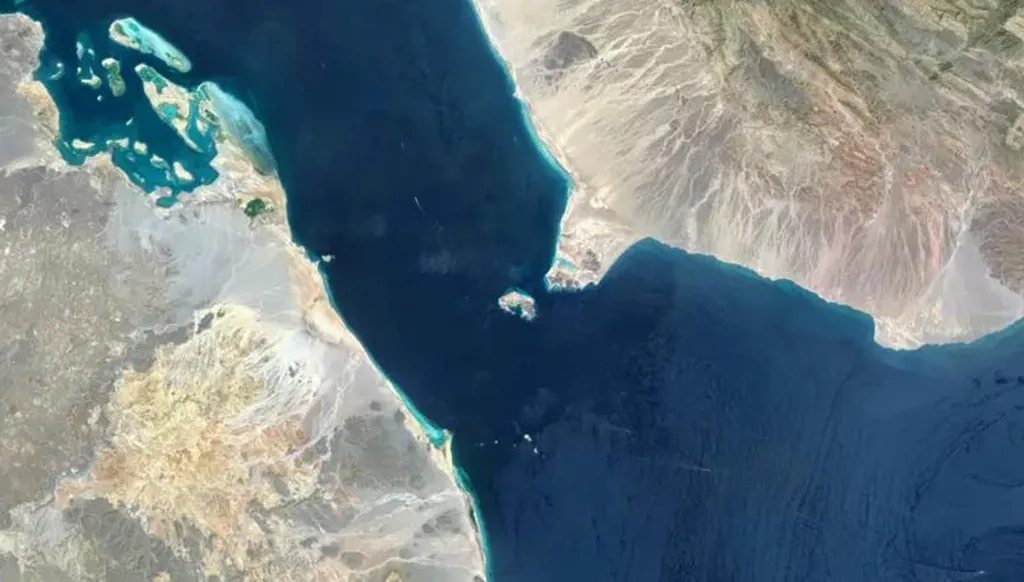


There are important dates that, over the years, turn into forgotten dates. This is due to certain events of the kind that Yemen has gone through. Yemen was unified on 22 May 1990 and is now a state on the path of fragmentation in the absence of a central authority of any kind that can bring life back to a country of great strategic importance.
Yemen has strategic importance, at least from the perspective that it is an integral part of the Arabian Peninsula on one hand, and because of the coastline it possesses, stretching from the Arabian Sea to the Red Sea on the other hand.
If the current Gulf war has revealed anything, it has revealed that Yemen should have been a greater focus of Gulf attention so that it would be possible to dispense, even relatively, with the Strait of Hormuz, which the "Islamic Republic" in Iran uses as part of an ongoing process of pressure and exploitation against the countries of the region and the world.
Birth of unity
It is no secret that Yemeni unity, which brought together two independent states, the “Yemen Arab Republic” in the north and the “People’s Democratic Republic of Yemen” in the south, was born under specific circumstances that are unlikely ever to be repeated. Foremost among these circumstances was the collapse of the Soviet Union, in whose orbit South Yemen had been aligned. The collapse of the Soviet Union played a role in the downfall of the regime in the south, and the result was a unified state led by Ali Abdullah Saleh.
From the state of unity to the current state of fragmentation, it is necessary to acknowledge that unified Yemen was a centralized state. Sanaa represented the center. The late president managed to control all of Yemen, both north and south, especially after he eliminated the Socialist Party following the summer war of 1994. The Socialist Party was represented by the late Ali Salem al-Beidh, Saleh’s partner in unity.
There is no need to revisit the events in Yemen since the attempt to end unity through an adventure led by Ali Salem al-Beidh, who early on realized that there was no chemistry between him and Ali Abdullah Saleh. The latter was determined to rule Yemen in his own way, based on balances whose secrets only he knew.
What is notable, however, is that the Yemeni “leader’s” allies from the Muslim Brotherhood and those aligned with them later turned against him. These actors played a central role in bringing an end to the system of Ali Abdullah Saleh’s family in 2011. In reality, the issue was not merely about a family-based regime; the matter was far more complex than that.
What cannot be avoided is that Yemeni unity played a highly important role in defining the Yemen–Saudi borders and, before that, the Yemen–Oman borders. It also helped in countering the threat posed by Eritrea under Isaias Afwerki, which sought to seize the Yemeni Greater Hanish Island in the Red Sea.
Unity also allowed sensitive border issues with the Kingdom of Saudi Arabia and the Sultanate of Oman to be handled calmly, away from the provocations of the north against the south and the south against the north.
New Yemeni reality
What is also impossible to ignore today is that there is no room left for Gulf Arab states to deal with a new Yemeni reality after Iran has established a foothold in northern Yemeni areas. Through the Houthis, Iran has set up a base of its own in Yemen. It is true that the Houthis have been relatively calm in recent months, but it is also true that Iran may once again seek to activate them in the Red Sea and the Gulf of Aden. Will this Houthi calm last for long? Will the incentives that help keep them quiet continue to work like a sedative, or will the effect of these “painkillers” soon wear off?
There is a need to approach Yemen from a new regional perspective. This perspective is based on acknowledging that Yemeni unity is now a thing of the past and that it is no longer possible to rely on the current “legitimacy,” which has been unable to exert any kind of pressure on the Houthis.
What remains is the most important question: how should Yemen be dealt with in the future, and how can the Gulf benefit from its land and long coastline in order to bypass the Strait of Hormuz? This is the central question that cannot be ignored. It is also a question tied to the future of the Houthis and Iran in Yemen, and to how to eliminate the military base that the “Islamic Republic” has established in the Arabian Peninsula. This base was created primarily to blackmail each Gulf Arab state and keep it under the constant sense of Iranian threat.
Disclaimer: The opinions expressed by the writers are their own and do not necessarily represent the views of Annahar