

Lebanon’s escalating crisis and the weight of external negotiations
Amid rising regional tensions and internal political confrontation, Lebanon’s evolving negotiations with Israel and the United States are increasingly seen as a pivotal test of sovereignty, deterrence, and the balance of power in the region.




 Messenger
 Whatsapp
 Threads
 Email
Email
 Print
Print
 X
X
 Facebook
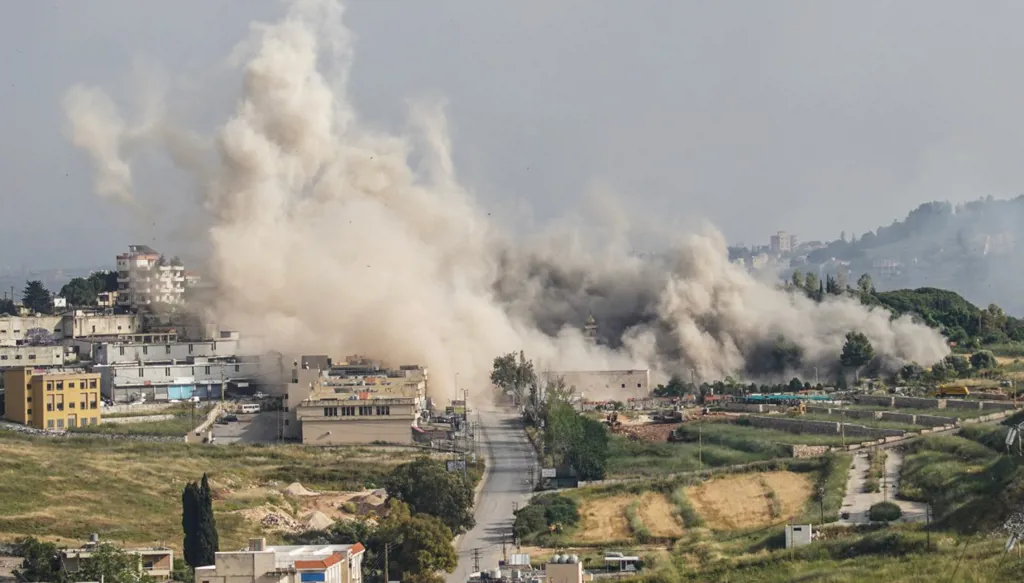


It has become almost impossible to dedicate the days of the year, across their entirety, to commemorating here or there the tragedies of wars, crises, and successive events in Lebanon over the last six decades, given the dramatic events that have marked Lebanon’s fate and have not yet come to an end.
Nevertheless, it seems illogical to ignore the deadly interconnection in the “doctrine” of “Hezbollah” between igniting catastrophic and absurd arenas of confrontation with Israel, in order to serve its Iranian regional role, and igniting arenas of internal strife in order to implement a strategy of intimidating “all others” without exception.
The standards of the party’s “success” in this do not apply to the rest of the repeated catastrophic experiences that witnessed this linkage, even if it has succeeded solely in keeping Lebanon as a pawn tied to its Iranian connections, before and after the fall of the other regional ally, the Assad regime in Syria.
However, what is happening in the current phase reveals something that many of those who claim deep knowledge of the party’s secrets cannot say they had been sufficiently aware of discovering, namely that the party, which is based on a strategy driven by the boasting of terror, intimidation, and domination, is in its core possessed by a fear of the principle and course of direct negotiations undertaken by the Lebanese state, a fear far more intense than its fear of disarmament.
In any case, regardless of hasty expectations of decisive outcomes in favor of the Lebanese state and the independence of the Lebanese direct negotiation track with Israel under U.S. administration, and despite all concerns about possible disappointments or waves of rise and fall in the upcoming negotiation rounds in Washington, Hezbollah, in the fiery inferno it has recently ignited and in its increased justification for Israel to expand the war, has left no room to expose its fear of negotiations as a weapon threatening it with “ultimate endings.”
This is reflected in that dangerous impulsiveness in invoking a tone of intimidation about killing or confronting everything that may emerge from the negotiations, people and reality alike, to the extent of a reckless evocation of the image of the party’s terrorism in the May 7 events, as well as threats of assassinations, not to mention the worst misstep of threatening to topple the government in the streets.
All of this coincides with the party’s rush to escalate confrontations in the south and its boasting of targeting northern Israel, to the point of the inevitable outcome of providing the anticipated pretext for a return of intense Israeli war into the heart of the southern suburbs, as if Tehran only feels comfortable with its proxies and instruments when tens and hundreds of thousands of Lebanese Shiites are lined up in scenes of humiliating flight from their homes, towns, and villages, even when Tehran itself may be on the verge of announcing an agreement with the American “great Satan.”
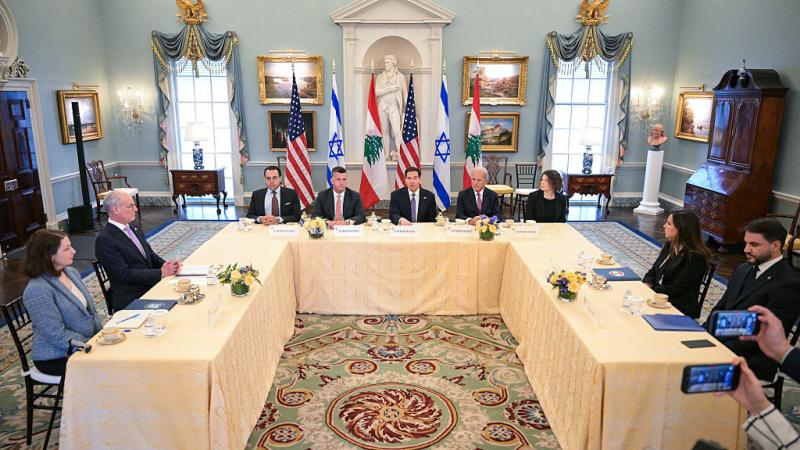
In doing so, the “added value” of the Lebanese–Israeli–American negotiations in their independent course becomes increasingly clear in practical terms, more than ever before, even if clouds of doubt and serious concerns rise among many, both Lebanese and non-Lebanese, regarding the direct or indirect consequences of a bad agreement between the Trump administration and the Islamic Revolutionary Guard Corps regime in Iran.
The Lebanese–Israeli–American negotiations, which constituted a decisive step to strip Iran of its dominance over Lebanon, have in practice proven to be the most forceful and effective development against Iran and its arm, to the point of a chaotic and catastrophic breakdown in the conduct of war management by “Hezbollah.”
No reasonable person could have imagined the party igniting all these overlapping battles at once, coupled with an increasingly tense and offensive campaign against the President of the Republic and the Prime Minister, at this timing, within this framework, and under these circumstances, were it not for something called panic.
Disclaimer: The opinions expressed by the writers are their own and do not necessarily represent the views of Annahar