

Iran’s internet battle exposes a deep power struggle within the regime
The government’s attempt to restore internet access after months of shutdown has triggered a confrontation with the judiciary and hardline institutions, revealing sharp divisions over digital freedoms, security, and control inside Iran’s ruling system.



 Messenger
 Whatsapp
 Threads
 Email
Email
 Print
Print
 X
X
 Facebook

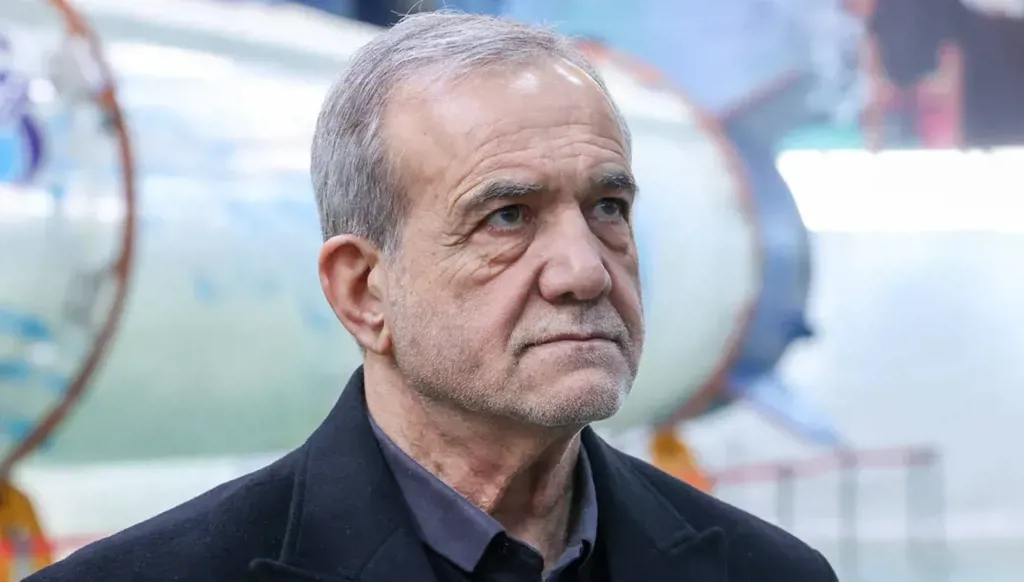


The decision to restore internet access in Iran has turned into an open confrontation within the ruling establishment after the Iranian judiciary intervened to freeze the government’s decision, which was supposed to end the network shutdown that has continued for months. While Iranian President Masoud Pezeshkian presented the move as a response to growing public and economic pressure, the reactions of his opponents revealed the depth of divisions within the regime over communication freedoms and control of cyberspace, in a scene that reflects a struggle extending beyond the internet issue itself to the nature of the balance of power inside the country.
At the same time as positive reports spread about an Iranian American understanding to end the war, news circulated in Iran that citizens viewed as a long awaited glimmer of hope: the restoration of international internet access after a three month outage. Government spokesperson Fatemeh Mohajerani and Communications Minister Sattar Hashemi confirmed that Pezeshkian’s orders to restore the service would soon take effect.
The decision came after the formation of an “Emergency Committee” last week by direct order from Pezeshkian in his capacity as President and head of the Supreme National Security Council, in response to mounting public demands. During the committee’s first meeting, all members voted in favor of restoring the service except for three. Following the decision, Deputy Communications Minister Ehsan Chitsaz said: “The internet is the oxygen of the digital economy, the lifeline of hope for the younger generation, and a pillar of public trust. No nation can connect to the future by cutting itself off from the world.”
Opponents of the “Digital Oxygen”
After the decision was issued, Iranian media revealed the identities of two of the most prominent opponents of restoring internet access: Peyman Jebelli, head of Iran’s state broadcasting authority, and Mohammad Aghamiri, secretary of the Supreme Council of Cyberspace. The latter is considered a controversial figure, having risen to the position during Ebrahim Raisi’s administration amid criticism over his young age, limited experience, and influential family connections. He is the son of the president of Shahid Beheshti University and the son in law of Mohammad Javad Larijani, head of the Institute for Research in Fundamental Sciences, who is known for his hardline positions on social and political freedoms.
According to former state broadcasting chief and Supreme Council of Cyberspace member Mohammad Sarafraz, the council did not hold a single meeting throughout the past year, while some of its members sought to import advanced Chinese equipment capable of carrying out a complete and comprehensive internet shutdown.
“Internet Pro” and the Failure of the Security Justification
The government’s move was also linked to a controversial decision by telecommunications companies to sell high priced internet services under the name “Internet Pro” Informed sources say the real aim of the plan is to generate huge profits to help companies repay debts owed to contractors.
Information technology experts believe this step exposes the weakness of the security arguments used to justify cutting internet access. They ask: how can money eliminate the so called “security threat” and allow those who can pay to use the network? In addition, several assassinations that took place during the “Forty-Day War” with the United States and Israel despite the internet shutdown strengthened the belief that the restrictions failed to achieve the intended security deterrence.
At the same time, the trade in VPN services generated enormous profits over the past three months, while observers believe those benefiting from this market are also among the opponents of restoring internet access. Social experts warn that Iranians are running out of patience and that continued delays could lead to consequences that may become difficult to contain.
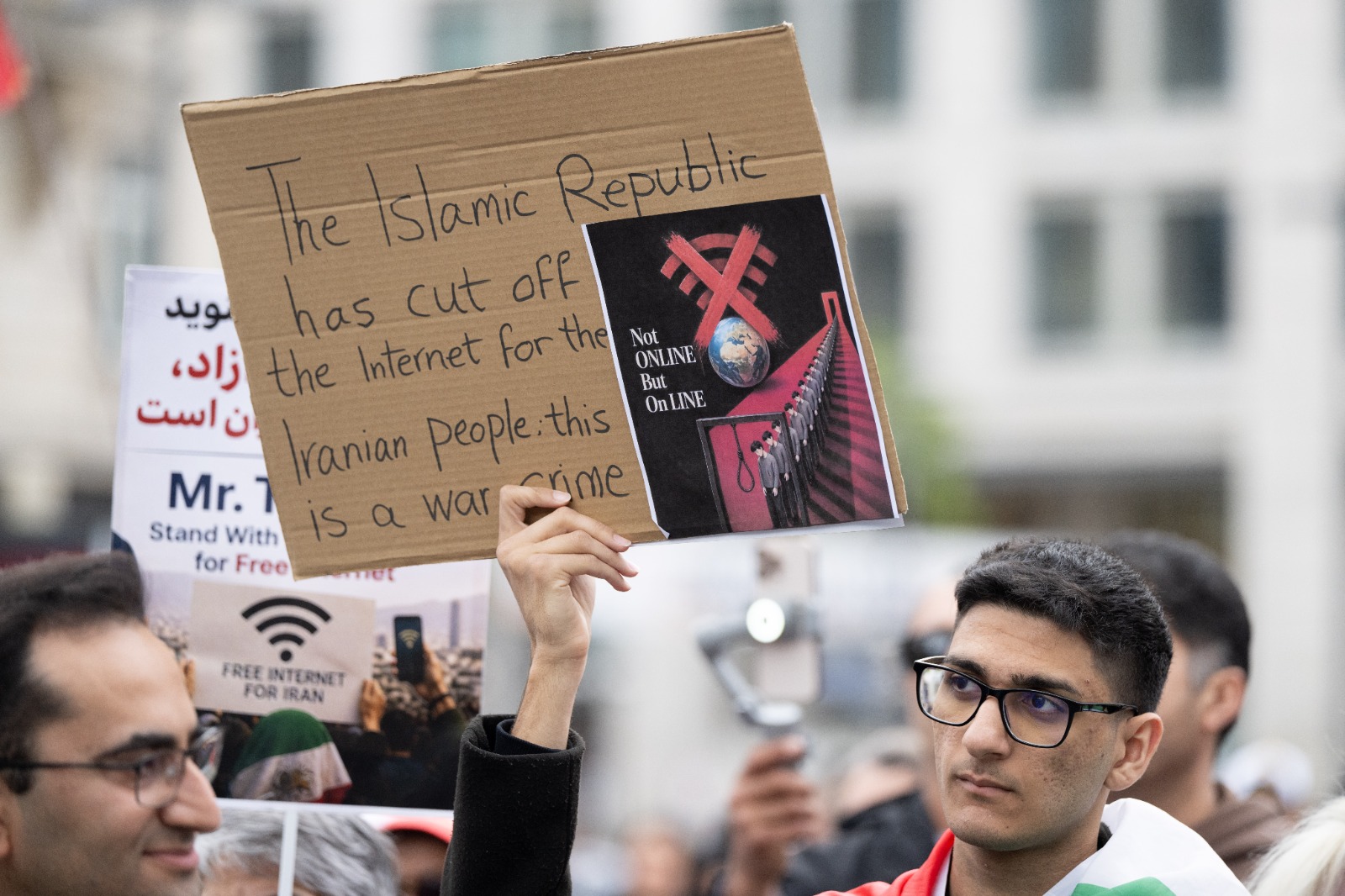
The Judiciary Freezes the Decision as Conflict Deepens Within the Regime
Despite the government’s decision, shocking news spread on Tuesday afternoon stating that the Administrative Justice Court, which is affiliated with the judiciary, had ordered the suspension of the government committee’s decision until complaints filed against it are reviewed. In practice, this means freezing the restoration of internet access and exposing any official who implements the decision, including the president or the communications minister, to possible legal prosecution.
However, legal experts stress that Pezeshkian issued the decision in his capacity as head of the Supreme National Security Council, and if it receives the backing of Iran’s Supreme Leader Mojtaba Khamenei, no judicial body would be able to obstruct it.
The Entekhab website later revealed the names of the four complainants: Kamyar Saqafi, Reza Taghipour, Rasoul Jalili, and Mohammad Hassan Entezari, all of whom are opponents of Pezeshkian’s government and critics of freedom of information and communications. Rasoul Jalili, who is close to Saeed Jalili, is known in Iran as the “father of internet filtering” and owns companies specializing in network security.
“A Regime With Two Brains”
These developments reflect a deep division within Iran’s governing institutions, especially over the management of sensitive issues during times of crisis. The Hamshahri newspaper, which is affiliated with Tehran Municipality, opposed the decision to restore internet access, arguing that it threatens “unity of command” during wartime conditions. This reveals that part of the state apparatus still views the internet as a security threat rather than a public service.
In a sharp attack, MP Hamid Rasai described the government committee as “illegal” and claimed its decisions contradict the direction of the security agencies. He also questioned the legality of Mohammad Reza Aref serving as vice president and head of the committee on the grounds that his son resides in the United States.
Analyst Hamid Asefi summarized the situation as “an X ray image of a regime with two brains.” He said the government is pressing the “connect” button with one hand while other institutions are pulling the plug with the other. In the morning, the government promises a “digital breakthrough,” while by evening the judiciary freezes the decision inside the “refrigerator of bureaucracy.”
The issue no longer appears to be merely an administrative dispute, but rather a struggle within what Asefi described as a “Republic of Anxiety,” where the government, judiciary, security agencies, and power centers move in contradictory directions, while the Iranian citizen remains the biggest loser.
The question now being raised is whether Pezeshkian’s government will be able to impose its decision and fully restore internet access, or whether opponents of digital openness will once again succeed in blocking any change.