Iraq and Gulf security: Rising questions over state control and armed factions

Opinion 26-05-2026 | 11:27

Iraq and Gulf security: Rising questions over state control and armed factions

Drone incidents linked to Iraqi territory reignite debate over Baghdad’s sovereignty, regional stability, and the future of Iraq’s role in the Arab world.


Iraq and Gulf security: Rising questions over state control and armed factions
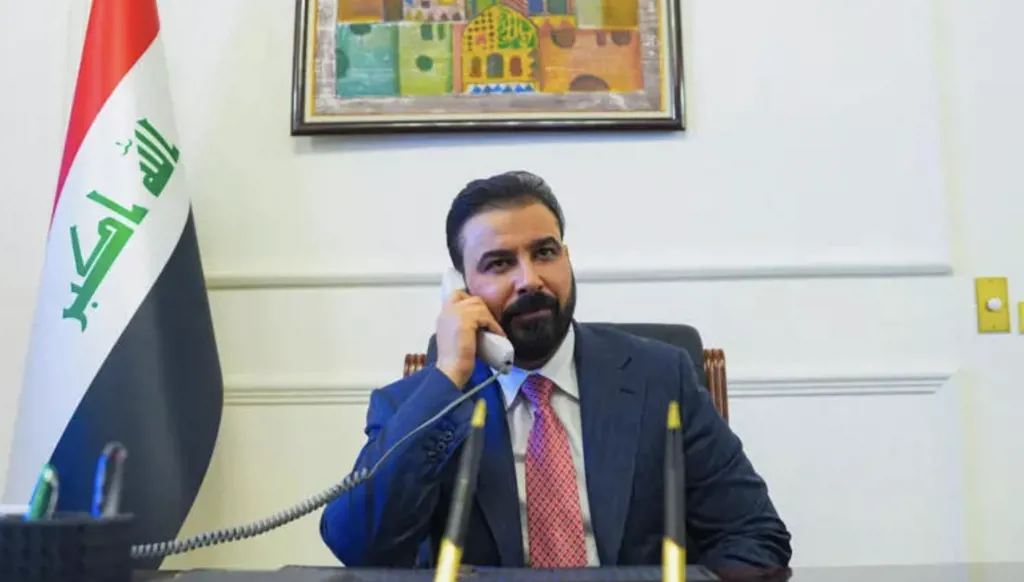
Ali Al Zaidi's government finds itself required to move from declared positions to action. (AFP)
Smaller Bigger


The targeting of the Barakah peaceful nuclear power plant by drones launched from Iraqi territory has placed the region in a highly sensitive security situation.


It was a serious indication that Iranian-backed militias in Iraq are transitioning from an internal crisis to a direct regional threat affecting Gulf security and its civilian and vital facilities. When drones reach such a significant civilian project, the issue becomes bigger than a limited military attack; it reveals a deeper problem in the position of the Iraqi state and its ability to control weapons decisions within its borders.


The official UAE stance was clear in condemning attacks launched from Iraqi territory and in calling on the Iraqi government to prevent the use of its land to target its neighbors. The problem is not with Iraq and its people, but with militias linked to Iran. Arab Iraq is part of Gulf stability, and the Iraqi people pay the price before others for turning their country into a platform for conflict.


The root of the crisis lies in weapons operating outside state control, loyalties that go beyond Baghdad, and groups that tie Iraq’s future to Tehran’s calculations rather than the interests of Iraqis.


Iran has pushed for years to build deep influence inside Iraq through armed factions possessing money, weapons, and political cover. Over time, these factions have evolved from groups on the state’s fringe to becoming part of the authority and influence equation, capable of exerting pressure and disrupting Iraqi national decisions with broader regional considerations.


This is the danger of the Iraqi situation. The state exists, and institutions are in place, but decisions of war and peace do not always seem confined to the government’s hand.


Iran deals with these factions as a tool of leverage beyond its borders. It grants Iran the capacity to send messages and raise the cost of confrontation, while leaving Baghdad to bear the political burden before its neighbors.


When Iraqi land is used to target the Gulf, Iraq itself is placed in a difficult position, since a state seeking normal relations with its surroundings cannot allow its territory to become a front for conflicts that do not serve its security and stability.


This situation harms Iraq before it harms its neighbors. As militia influence expands, Baghdad’s ability to build trust with its Arab and Gulf surroundings diminishes, investment and development opportunities weaken, and Iraq enters a cycle of suspicion and concern.


A state seeking stability cannot accept weapons being controlled outside its institutions, nor can its neighbors rely on assurances if its territory is used to launch drones and threaten civilian facilities.


Therefore, Ali Al-Zaidi’s government finds itself required to move from declared positions to action. Condemnation statements and promises of accountability are necessary steps but are not sufficient on their own. These commitments must be translated into clear measures that prevent Iraq from becoming a launchpad for any hostile action against Gulf states. Iraq does not need to manage the crisis through media narratives, but to restore state authority over weapons, borders, and decision-making.


The issue goes beyond the Barakah incident or any isolated attack. What happened raises a broader question about the future of Iraq. Will Iraq remain an open arena for others’ conflicts, or will it regain its natural position as a responsible national state in its surroundings? This question does not concern Baghdad alone, as it affects Gulf security, regional stability, and the course of Arab relations with Iraq.


The restoration of Iraqi decision-making is not only a Gulf demand but also, first and foremost, an Iraqi necessity. The closer Baghdad comes to its Arab surroundings and prioritizes state interests over factional calculations, the less likely its territory will be used in others’ conflicts.


An Iraq that regains control over its decision-making will find in the Gulf a partner for stability and development, while weapons remaining outside state control leave its land vulnerable to external use against its neighbors and against the interests of its own people.


Disclaimer: The opinions expressed by the writers are their own and do not necessarily represent the views of Annahar.