The war of words: How media shapes modern geopolitical conflicts

Opinion 26-05-2026 | 11:24

The war of words: How media shapes modern geopolitical conflicts

From talk shows to transnational narratives, information has become a strategic weapon shaping perception before reality.


The war of words: How media shapes modern geopolitical conflicts
In an open space, the word remains a sharp weapon in the side of societies.
Smaller Bigger


The modern battle begins with the word before it reaches the battlefield. Words are powerful because they remain in the recipient’s mind and can change convictions, even behavior. That is why companies and countries allocate massive budgets to all forms of media. The dilemma is that some believe form is more important than substance, and that reach can replace impact.


In the Arab context, amid an open and unregulated space, the word remains a sharp weapon aimed at societies. No one can deny that the Arabian Gulf has been subjected to continuous political and media pressure for nearly half a century due to the transformations that followed the Iranian revolution.


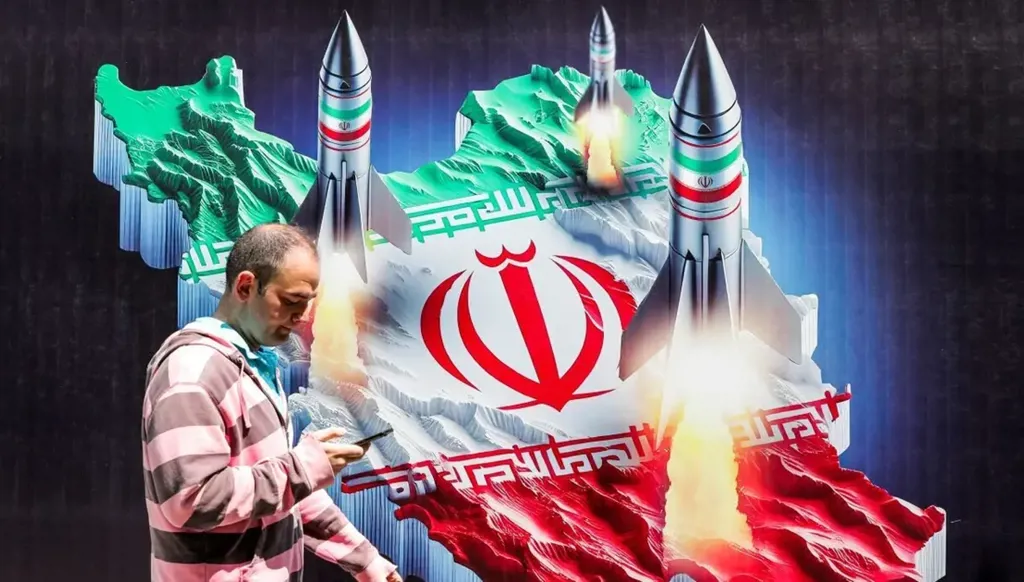
Since then, the Iranian project has not remained merely a domestic one, but has evolved into a transnational political idea that views the Gulf neighborhood as a constant sphere of influence, employing various tools; some political, some sectarian, some social, and others media-related, the latter being the most dangerous.


The Ability to Influence


Over time, it became clear that the conflict is not solely military, but largely a struggle over awareness, the shaping of public perception, and the ability to influence Arab public opinion, especially in media-open societies such as the Gulf states.


Here arises a highly sensitive issue related to the performance of some Arab, particularly Gulf, media outlets in managing this complex confrontation, especially as they are the most dominant forces in today’s media landscape. I am certain that discussing this topic is sensitive for some, yet it remains necessary to present and debate it.


Indeed, several media institutions understand the gravity of this phase and attempt to deal with it professionally. However, the problem sometimes lies in the absence of a clear strategic vision regarding the objectives to be achieved. Some talk shows enter the battle driven more by emotion than by knowledge and expertise.


Under the banner of “opinion and counter-opinion,” platforms are at times opened to figures aligned with the official Iranian narrative, even though everyone knows that Iranian media itself allows no real space for opposing or differing views, even within Iran.


The paradox here is striking: channels from Tehran do not host Gulf voices to freely present their narrative, nor do they even allow neutral approaches that touch the political constants of the regime, as they see them. There is strict discipline in the media message, a clear understanding that media is part of national security, and an insistence on repeating a single narrative in multiple tones.


Meanwhile, in some Arab media, we sometimes find a state of “confusing neutrality” or a desire to appear fully professional, even if it ultimately leads to presenting misleading messages to the Arab viewer, contrary to their interests.


The crisis does not lie in hosting a different opinion, as self-confident societies do not fear dialogue. The crisis lies in the absence of knowledge and professional balance, whether due to insufficient training of the program presenter, poor preparation, cultural gaps, or the selection of unsuitable guests. Many guests appearing from Tehran are highly trained to steer discussions toward emotionally charged issues that are particularly sensitive to Arabs.


As soon as facts are presented, the discourse is often redirected toward the Palestinian issue or what is referred to as the “axis of resistance” and “resistance to Israel and the Great Satan,” themes that quickly trigger emotional responses in Arab audiences. In such moments, some Arab participants fall into the trap, whether due to weak preparation, lack of information, emotional reaction, or even unfamiliarity with the nature of Iranian political discourse and its methods.


The result is that the Arab viewer does not gain a deeper understanding, but is instead left in a state of cognitive confusion, where facts merge with slogans, and the line becomes blurred between supporting a just cause and exploiting it to serve an expansive political project that has offered nothing but tears and blood.


The modern media battle is not managed with a loud voice, but through building critical awareness based on precise information. This requires a genuine reconsideration of the concept of political talk shows in the region.


Media is not a showcase arena, nor a competition for viewer numbers, but a tool for shaping public perception and protecting society from misinformation.


It is also necessary to invest in preparing media cadres with talents honed by deep political and historical knowledge, not just verbal presentation skills. The host conducting a sensitive political discussion must be able to uncover manipulations of terms, distinguish between facts and propaganda, and prevent the guest from dragging the debate into intentionally emotional paths, while requiring them instead to present objective evidence. Soft talk does not equate to strong arguments, but can serve as a form of deception.


Similarly, universities and research centers must participate in this effort by training informed media cadres. Media alone is insufficient unless supported by solid intellectual production and scientific analysis that explain the nature of existing challenges, far from exaggeration or understatement, and away from populist rhetoric.


Targeting minds


The world has changed, and images, words, and information have become influential tools, as dangerous as missiles and drones—perhaps even more so in the long term, as they target minds before borders.


The problem is not the presence of a hostile discourse, which is natural in politics, but rather the absence of intellectual immunity capable of exposing and confronting it with a cool head, confidence, and knowledge-based information. In the age of media chaos, the most dangerous defeats are those that quietly infiltrate minds.


Disclaimer: The opinions expressed by the writers are their own and do not necessarily represent the views of Annahar.