Trump’s Iran dilemma: Pressure from allies slows push for nuclear deal

US 26-05-2026 | 08:42

Trump’s Iran dilemma: Pressure from allies slows push for nuclear deal

After signaling a rapid agreement with Tehran, Donald Trump faced backlash from key Republican allies, forcing a sharp shift in tone and raising new questions about the future of U.S.-Iran negotiations.


Trump’s Iran dilemma: Pressure from allies slows push for nuclear deal
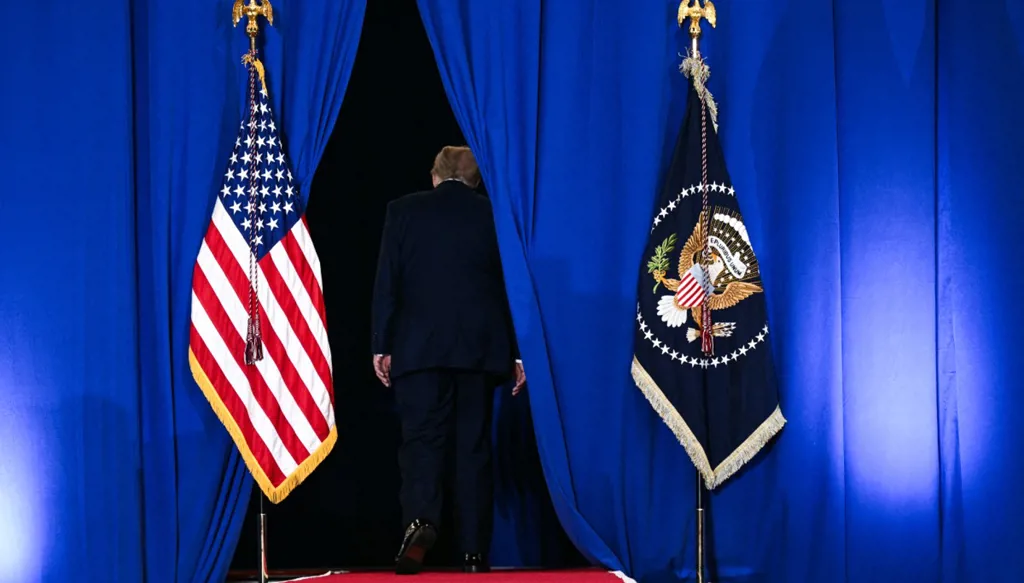
U.S. President Donald Trump leaves the podium after a conference on the economy, May 22, 2026. (AP)
Smaller Bigger


From Saturday to Sunday, there was a significant shift in President Donald Trump's stance on negotiations with Iran. On the first day, signs pointed to a swift move toward a memorandum of understanding with Tehran. Less than 24 hours later, Trump reverted to applying moral pressure on Iran.


His clearest signal came through an image he posted on Truth Social, showing the U.S. bombing the Iranian Navy alongside the word “Goodbye.” Later, Trump stressed that he would not sign a bad deal with Iran and instructed his negotiators to refrain from reaching any agreement.


Trump: Between the Hammer of Iran and the Anvil of His Supporters


Perhaps Trump took note of the negative reactions to reports about the memorandum of understanding. Surprisingly, the criticism did not come solely from the President’s opponents; some of his closest allies also led the wave of criticism, albeit in a measured manner.


For example, Republican Senator Ted Cruz voiced concern over reports surrounding the memorandum. In a post on X, he wrote that if the agreement results in “an Iranian regime — still run by Islamists chanting ‘Death to America’ — receiving billions of dollars, enriching uranium, developing nuclear weapons, and exercising effective control over the Strait of Hormuz, then it would be a catastrophic mistake.” Cruz also described the military outcome of the war as “exceptional.”


Senator Ted Cruz during his last campaign in 2024 (AP)


Trump ally Senator Lindsey Graham used more measured language, but his message was equally clear. In a post on the same platform, he warned that the agreement could be interpreted as an acknowledgment of an inability to protect the Strait of Hormuz and the Gulf countries’ oil infrastructure from Iran, despite stressing otherwise. He added that if such perceptions prove accurate, “one would wonder why this war was launched in the first place.”


Analysts at the Foundation for Defense of Democracies, a think tank that helped shape many of Trump’s hardline policies toward Iran, also criticized the initially leaked ideas surrounding the memorandum.


The Future of Trump-Iran Negotiations


It is almost certain that this wave of criticism contributed, at least in part, to slowing the momentum toward the memorandum. This became evident in the rapid shift away from optimism as discontent spread across social media. Media leaks then began pointing to tougher terms favoring the Americans, including reports denying any U.S. commitment to lift sanctions on Iran before a final agreement is reached.


The Wall Street Journal reported that the memorandum amounted to a form of barter centered on Iran reopening the Strait of Hormuz in exchange for the U.S. easing its blockade on Iran.


This coincided with Israeli Prime Minister Benjamin Netanyahu announcing on Sunday afternoon that he had spoken with President Donald Trump, who, according to Netanyahu, reaffirmed “Israel’s right to defend itself against threats on all fronts, including Lebanon.” The statement appeared to contradict references in the leaked memorandum to a “halt to war on all fronts.”


Senator Lindsey Graham speaking while then-presidential candidate Donald Trump listens, 2024. (AP)


Trump found himself in a difficult position. Facing criticism from his opponents was one thing; facing criticism from both his opponents and a significant segment of his supporters was another. That is why his post on Truth Social on Sunday at 10 a.m. local time drew particular attention.


In the opening line, Trump referenced the flaws of the Iran nuclear deal brokered by Barack Obama. It was hard not to interpret this as a message to his supporters that he would not sign a deal resembling the previous agreement — a point he later reiterated in a media interview. Trump also lashed out at the “losers” criticizing his moves, saying they had no understanding of the details of the negotiations.


This development suggests that media pressure on Trump could influence his future decisions regarding Iran. It is unlikely that such pressure will prevent him from signing a memorandum of understanding — or even a broader agreement — with Tehran.


However, it may slow any rush toward de-escalation aimed merely at securing a photo opportunity and declaring a superficial victory. While this pressure may not guarantee a strong deal, it could make it more difficult for Trump to negotiate with Tehran with complete freedom.