

GCC economy surges to $2.4 trillion as Gulf deepens global financial power and diversification
On its founding anniversary, Gulf Cooperation Council states showcase rising non-oil growth, trillion-dollar banking assets, and expanding global investment influence.



 Messenger
 Whatsapp
 Threads
 Email
Email
 Print
Print
 X
X
 Facebook
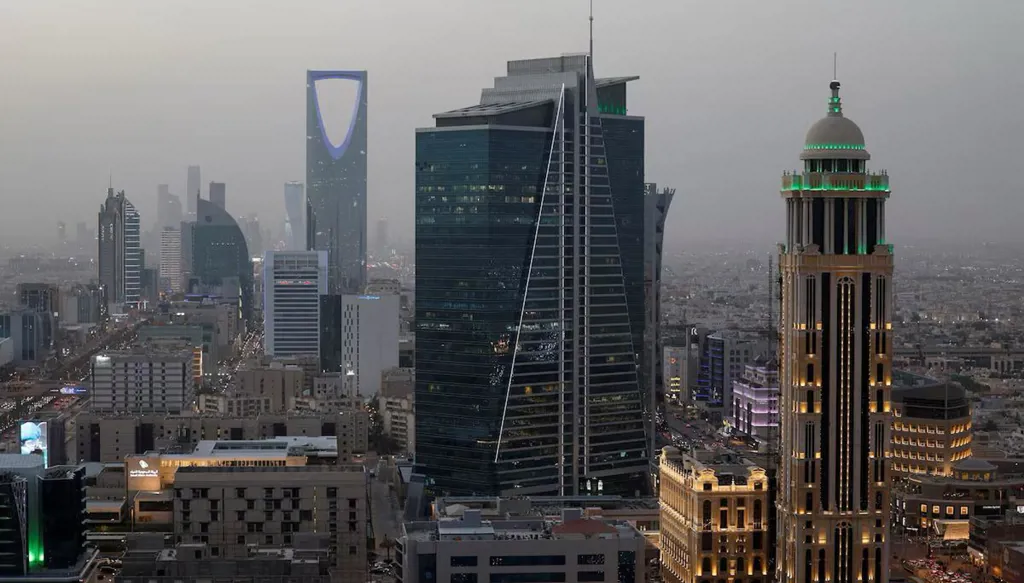


The Gulf Cooperation Council countries are marking today, May 25, the anniversary of the council’s founding, as economic and financial indicators highlight the increasing global economic weight of the Gulf states, according to data issued by the Statistical Center for the Cooperation Council for the Arab States of the Gulf.
The data showed that the current GDP of the council countries reached approximately $2.4 trillion, with the non-oil sector contributing more than 78% of the Gulf economy, and recording a growth rate of 5.3% in 2025, reflecting ongoing efforts toward economic diversification.
In the financial sector, the assets of Gulf commercial banks rose to approximately $3.9 trillion, marking a growth of 11.9% between 2024 and 2025, while deposits at commercial banks reached about $2.3 trillion, reflecting an increase of 10.6%.
The data also indicated a rise in the Gulf’s global investment presence, with the assets of Gulf sovereign wealth funds reaching approximately $5 trillion, representing 30.3% of total sovereign wealth fund assets worldwide.
In terms of trade, the volume of Gulf trade exchange reached approximately $1.6 trillion, reflecting a growth of 7.4% compared to 2023, while Gulf commodity exports amounted to about $849.6 billion.
In the energy sector, the council countries maintained their position in the global oil market, with production reaching 16.6 million barrels per day, representing about 22.2% of global crude oil output.
The council countries also advanced in global competitiveness indices for 2025, ranking 15th worldwide in the overall index, eighth in the tax policy index, and 11th in the public finance index.
Gulf integration
In terms of Gulf integration, intra-Gulf trade rose to approximately $146 billion, reflecting a growth of 85.2% compared to 2012, while the total capital of Gulf joint-stock companies reached about $549 billion, an increase of 237.6% compared to 2007.
The data also showed growth in social connectivity indicators among the council countries, with more than 41.4 million Gulf citizens traveling between member states, and the number of Gulf students enrolled in government schools in other countries rising to 43.2 thousand students.
Moreover, about 488.9 thousand Gulf citizens benefited from inter-health services, while Gulf tourism revenues reached approximately $132.3 billion, amid the continued growth of the tourism sector in the region.
Five key facts:
● The Gulf countries celebrate the founding of the Cooperation Council on May 25.
● The Gulf GDP reached $2.4 trillion.
● The non-oil sector contributes more than 78% of the Gulf economy.
● The assets of Gulf commercial banks reached $3.9 trillion.
● Gulf sovereign wealth funds represent 30.3% of global sovereign assets.