

Hajj management and the principle of depoliticized worship
Saudi Arabia frames its Hajj policy as a balance between maximum service to pilgrims and strict prevention of political or sectarian activity in the holy sites, emphasizing safety, equality, and uninterrupted worship.



 Messenger
 Whatsapp
 Threads
 Email
Email
 Print
Print
 X
X
 Facebook
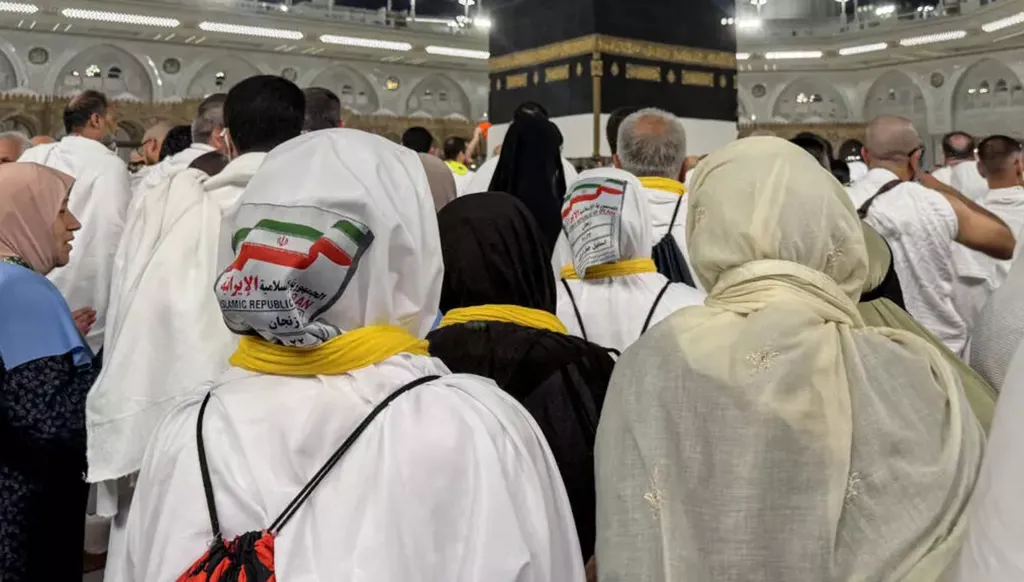


During the Hajj season, the Kingdom of Saudi Arabia strives to offer the best of its capabilities to the guests of the Kaaba, making use of modern technology and accumulated experience to create a suitable environment in which pilgrims can perform their rituals with ease and comfort, away from any security disturbances, health risks, or service shortcomings.
Those who follow Saudi management of Hajj in recent years can see that Riyadh is not merely managing a large human gathering; it is dealing with a deeply sacred religious meaning for Muslims. This ritual loses its spiritual essence if it is politicized, and if slogans intrude upon it, it turns from a unifying act of worship into a space for sectarian and political disputes. For this reason, the Kingdom’s policy during the Hajj season appears strict and clear, based on a precise balance: the highest levels of openness in serving pilgrims, and the highest levels of firmness in preventing the sacred sites from becoming a platform for partisan or sectarian conflict.
Strict management
This equation was clearly evident in the Conference of Hajj Security Forces Leadership held this May, where the Director of Public Security, Lieutenant General Mohammed bin Abdullah Al-Bassami, affirmed that the general plan of the Hajj security forces has been raised to full readiness to carry out security, traffic, and organizational duties. He stated that the top priority of the forces is to safeguard the security and safety of pilgrims until they return safely to their countries. He also stressed the prevention of unauthorized pilgrims from entering the holy sites and the establishment of a security cordon around the entrances to Mecca and the sacred sites, in order to block any irregular entry of individuals, preventing overcrowding or health crises that could put elderly pilgrims at risk, especially those who arrive without permits through smuggling routes that have been exploited by groups, some of which were arrested in previous seasons.
High readiness
The commander of the Special Emergency Forces, Lieutenant General Mohammed bin Maqbool Al Omari, emphasized that the security system during Hajj is integrated and that its goal is unified: the safety and security of the guests of God. He added that the plan is characterized by integration and flexibility with other security agencies, sending messages about the high level of readiness to protect the sacred sites on one hand, and to prevent any marches or political or sectarian slogans during these sensitive times that could disrupt the serenity of Hajj.
He explained that the role of security during Hajj is not a display of force as some may assume, but rather risk management before incidents occur and safeguarding calm before it is disturbed. He clarified that the forces work to prevent infiltrators and violators from reaching the holy sites and to regulate crowds in Arafat, the Jamarat complex, and the southern courtyard of the Grand Mosque, ensuring smooth movement and the safety of pilgrims.
High Readiness
Commander of the "Special Emergency Forces" Lieutenant General Mohamed bin Maqbool Al-Amri stressed that "The security work system in Hajj is integrated," and "its sole objective is the security and safety of the guests of Allah," adding that the plan features "integration and flexibility with security entities," sending messages about the high readiness to protect the holy sites on one hand, and preventing any political and sectarian demonstrations and slogans during these sensitive times, averting issues that may disturb the peace of the Hajj!
The function of security in Hajj is not a display of force as some imagine, but risk management before they occur, and protection of peace before it is disturbed. Al-Amri explained that the forces are working to prevent intruders and violators from reaching the sites, organizing crowds in Arafat and the Jamarat bridge and the southern courtyard of the Haram, maintaining smooth flow and safety of the pilgrims.
Rejection of politicization
From here, the reasons behind Saudi Arabia’s rejection of politicizing Hajj must be understood. The issue is not about imposing a specific viewpoint, but about protecting the principle of equality among pilgrims and ensuring their safety. When a political or sectarian slogan is raised in the holy sites, other pilgrims are forcibly pushed into an environment that has nothing to do with worship.
The practical evidence that this position does not target any specific nationality or sect is the Saudi treatment of Iranian pilgrims. Their delegations have been received with flowers, and the Iranian ambassador to Riyadh, Ali Reza Enayati, stated that “the pilgrims of my country receive the same generous care that all other pilgrims receive,” confirming their commitment to “the etiquette of Hajj and Saudi regulations.”
These facts reveal an important Saudi distinction between the hostile conduct of the Iranian regime toward the Kingdom during the recent war and the Iranian pilgrim as a Muslim coming to perform a religious duty. Therefore, the pilgrim is not treated as an extension of their country’s foreign policy, but as a guest of the Kaaba, provided with all facilitation so they can return safely to their homeland after completing the rituals.
Disclaimer: The opinions expressed by the writers are their own and do not necessarily represent the views of Annahar