From nuclear threats to a fragile truce: How the U.S. and Iran reached a forced ceasefire

Opinion 25-05-2026 | 09:38

From nuclear threats to a fragile truce: How the U.S. and Iran reached a forced ceasefire

After weeks of devastating strikes, nuclear threats, and Gulf pressure, Washington and Tehran edge toward a fragile memorandum of understanding that could reshape the Middle East balance of power.


From nuclear threats to a fragile truce: How the U.S. and Iran reached a forced ceasefire
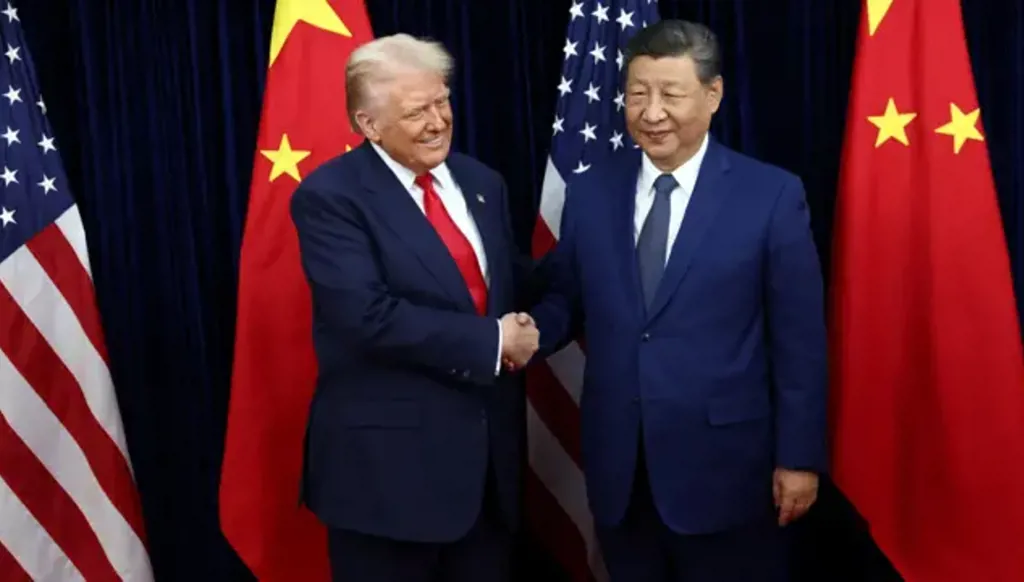
Trump and Xi
Smaller Bigger


Only a few hours separated Donald Trump’s April 7 statement that “an entire civilization will be erased tonight” from his announcement of the first ceasefire in the U.S.-Israeli war on Iran. The ceasefire was later extended multiple times alongside similar threats, though without repeating the unprecedented “erase civilization” remark, which was widely understood at the time as a nuclear threat. Just hours before reports emerged of a potential agreement on a new 60-day ceasefire extension, Trump said that “the odds are equal: either an agreement or their complete destruction.”


Memorandum of Understanding!


Thirty-eight days of devastating bombing, a direct round of negotiations in Islamabad, and forty-five days of difficult indirect talks later, a partial interim agreement on a “Memorandum of Understanding” has finally emerged—one that could also be described as coerced, given that both the American and Iranian sides had consistently rejected such an arrangement in their declared positions. Washington expected nothing short of the other side’s “surrender,” while Tehran insisted on “ending the war with guarantees that it would not resume.” In the end, neither achieved what it wanted, and both were forced to gradually climb down from their maximalist positions. Trump traveled to Beijing and returned with “mixed feelings”: eased trade tensions on one hand, and continued reluctance to assist Iran for as long as the war remained ongoing on the other.


China and Russia


Days later, Presidents Xi Jinping and Vladimir Putin met in Beijing and appeared to share the same view: let Trump struggle in the trap he had set for himself, without offering any initiative to rescue him. The Chinese and Russian leaders recalled that whenever the United States became entangled in a major predicament, they stood to gain strategic advantages. That pattern began in 2003, when George W. Bush became bogged down in Iraq, only for it to become clear that Iran—not Iraq—was the sole beneficiary of the American intervention. Yet Trump, returning from Beijing, quickly reignited the momentum toward resuming the war from where it had paused. There was strong temptation to launch a broad campaign targeting bridges and energy infrastructure, in order to test how Iran and its negotiators would respond afterward.


Monday (18/05) initially appeared to be just another day in a stagnant crisis: the ceasefire held, Washington and Tehran exchanged competing proposals, and Islamabad continued its role as mediator. But on the eve of that day, drones launched from Iraq struck the “Barakah” nuclear plant in the Dhafra region of the UAE, causing a fire, while other attacks targeted Saudi Arabia, Kuwait, Qatar, and Bahrain. At the same time, Israel declared its readiness as the war seemed poised to resume, while leaks from Washington and warnings from Tehran pointed to imminent escalation. Then, suddenly, Trump announced—“at the request of Saudi Arabia, Qatar, and the UAE”—the postponement of scheduled strikes against Iran, also referring to other parties believed to include Egypt, Turkey, and Pakistan. The three Gulf states urged “giving negotiations a chance,” warning that a new phase of war would not harm Iran alone but would further deepen and complicate the crisis. There was no guarantee such escalation would achieve Washington’s objectives, even if Benjamin Netanyahu held different assessments. What appeared certain, however, was that reckless Iranian attacks could inflict severe damage on Gulf states and force them into a response, dragging them into a war they had no desire to enter.


The “chance” granted to negotiations also reflected what Pakistani mediation efforts had achieved, namely the recognition that both sides in the war needed an “agreement,” even though their conditions remained so contradictory that only a preliminary arrangement was possible—whether described as an “expression of intentions,” a “declaration of principles,” or a “memorandum of understanding.” In essence, it was a revised framework built around the central idea of “ending the war.” Clearly, both parties had accepted that premise; otherwise, the Pakistani initiative—which first sent Interior Minister Mohsin Naqvi to Tehran, followed by Army Chief Asim Munir and Intelligence Director Asim Malik—would not have culminated in a key meeting between Asim Munir and Revolutionary Guard commander Ahmad Vahidi, one of the regime’s most hardline figures and currently regarded as the Supreme Leader’s representative in strategic decision-making. At the same time, Prime Minister Shehbaz Sharif traveled to China to secure Beijing’s role in reinforcing any agreement aimed at ending the war.


The new ceasefire extension is long enough to cover the World Cup, including the participation of both the U.S. and Iranian teams, and is also expected to encompass Lebanon, although Israel will retain freedom of action against the “Party of Iran.” Yet the more significant global development may be the reopening of the Strait of Hormuz, with questions lingering over whether it will remain free of restrictions or subject to Iranian-imposed costs. By postponing the nuclear dossier, Tehran appears to have secured a point in its favor. In practice, the war may have begun on February 28 through a joint U.S.-Israeli decision, but it is ending at the request of Gulf and regional states. Trump, in turn, has a clear interest in relying more heavily on the eight Arab and Islamic states if he is genuinely seeking peace.