Lebanon trapped between Washington and Tehran as a new regional understanding takes shape

Opinion 25-05-2026 | 11:24

Lebanon trapped between Washington and Tehran as a new regional understanding takes shape

As signs of an emerging American-Iranian understanding grow stronger, Lebanon faces mounting political pressure, deeper regional entanglement, and fears of a prolonged phase of instability shaped by Hezbollah, Israeli escalation, and uncertain negotiations.


Lebanon trapped between Washington and Tehran as a new regional understanding takes shape
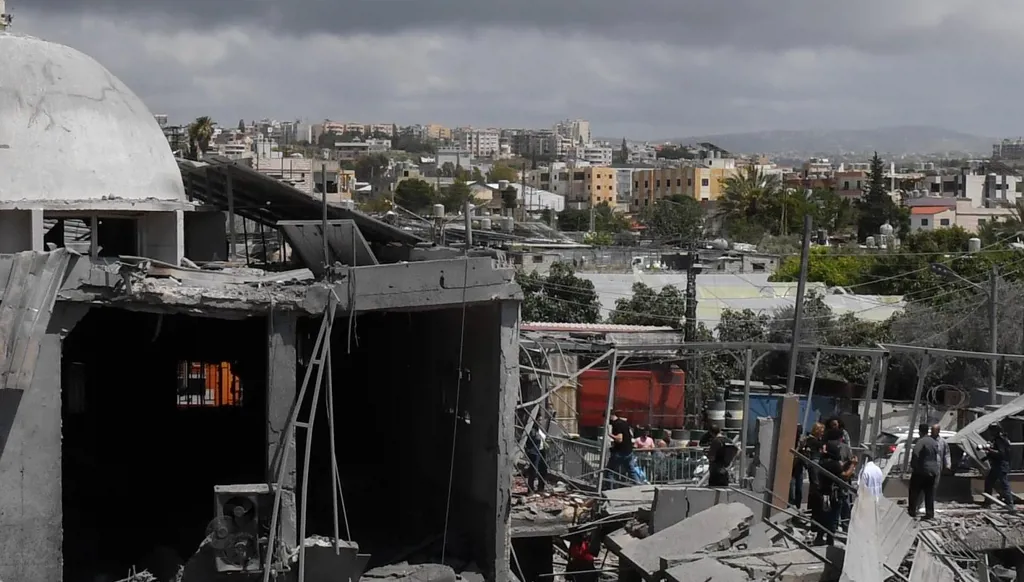
Scenes of destruction in the south
Smaller Bigger


The ongoing disaster entangling Lebanon cannot endure half-measures, appeasement, or embellished rhetoric, especially after the country has already paid the devastating price of the gap between decisive decisions to monopolize weapons and implementation commitments that remain faltering, incomplete, or riddled with shortcomings.


Thus, we find ourselves amid the symbolism, irony, and drama surrounding the anniversary officially marked for 26 years as “Liberation and Resistance,” confronted with Lebanon’s urgent need to face a deepening trajectory of prolonged suffering and increasingly unfavorable signs of an American-Iranian understanding over Lebanon. Based on the available and publicly known facts, it can hardly be described otherwise, as the country stands on the brink of a complex phase of negotiations aimed at reaching an agreement or understanding whose emergence — if it emerges at all — remains uncertain.


In reality, the staged American-Iranian understanding announced even before receiving official approval from both sides means, from the Lebanese perspective — which concerns us most at this moment — an increase in the burdens and repercussions weighing on the Lebanese state engaged in negotiations. In the coming hours, the country is likely to witness the reverberations of a new so-called victory that Hezbollah, possibly alongside its Shiite ally, will seek to promote by claiming that Iran has also secured a ceasefire for Lebanon. Although anticipating the consequences and implications of the unfavorable American-Iranian understanding may not yet yield fully objective conclusions before all facts, calculations, comparisons, and local and regional considerations are complete, an immediate reading of the scene calls for unavoidable caution toward a network of pressures and complexities that will inevitably emerge — realities that cannot be obscured, concealed, or softened through any attempt to evade acknowledging the facts.


This emerging American-Iranian understanding is set to become the broader regional framework around which developments will revolve and intertwine until negotiations over the nuclear file are concluded and a long-term truce between the two sides is officially declared. This means Lebanon will continue along its negotiating path, theoretically separate from the Iranian track, yet shaped by a complex backdrop heavily influenced by developments between Washington and Tehran. Consequently, Lebanon is likely to face intensified and more stringent American and Israeli pressures and conditions alike, especially as Washington has activated the sanctions weapon for the first time against parts of the “security and military” deep state partially linked to Hezbollah, amid Israeli concerns over the American-Iranian understanding, concerns that may translate into greater Israeli freedom of action in Lebanon. What cannot be overlooked in this context is that Lebanon will struggle through its negotiations on two fronts: directly within its own negotiating track, and indirectly under the weight of a shifting regional reality shaped by the American-Iranian understanding.


Until proven otherwise, Iran will regard the nature, background, and substance of this emerging regional understanding as a victory whose effects extend to its Lebanese arm, which is likely to approach the coming phase with greater pressure on the Lebanese state — whether through a ceasefire, a war of attrition, or something in between. The Lebanese drain is unlikely to end here, particularly if additional diplomatic arrangements, still undisclosed, are embedded within the hidden dimensions of the understanding that is expected to launch negotiations between Washington and Tehran, while the issues of Iran’s regional proxies and ballistic missiles remain absent from any publicly announced framework. Amid all this, Lebanon sees little ahead except growing caution, apprehension, and anxiety as it awaits Washington’s upcoming tests.


Disclaimer: The opinions expressed by the writers are their own and do not necessarily represent the views of Annahar.