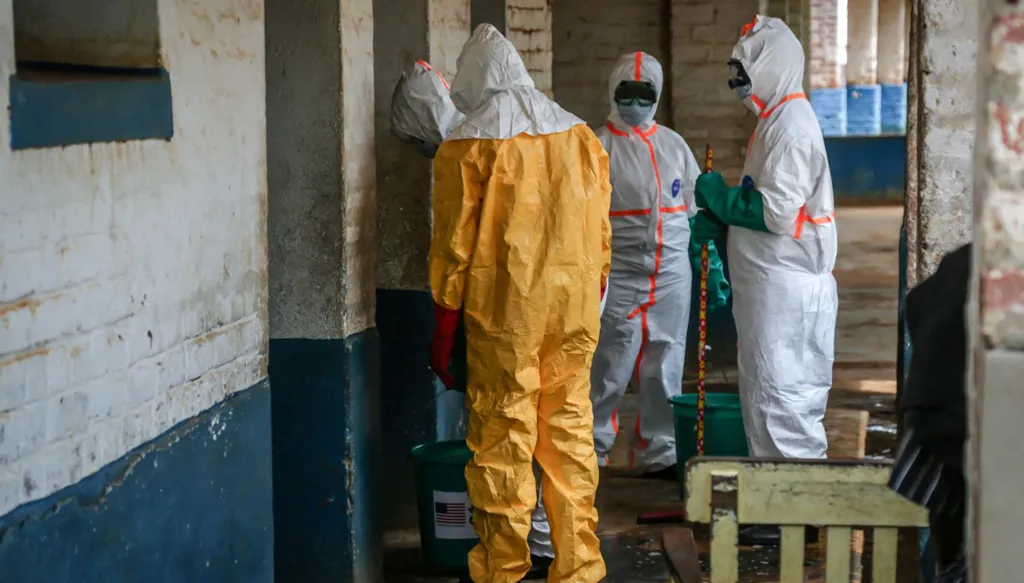
Ebola outbreak in DR Congo claims 204 lives as health authorities warn of regional spread risk

World 24-05-2026 | 19:32

Ebola outbreak in DR Congo claims 204 lives as health authorities warn of regional spread risk

A deadly Ebola outbreak in the Democratic Republic of Congo has killed 204 people out of 867 suspected cases, with officials warning of potential spread to ten countries amid ongoing insecurity and limited access to affected regions.


Ebola outbreak in DR Congo claims 204 lives as health authorities warn of regional spread risk
A health team in Congo. (AFP)
Smaller Bigger

The Ebola epidemic has claimed the lives of 204 people in the Democratic Republic of Congo out of 867 suspected cases recorded, according to the latest figures published by the Ministry of Health on Saturday, while African health authorities warned of the risk of the epidemic spreading to ten other countries on the continent.

An earlier report from the World Health Organization on Friday stated that 177 people had died out of 750 suspected cases.


The Democratic Republic of Congo announced on May 15 the outbreak of the Bundibugyo strain of the virus responsible for the current epidemic, which has a mortality rate of up to 50% in the absence of a vaccine or treatment.

The World Health Organization declared a public health emergency of international concern to counter this seventeenth wave of the virus in this vast country in Central Africa, which has a population of over 100 million.


Ebola has claimed more than 15,000 lives in Africa over the past fifty years, with a fatality rate ranging from 25% to 90%, according to figures from the World Health Organization reported by AFP.


The deadliest outbreak in the Democratic Republic of Congo caused the death of around 2,300 people out of 3,500 infected between 2018 and 2020.
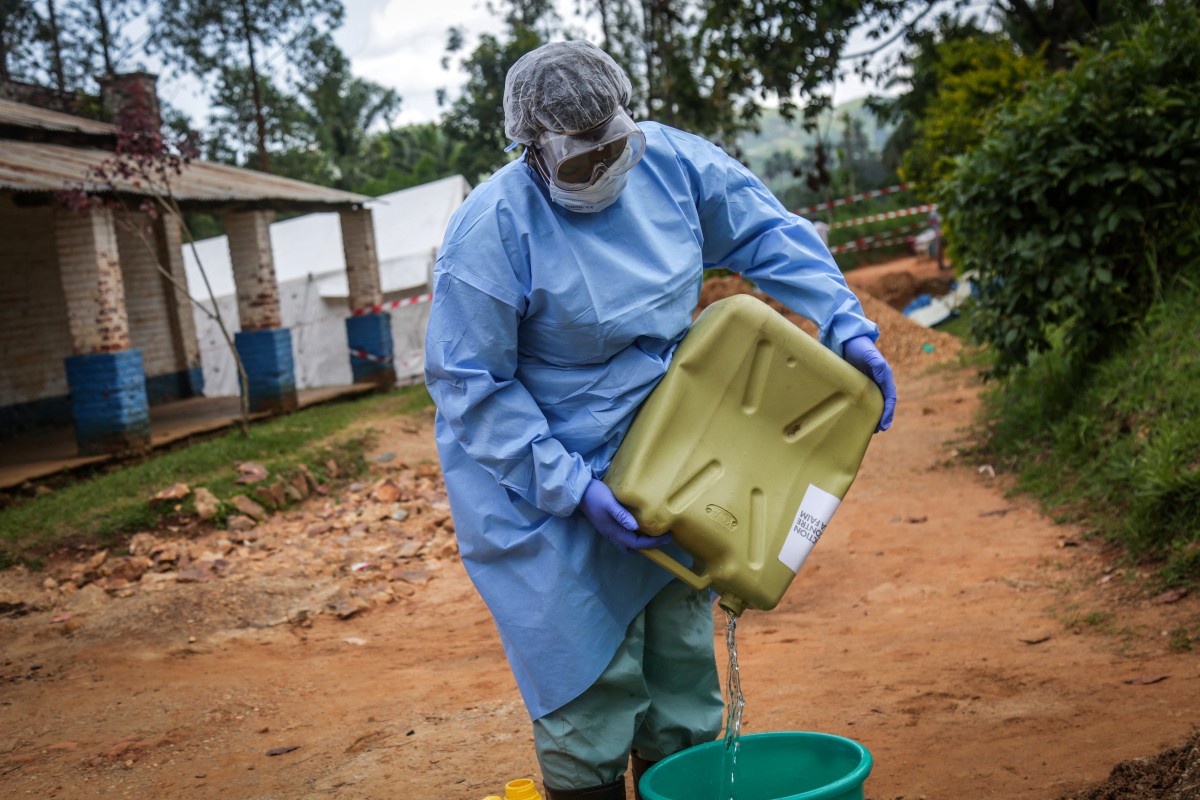


The virus causes a highly contagious hemorrhagic fever that can lead to death and remains extremely dangerous despite the recent development of vaccines and treatments that are effective only against the "Zaire" virus, which is responsible for the majority of past outbreaks.


Health worker in Congo. (AFP)


In the absence of an approved vaccine or treatment for the Bundibugyo strain responsible for the current outbreak, containment efforts rely primarily on adherence to isolation measures and the rapid detection of cases.

Uganda, which borders the Democratic Republic of Congo, confirmed three new cases on Saturday, bringing the total number of reported cases to five, one of whom has died.


In the Democratic Republic of Congo, only a few laboratory tests have been conducted so far, as the outbreak is in a remote, hard-to-access area where armed groups are active.


The Ministry of Health stated that the officially confirmed number of deaths is 10, while the confirmed cases reached 91.


Ten Countries at Risk 
The head of the Africa Centres for Disease Control and Prevention of the African Union, Jean Kaseya, warned during a press conference on Saturday in Kampala, the capital of Uganda, that there are “ten countries at risk” of the virus spreading: South Sudan, Rwanda, Kenya, Tanzania, Ethiopia, the Republic of the Congo, Burundi, Angola, the Central African Republic, and Zambia.


However, the World Health Organization considered that the risk of the epidemic remains “low at the global level,” noting that its spread could continue for more than two months.


Ebola is spreading in the Democratic Republic of Congo across three provinces, with cases particularly concentrated in Ituri province, which borders Uganda and South Sudan in the northeast of the country. Ituri is a gold-rich province with extensive mining activities that lead to significant daily population movement, and it has been witnessing local militia clashes for years, which complicates access to certain areas.


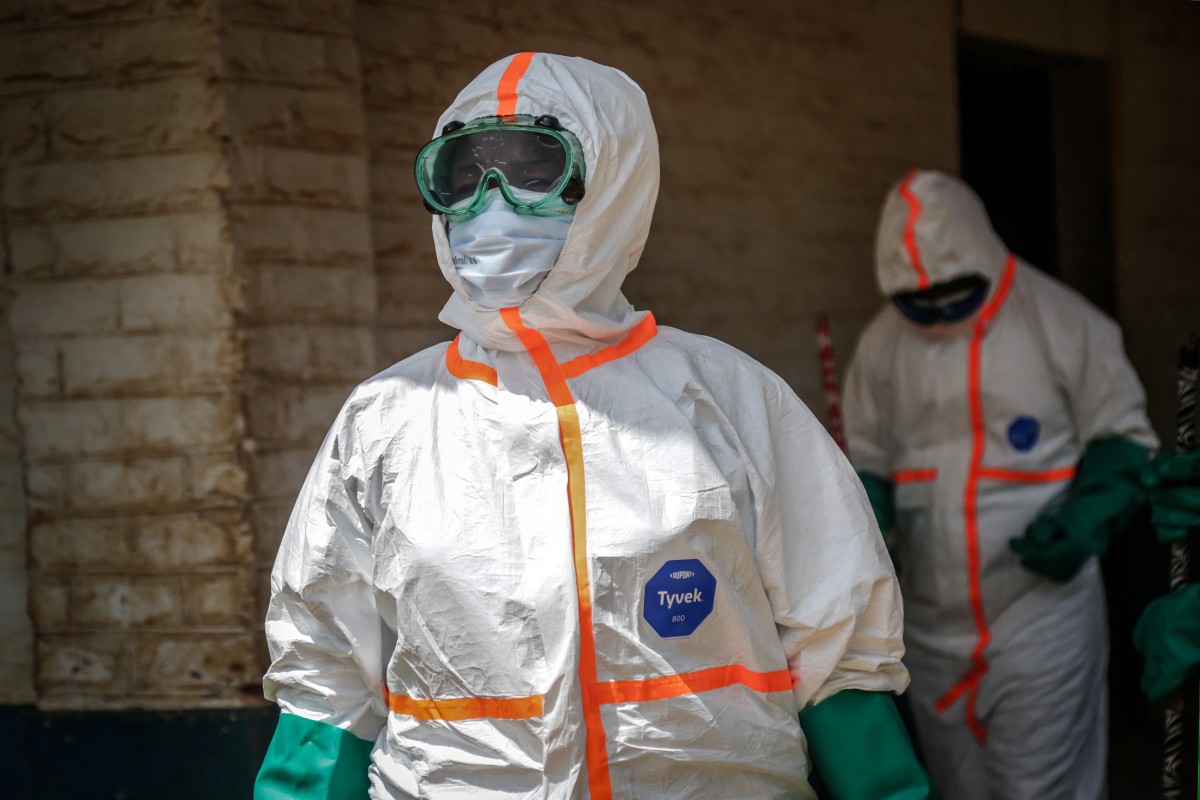
Healthcare workers. (AFP)


It spread from Ituri to North Kivu and South Kivu, where the anti-government armed movement “M23” controls vast areas.

Kaseya stated that “population movement and insecurity” facilitate the spread of the epidemic.

Tens of tons of equipment have been sent and WHO teams deployed, but organizing the epidemic response has been delayed in Ituri, which has a population of over eight million, including one million displaced people living in overcrowded camps.

Public gatherings have been restricted and movement on main roads in affected provinces has been limited, and the Congolese authorities announced the suspension of flights to and from Bunia, the capital of Ituri.

In neighboring Rwanda, authorities banned foreign nationals who have traveled through the Democratic Republic of Congo from entering the country and imposed quarantine on Rwandans arriving from there.

The United States has enhanced health monitoring measures at borders for air travelers coming from African countries that report infections.

This new outbreak of the epidemic, the seventeenth in the Democratic Republic of Congo, comes at a time when NGOs are experiencing reduced international aid, especially from the United States, which has withdrawn from the World Health Organization.