

Vance vs. Rubio: The quiet battle already shaping Trump’s post-2028 republican future
As Donald Trump faces rising crises and declining trust, two of his closest allies, J.D. Vance and Marco Rubio, are already positioning themselves as rival heirs to “Trumpism,” signaling an early and subtle succession struggle inside the Republican Party.



 Messenger
 Whatsapp
 Threads
 Email
Email
 Print
Print
 X
X
 Facebook
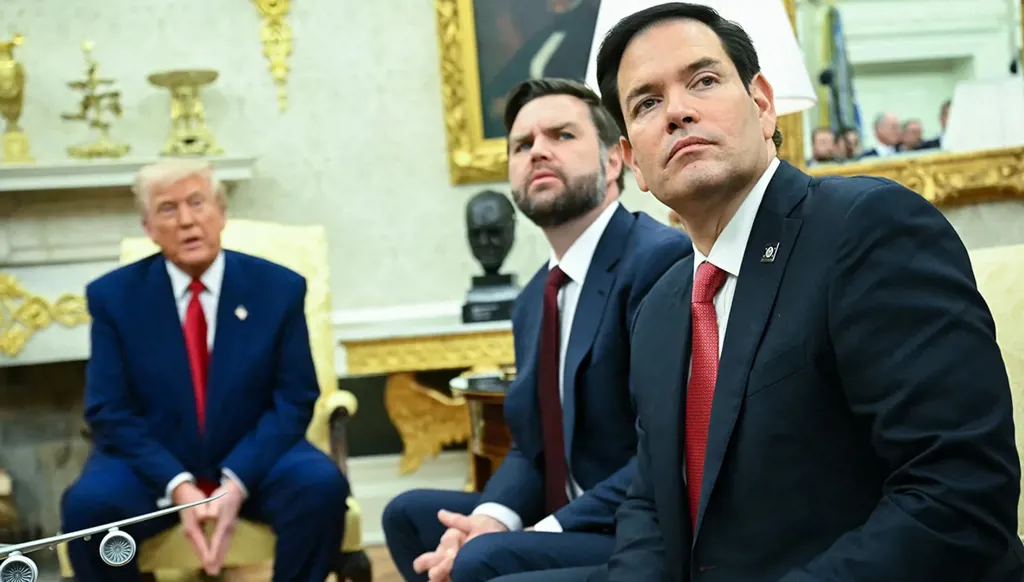


As President Donald Trump’s administration confronts escalating crises, from the war with Iran to declining public trust, the contours of an early race to succeed him within the Republican Party are gradually taking shape. Although Vice President J.D. Vance and Secretary of State Marco Rubio deny that any presidential contest is already underway, their presence in and around the White House gives the clear impression that Republicans are already testing the post-Trump era. Has the struggle to inherit “Trumpism” between Vance and Rubio already begun ahead of the 2028 elections?
Calmer rhetoric than Trump
In recent weeks, the two men have appeared at the White House press briefing platform in a way that recalls the era of traditional Republicans before Trump’s rise, with a calmer rhetoric focused on policy issues rather than the personal attacks and media spectacle that have come to define the current American president.
According to CNN, Vance and Rubio present a different model within the administration, grounded in political discipline and the ability to address public opinion in a more coherent language. Vance, a Yale University graduate and a rising star within the “MAGA” wave, has sought to portray himself as a politician capable of defending administration policies in a rational tone, particularly regarding the war with Iran and rising fuel prices, while also offering a more structured explanation of Washington’s concerns about the Iranian nuclear program.
As for Rubio, he has leveraged his media appearances to project the image of an experienced statesman, drawing on his position as Secretary of State and National Security Advisor. During a recent press conference, he spoke about “America’s hope” as a country that provides opportunities for all, regardless of race or social background, in a speech reminiscent of his political tone prior to fully joining the “MAGA” camp.
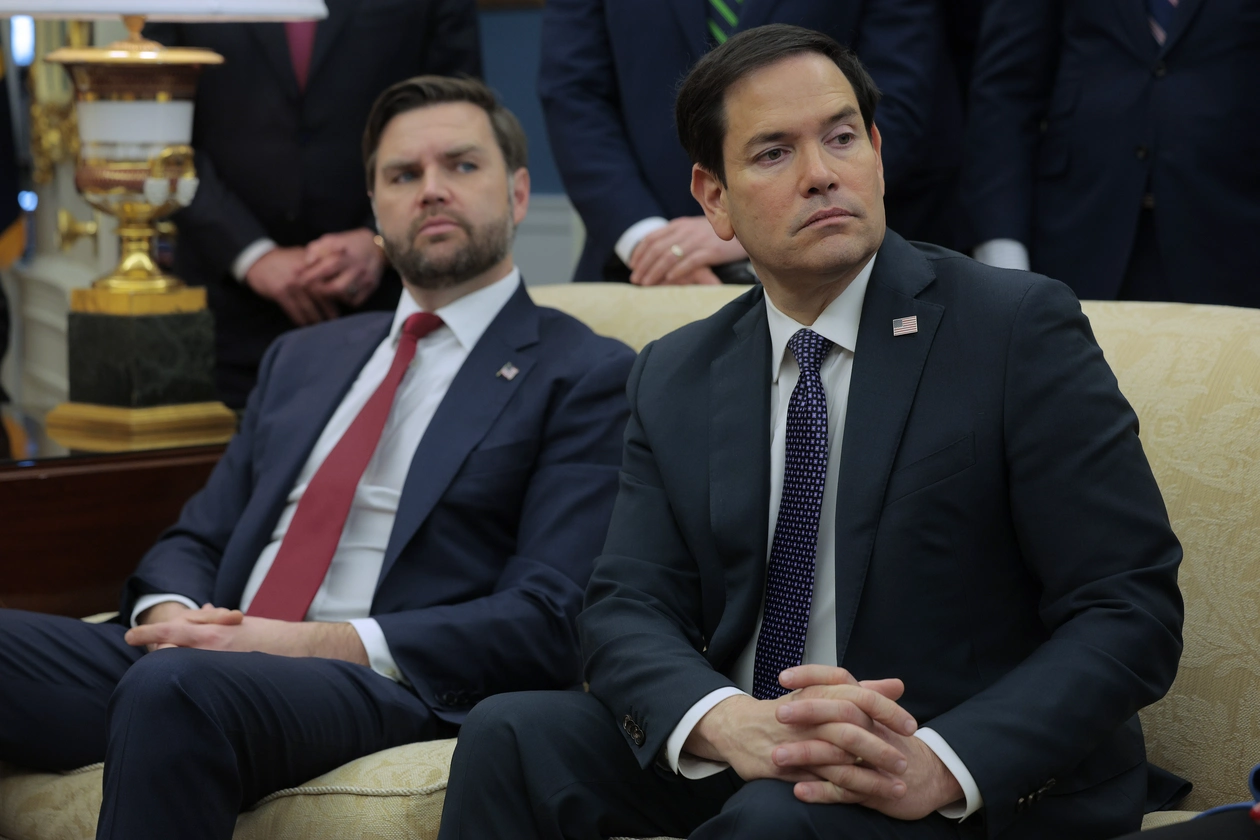
Shaping the future of the Republican Party post-Trump
Political writer and analyst Hassan Mneimneh from Washington tells Annahar that the confrontation between Vance and Rubio over succeeding Trump “practically began once each assumed his position, as both seek to demonstrate absolute loyalty to Trump while trying to capitalize on their positions within the power hierarchy.”
The two men are attempting to shape the future of the Republican Party after Trump, but with different approaches. Vance appears closer to the conservative populist base, adopting a strongly nationalist stance on issues of immigration, identity, and religion, while Rubio is seeking to offer a more ambitious version of Republican conservatism.
Rubio’s appearances have been more focused on foreign policy issues, consistent with his dual role as Secretary of State and National Security Advisor. However, when a journalist gave him the opportunity to speak in a broader political language, he seized it with evident skill.
He stated that “America’s hope is what it has always been,” in a speech echoing the ambitious political tone that had faded since his 2016 election defeat. He added that the United States should remain “the place where anyone, regardless of their background, skin color, or birth circumstances, can achieve what they want.”
Despite his recent alignment with Trump’s rhetoric, Rubio’s statements reflected an attempt to revive a calmer version.
Despite increasing talk about a potential confrontation between them in the 2028 elections, both affirm that they are not currently considering a presidential run, especially as Trump continues to closely monitor any moves within the party.
Mneimneh points out that the vice-presidential office automatically gives its holder an advantage in discussions of succession, so Vance is keen to appear “presidential” in his speeches and media appearances. Conversely, Rubio has a greater capacity to draw on “political accomplishments,” particularly by combining the roles of Secretary of State and National Security Advisor, which positions him as a man of files and results.
But the problem, according to Mneimneh, lies in the fact that Trump’s current record has not yet provided significant achievements for Rubio to build on politically, while playing the “firefighter” in crises could expose him to the president’s anger. Hence, Rubio appears to be searching for a file he could turn into a personal achievement, and possibly, the Cuba file could be one of these options.
They have tried, to some extent, to disassociate themselves from the decision to go to war with Iran, although they proceed with great caution, because “their major financial backers generally support confronting Tehran.” He sees that the funding bodies supporting Israel tend to favor Rubio, considering him “more malleable,” which sometimes pushes Vance to outbid him in his positions, even if they appear unconvincing in full, especially given the waning enthusiasm among a segment of the Republican base for the close relationship between the United States and Israel.