

Iran and the Gulf: War, contradiction, and an unresolved threat
From drone strikes and shifting rhetoric to decades-old tensions, the conflict exposes a deeper structural divide between Tehran and the Gulf, one that no ceasefire is likely to resolve.



 Messenger
 Whatsapp
 Threads
 Email
Email
 Print
Print
 X
X
 Facebook
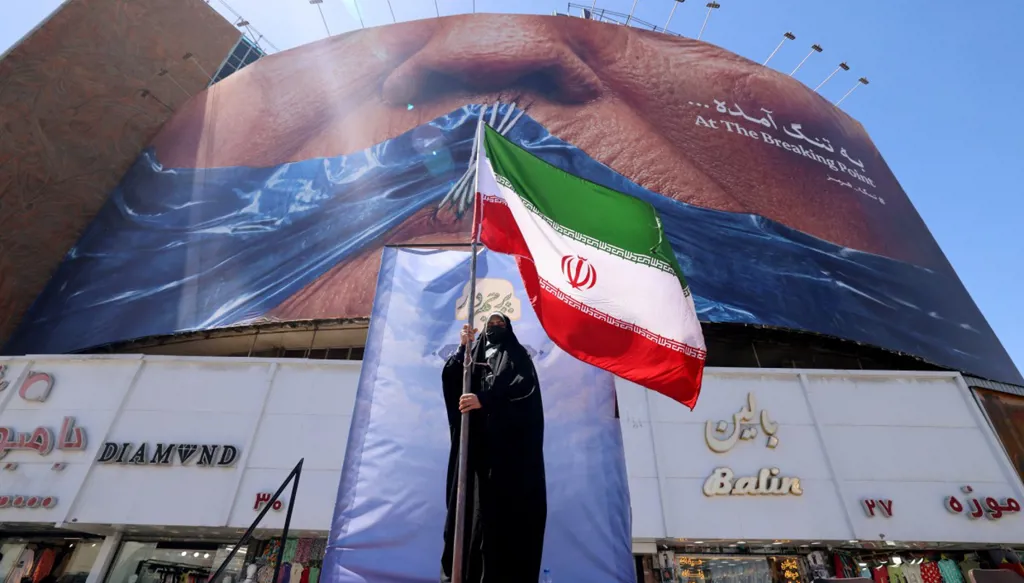


Days, or even hours, after Saudi Arabia, Kuwait, and the UAE were struck by “unknown” drones, Iranian President Masoud Pezeshkian once again referred to the Gulf states as “brethren.” At the outset of the current war, he had issued an apology to these countries, followed by continued strikes impacting the region.
While Foreign Minister Abbas Araghchi introduced the notion of a loss of command and control, he simultaneously began justifying the attacks as legitimate responses, effectively fabricating excuses for them.
Structural Problem?
A structural problem persists between the doctrine governing the Islamic Republic and its regional arms on one side, and the Gulf Cooperation Council states on the other. In this context, a video resurfaced featuring Iraqi “Popular Mobilization” leader Abu Mahdi al-Muhandis prior to his assassination in 2020, alongside Quds Force commander Qasem Soleimani, speaking in Farsi and expressing a wish, before his death, to see the “destruction of Saudi Arabia, not Israel.”
Iran’s so-called reformist or moderate figures, such as Mohammad Khatami and Ali Akbar Hashemi Rafsanjani, sought to open a “new page” with countries in the region. However, the underlying nature of the system ultimately prevailed over adaptation, and these approaches remained confined to a limited exception within a broader antagonistic posture adopted in Tehran toward the Gulf.
No evidence is required, whether in the “displays” of Iranian pilgrims, the presence of active and dormant terror cells, the threats and warnings issued by the Houthi group in Yemen, or the speeches of former Hezbollah Secretary-General Hassan Nasrallah, calibrated to the agenda of the Islamic Republic and its Supreme Leader.
Adhering to doctrine, principle, and established norms, Tehran did not hesitate, from the very first hours of a war launched by the United States and Israel, to target all six Gulf states with intensity and coordination. These actions were neither random nor frantic, but rather the product of a calculated plan and precise orders issued by decision-makers in Tehran. Even the claim that the attacks were carried out by a decentralized force that had lost contact with the center serves as an indictment, suggesting that those who lost direct command instinctively and, in line with prior conditioning, turned against the very “enemy” al-Muhandis had wished to see destroyed.
Geographical Burden
The Gulf states share a view of Iran as a geographic burden that has, since the establishment of the Islamic Republic, displayed its aggressive intentions without reservation. The Gulf Cooperation Council was founded in 1981, just two years after the Shah’s overthrow by “Khomeini’s state,” reflecting a collective awareness among the region’s countries of the need for a preemptive alliance against anticipated, even if delayed, aggression. Today, as GCC states confront this reality through iron and fire, they approach the unfolding events and their responses with varying speeds and interpretations.
When U.S. President Donald Trump announced on Monday that he had halted a military strike planned for Tuesday against Iran, he framed the decision as a response to requests from the leaders of Saudi Arabia, the UAE, and Qatar. Despite the threat posed by Iran, it is no secret that these countries, like others in the region, have sought to avoid the outbreak of such a war.
Despite the emergence of an almost official current advocating a response to Iranian attacks, the formal stance of these states, despite sharp divergences, has remained committed to avoiding engagement in a war, based on calculations that may not align with the region’s broader interests.
Whatever the outcomes of this war, and whatever form the resolutions that bring it to an end may take, any ceasefire reached within the terms of an agreement will not alter the nature of this regime, regardless of the scale of its losses, the extent of its concessions, or the sweetness of its rhetoric.
While the war may temper the tone of hostility and impose the constraints of post-war reconstruction, promising rapprochement and truce, the region’s own logic of security and prosperity requires GCC states to come together on firm foundations to avert the risks posed by this geographical burden, so long as they have yet to reach a unified agreement on countering its threats and curbing its destabilizing influence.
And if, within Iran’s regime, there are those who view the Gulf’s model of life as an existential contradiction, it may be equally permissible to regard this regime itself as an existential contradiction, one that will remain a threat to the entire Gulf region.
Disclaimer: The opinions expressed by the writers are their own and do not necessarily represent the views of Annahar.