

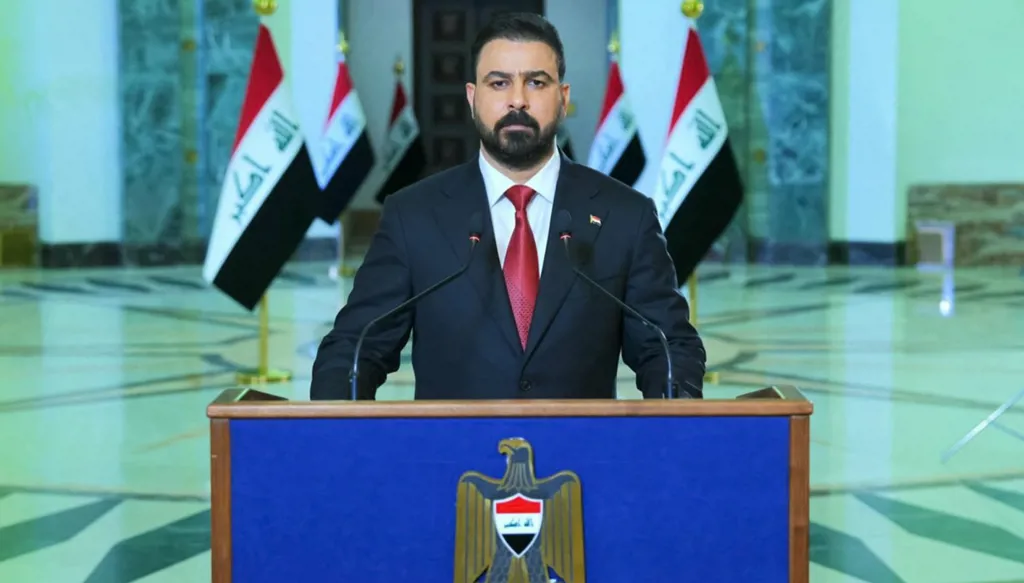
Iraq’s heavy burden: Prime Minister Ali Al-Zaydi faces armed factions and sovereignty crisis
As uncontrolled weapons challenge state authority and strain ties with Gulf nations, Iraq’s new government faces a defining test of sovereignty, security, and regional credibility.



 Messenger
 Whatsapp
 Threads
 Email
Email
 Print
Print
 X
X
 Facebook


Disarmament
Although Ali Al-Zaydi included disarmament in his ministerial program and demonstrated determination to establish a roadmap for resolving the issue, achieving it may prove difficult unless he moves decisively toward Tehran. Following the events of October 7, 2023, and the 40-day war in 2026 between the United States and Israel on one side and Iran on the other, it became increasingly evident that the operations and future of these weapons are tied less to Iraq’s national interests than to the requirements of Iranian influence and strategic interests.
The lords of these weapons are unlikely to respond to governmental, political, or even religious appeals, making it necessary for him to present a plan with clear timelines — particularly as he is expected to gain support from forces opposed to the dominance of weapons over decisions of war and state institutions. Such a plan must go beyond dismantlement or integration, and also address the institutional and societal divisions caused by parallel arms, the fractures within the pillars of the state, and the risks of civil conflict or clashes with official institutions, while ending Iran’s use of these groups to threaten regional security through operations targeting Gulf Arab states.
Targeting Saudi Arabia
The targeting of Saudi Arabia with three drones launched from Iraqi airspace on May 17 — just days after the Iraqi government secured parliamentary confidence — sent a direct challenge to Ali Al-Zaydi and his administration from armed factions, signaling that the decision of war remains monopolized by these groups. They possess the ability to undermine any progress in Iraq’s external relations, whether with Gulf, Arab, or Western states, placing Al-Zaydi’s government before a critical test of trust: preventing any group from threatening Iraq’s Arab neighbors.
The criminal attack against Saudi Arabia will serve as a measure of his ability to translate his ministerial program into a genuine state monopoly over arms, as well as his intentions to reshape relations between Baghdad and Riyadh, along with the rest of the Gulf capitals. These drones target Iraq, its people, and its national security before they target the neighboring Kingdom. They threaten every opportunity for stability and development for Iraq and its citizens. And while such attacks may serve the interests of one state, they ultimately inflict harm on many others — foremost among them Iraq itself.
Restoration