Iraq’s disarmament push: Can Baghdad rein in armed factions and restore state control?

Region 21-05-2026 | 08:40

Iraq’s disarmament push: Can Baghdad rein in armed factions and restore state control?

Behind-the-scenes negotiations, US pressure, and deep internal divisions are shaping a high-stakes effort to redefine the balance between the Iraqi state and powerful armed factions.


Iraq’s disarmament push: Can Baghdad rein in armed factions and restore state control?
Will Iraqi Shia militias affiliated with Iran surrender their weapons?
Smaller Bigger


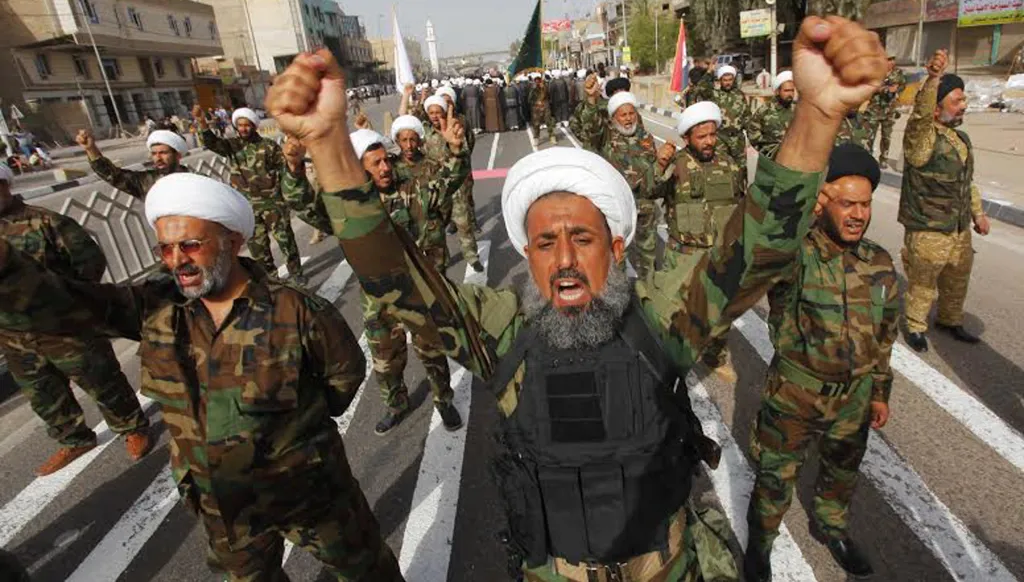
In one of the most sensitive and complex issues within the Iraqi scene, signs have intensified over the past few days of a real political and security move aimed at disarming several armed factions integrated within what are known as the “resistance factions.” This step is being described as potentially pivotal in reshaping the relationship between the Iraqi state and unofficial armed groups, amid growing American and international pressure to restrict weapons exclusively to the state, while linking any future political participation of these factions to their commitment to dismantling their armed structures and handing over their heavy and medium weapons to official institutions.


According to informed Iraqi sources speaking to “Annahar,” the current moves involve several prominent factions, most notably Asa’ib Ahl al-Haq led by Qais al-Khazali, the Imam Ali Brigades led by Shebl al-Zaidi, the Ansar Allah al-Awfiya movement led by Haidar al-Gharawi, and the Imam’s Army led by Ahmed al-Asadi, in addition to other factions being discussed for possible inclusion in later arrangements related to merger or restructuring mechanisms.

Understandings before government formation


Well-informed sources explained that “the disarmament process is being carried out under the direct supervision of the Commander-in-Chief of the Armed Forces, Iraqi Prime Minister Ali al-Zaidi, within complex political understandings formed during negotiations over the new government’s formation. Washington, they said, has set clear conditions related to weapons and armed factions in exchange for accepting the participation of some of these forces in the government, whether through ministerial portfolios or senior executive positions.”


They noted that “Asa’ib Ahl al-Haq is among the primary parties concerned with these understandings. Under the political agreements, the group is expected to receive the Ministry of Labor in addition to the position of Deputy Prime Minister. However, granting these positions has been postponed until after the completion of the weapon handover procedures and an official declaration committing to restricting weapons to the state, in an effort to provide both internal and external assurances that political participation will no longer remain tied to the presence of influential military wings outside the official security establishment.”


The sources revealed that “the current arrangements are not limited to the political aspect alone, but also include complex meetings and technical, logistical, and security preparations related to inventory and handover mechanisms, storage sites, and the transfer of weapons. They also involve establishing oversight mechanisms to ensure that weapons are not re-circulated or transferred to parallel formations. An official announcement of these steps is expected after Eid al-Adha, coinciding with the completion of the initial understandings between the government and the factions involved in the agreement.”


Informed Iraqi sources confirmed that “this movement is being closely monitored by the United States, with Washington pushing to ensure that the handover process is genuine rather than merely superficial. There are concerns that some factions may resort to handing over outdated or limited weapons while retaining other arsenals away from the state’s oversight, prompting proposals for continuous monitoring and follow-up mechanisms, some linked to Iraqi security agencies and others through undisclosed international coordination channels.”


Factions refusing


Conversely, not all Iraqi factions appear inclined to accept this path. Sources told “Annahar” that the “Hezbollah Brigades,” led by Abu Hussain al-Hamidawi, and the “Nujaba Movement,” led by Akram al-Kaabi, are clearly rejecting any disarmament project, viewing the weapons of the “resistance” as part of the regional deterrence equation tied to the conflict with the United States and Israel, as well as part of the “protection of Iraq” and the ideological security structure linked to Iran’s regional axis.


This division opens the door to broad questions about the Iraqi government’s ability to implement any genuine project aimed at restricting weapons to the state, particularly given the considerable political and military influence held by these factions, the entanglement of their interests within state institutions, the economy, and the security sector, as well as the complex regional connections that have made the issue of weapons one of the most sensitive matters in Iraq since 2003.


Strategic affairs expert Ali Nasser told “Annahar” that “any genuine path toward disarming or regulating the factions requires a stable political environment, internal and external guarantees, and broad national consensus, with the success of this path directly tied to the government’s ability to manage the complex balance between political forces and armed factions that possess both field and political influence.”


The relationship between the state and armed force

Ali Nasser noted that “the importance of this movement, if it develops into concrete executive steps, lies in its attempt to redefine the relationship between the state and non-regular armed forces, which has been one of the most significant challenges facing the Iraqi state since 2003. Restricting weapons to the state is not solely a security matter, but also extends to restructuring the balances of power and influence within the state’s own institutions.”


He added that “previous experiences in Iraq indicate that such files often run into intertwined political, regional, and security obstacles, with the success of any plan of this kind requiring strict oversight mechanisms, international guarantees, and unified political will within Baghdad, as well as addressing concerns related to the future of the factions and their place within the political system.”


Ali Nasser confirmed that “international pressure, particularly from the United States, plays an important role in pushing this file to the forefront, but on its own is not enough to ensure success unless accompanied by genuine internal consensus. Care must also be taken to ensure that the absence of such consensus does not leave the issue confined to the realm of incomplete statements and unimplemented agreements.”


He concluded by saying that “the current phase represents a real test of the Iraqi state’s ability to assert its security sovereignty, as the transition from political discussion to practical implementation remains dependent on developments within the domestic scene in the coming period and the willingness of the parties involved to move toward a comprehensive settlement.”