

The return of nuclear threats in the Middle East
From deterrence to normalization, the war is reshaping global red lines, bringing nuclear weapons and the logic of mutual destruction back to the center of Middle East strategy.



 Messenger
 Whatsapp
 Threads
 Email
Email
 Print
Print
 X
X
 Facebook


One of the unexpected outcomes of Iran’s war is the growing normalization of nuclear weapons as a military option, along with a drift toward mutual destruction even without their use.
Since World War II, humanity has grown accustomed to the belief that the use of the atomic bomb is nearly impossible, given the devastation caused by the U.S. bombings of Hiroshima and Nagasaki. This perception was further reinforced by the doctrine of fear known as Mutually Assured Destruction between the Soviet Union and the United States during the Cold War.
Nuclear disposal of uranium?!
In past decades, fears of Tehran acquiring nuclear weapons emerged as a primary driver behind the war on Iran. Yet the paradox is that preventing Iran from developing an atomic bomb has, in turn, become a justification for considering the “tactical” and “limited” use of nuclear weapons by the United States and Israel to eliminate Iran’s stockpile of uranium enriched to 60 percent.
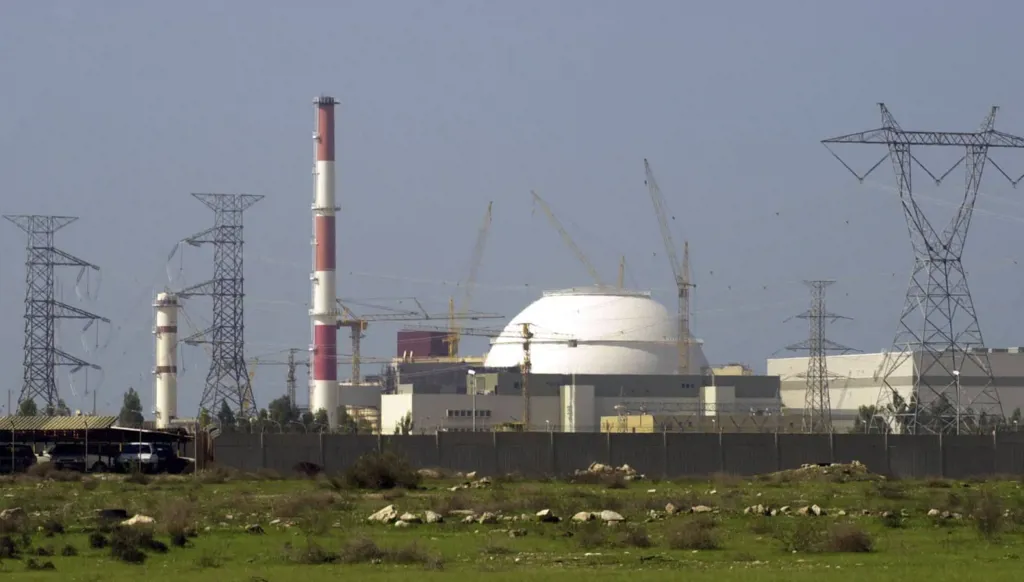
This scenario has been proposed since June 2025, despite widespread recognition that targeting Iranian nuclear facilities, particularly the Bushehr Nuclear Power Plant, carries the risk of radioactive leaks reaching Gulf countries due to their geographic proximity.
During the current war, Donald Trump’s escalating rhetoric has heightened the credibility of the possibility that Washington might resort to nuclear weapons. However, the American president has also ruled out their use, stating that the United States does not need them, as it has, according to his own claims, already “destroyed” Iran’s full military capabilities using conventional weapons alone.
However, he also hinted at the possibility of resorting to the nuclear option when he threatened to send Tehran “back to the Stone Age,” and when he warned that if no ceasefire is reached, the world could witness “one big glow” coming from Iran.
Nuclear outside the taboos
Gradually, a broader climate has taken shape that has pulled nuclear weapons across the region out of the realm of taboos. It is no coincidence that the war has stripped away the American curtain of silence surrounding Israel’s nuclear program, significantly eroding the strategic ambiguity long maintained by United States while shifting the spotlight beyond the Iranian threat alone.
The possibility of Israel resorting to nuclear weapons entered the American policy debate during the war on Iran, when David Sacks, a White House advisor, raised the scenario in March, warning that if Israel failed to withstand Iranian attacks, it might contemplate escalating to nuclear use.
President Donald Trump implicitly acknowledged Israel’s possession of nuclear weapons when he stated that it would “never” resort to them. What remained of the wall of silence began to collapse when roughly thirty Democratic members of United States Congress sent a letter to the administration, demanding disclosure of the nature of Israel’s nuclear program and raising concerns about the possibility of its use against Iran.
They noted in their letter that a member of the Israeli government had hinted, following the outbreak of the war in Gaza, at the potential use of an atomic weapon as one of the “available options.” For its part, Iran has shared with Israel a similar pattern of “strategic ambiguity” surrounding its nuclear program, although experts widely believe that Tehran possesses around 11 tons of uranium at varying levels of enrichment, enough, in theory, to produce up to a hundred nuclear bombs.
Within the deterrence doctrine surrounding the nuclear standoff between Iran and Israel lies the so-called Samson Option, the idea of “dying with one’s enemies,” rooted in the perception of an existential threat. This concept has been part of Israel’s strategic thinking since the development of its nuclear program in the 1960s, reinforced by reports suggesting it considered such use during the Six-Day War. A parallel logic can be observed in Tehran’s approach, particularly when it threatened to enrich uranium to 90% following the failure of Pakistani mediation, reflecting what is often described as a “revolutionary mentality” shaped by a desire to challenge regional and international systems seen as contrary to its interests.
While awaiting a path to acquiring the bomb, Iran finds in the potential choking of the Strait of Hormuz a sufficient alternative, as the war leaves behind a growing normalization of nuclear weapons and the notion of "Mutually Assured Destruction."
Disclaimer: The opinions expressed by the writers are their own and do not necessarily represent the views of Annahar.