

Iraq’s new government faces an old crisis as Iranian influence tightens grip on Baghdad
Iraq’s new government takes power amid deepening political paralysis, growing Iranian influence, and mounting public frustration over corruption, failing services, and the absence of accountability—raising fresh questions about whether Baghdad’s post-2003 political system can still survive.



 Messenger
 Whatsapp
 Threads
 Email
Email
 Print
Print
 X
X
 Facebook
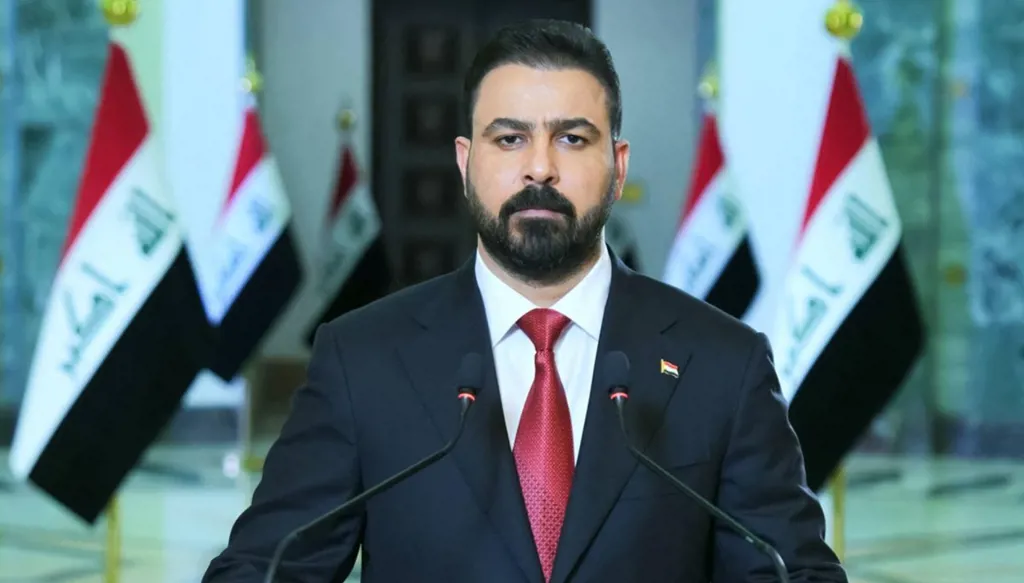


A new Iraqi government has recently been formed under the leadership of Ali al-Zaidi, who acknowledged in his first speech, following his government’s vote of confidence, the state of “slackness” affecting a country still searching for a different political system.
Absent accountability
Iraq is genuinely suffering from political bankruptcy at every level. This bankruptcy, experienced by Kurds, Sunnis, and Shiites alike, is perhaps best reflected in the appointment of Nizar Amidi to the presidency. Amidi carries little political weight, whether Kurdish, Iraqi, or regional, and can barely be considered part of the country’s second- or third-tier leadership, even among the Kurds.
What applies to the President also applies to the Sunni Speaker of Parliament, Haybat al-Halbusi. The same can be said of the Prime Minister, who emerged from the circle of businessmen and financiers tied to contracts with state institutions—contracts that remain highly controversial.
One cannot ignore the fact that the “Coordinating Framework,” which constitutes the largest parliamentary bloc, would not have been able to reach a consensus among its leaders and nominate Ali al-Zaidi as Prime Minister without direct Iranian intervention through the commander of the Quds Force, Ismail Qaani, the successor to Qasem Soleimani.
Moreover, the “Framework” was unable to overcome the veto imposed by Donald Trump on Nouri al-Maliki returning to the position of Prime Minister.
Future of the system
Much will ultimately depend on the outcome of the ongoing conflict involving Iran on one side and the United States and Israel on the other. This is because the future of Iraq’s current political system is closely tied to the future of the Iranian regime and its ability to maintain influence in Baghdad.
Disclaimer: The opinions expressed by the writers are their own and do not necessarily represent the views of Annahar.