

U.S. Treasury: Expands sanctions on Iran-linked individuals, entities, and shipping network
Washington intensifies financial pressure on Tehran, targeting shadow banking systems, oil trade intermediaries, and cryptocurrency channels while pledging tighter enforcement against sanctions evasion.



 Messenger
 Whatsapp
 Threads
 Email
Email
 Print
Print
 X
X
 Facebook
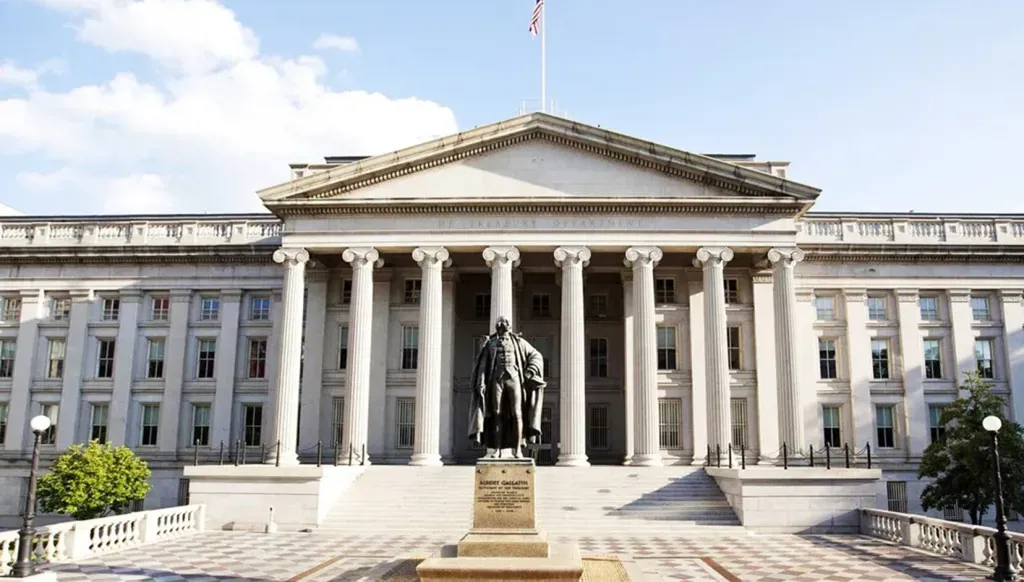


The US Treasury imposed sanctions on 12 individuals, 29 entities, and 19 vessels linked to Iran.
Scott Bessent, the US Treasury Secretary, revealed that there were “fruitful discussions” about Iran and the crisis in the Strait of Hormuz during G7 meetings, confirming that Washington is working in coordination with its allies to intensify financial pressure on Tehran.
Bessent said that the United States aims to “eradicate Iran’s shadow banking networks,” noting that the administration is working to support international financial institutions in disrupting financing operations for Tehran and reducing its ability to circumvent sanctions.
He added that Washington expects broad European support for tightening sanctions on Iran, explaining that coordination with European partners includes efforts to block Iran’s financiers and close branches of banks linked to it.

Bessent confirmed that the United States will make sanctions evasion “more complicated” for Iran, as part of a strategy aimed at tightening the financial and commercial channels that Tehran relies on to access the global financial system.
In a related context, the US Treasury Secretary said that his country will continue “relentlessly” targeting shipping networks and intermediary companies involved in the sale of Iranian oil, as part of a policy aimed at cutting off Tehran’s sources of funding.
He explained that the United States has successfully frozen more than half a billion dollars in cryptocurrency linked to Iran, noting that this step is part of broader efforts to track down non-traditional financial channels used to bypass sanctions.
Bessent added that US measures have disrupted Iran’s access to billions of dollars in oil revenue, confirming that Washington is directly targeting intermediary networks that facilitate export operations outside the traditional financial system.