

British military moves in the Middle East: Defensive posture or expanding role?
Recent UK deployments and political messaging suggest a limited deterrence strategy focused on maritime security, yet regional volatility keeps the potential for mission expansion open.



 Messenger
 Whatsapp
 Threads
 Email
Email
 Print
Print
 X
X
 Facebook
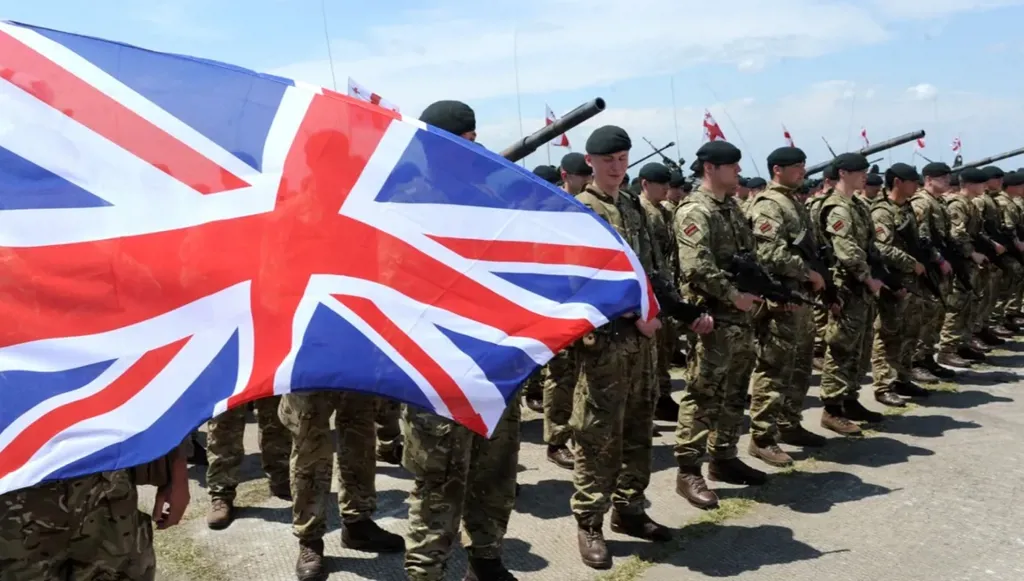


In a region where security equations are changing rapidly, it is difficult to treat any Western military move in the Middle East as merely a technical measure or an isolated step detached from broader political contexts.
Within this framework, the recent British announcement on 16 May 2026 regarding the deployment of low cost counter drone systems, along with Typhoon fighter jets, a destroyer warship, and mine detection equipment, has raised many questions about whether London is moving toward a greater military role in the region or acting within a limited defensive framework linked to protecting international shipping.
Current indicators appear closer to a move within a limited defensive framework, as the nature of the military capabilities Britain announced it would deploy does not reflect preparations for a broad military campaign or a direct offensive alliance against Iran, but rather suggests an attempt to strengthen maritime protection and deterrence systems.
The focus on means of intercepting drones, removing mines, and securing shipping lanes shows that the immediate priority is ensuring the continued flow of international trade and protecting ships in one of the most sensitive waterways in the world.
Usually, when major powers move toward preparing for large scale military operations, clearer indicators emerge, including a broad buildup of offensive aircraft and bombers, a significant increase in troop deployments, raising alert levels across multiple bases, in addition to more explicit political discourse about deterrence options or the use of force. So far, however, these indicators do not appear strongly enough to suggest that the region is heading toward a large-scale confrontation.