Gulf states redraw their security strategy as Iran war threat reshapes the region

Opinion 18-05-2026 | 14:45

Gulf states redraw their security strategy as Iran war threat reshapes the region

From intercepting missile attacks to uncovering covert networks and preparing alternatives to the Strait of Hormuz, Gulf nations are undergoing a major strategic shift as fears grow that a renewed Iran conflict could transform Middle East security and energy dynamics.


Gulf states redraw their security strategy as Iran war threat reshapes the region
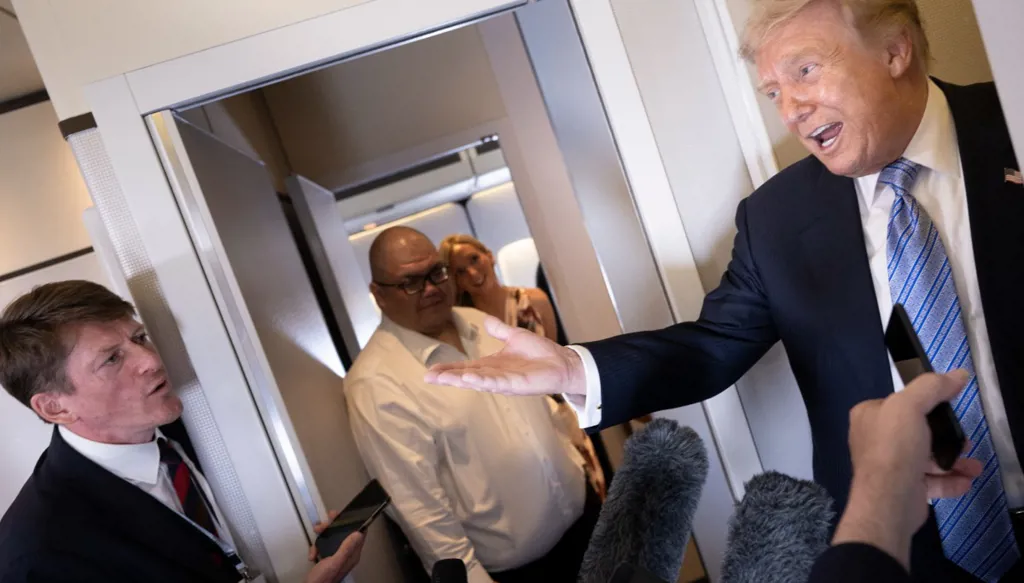
U.S. President Donald Trump (AFP).
Smaller Bigger


The Gulf Cooperation Council countries maintained a consistent policy regarding the war on Iran. They rejected it out of concern for regional security and stability, called for its cessation, and supported negotiations to bring it to an end. During the war, these countries condemned the attacks they faced, whether launched by Iran or allied Iraqi factions, asserting their natural and legal right to defend their people, sovereignty, and territory. They also rejected Tehran’s claims that it was responding to U.S. attacks by targeting American bases in the Gulf region, particularly after it became clear that Iran had deliberately targeted civilian areas, including airports, hotels, and residential neighborhoods, carrying out more attacks against them than against Israel, whose aircraft roamed freely across Iranian skies and throughout its territory.

From monitoring to confrontation


However, the targeted Gulf capitals gradually moved from merely monitoring missile and drone attacks to announcing that they were “dealing with them,” meaning confronting and intercepting them with their own capabilities. Tehran thus confirmed that a shift had taken place in the Gulf’s regional defense posture. This was neither a sudden change nor the result of rushed armament, but rather reflected a strategic political decision. Tehran had asked its neighbors to intervene with Washington to avert the war, and they did, fully aware of the expected security, economic, and political repercussions. Yet Washington had already made its decision. Tehran, however, failed to acknowledge the efforts made by the Gulf states, and its attacks revealed intentions that went beyond merely responding to America and its bases in the Gulf.


Iran’s actions did little to conceal its motives and longstanding grievances, which have long been well known. Yet its neighbors exercised restraint and avoided falling into the “historical mistake” Tehran itself had made. Riyadh and Abu Dhabi did not comment on reports in American and British newspapers alleging that they had struck targets either inside Iran or against its allied Iraqi factions. Still, beyond denial or confirmation, it has become increasingly clear that Gulf responses may not remain unchanged if the war resumes and Iran continues its attacks, as it did even during the ceasefire period. Gulf policy has remained grounded in clear constants: it neither sought this war, nor wished to be a party to it, nor incited it, nor favored its continuation or escalation. However, mounting indicators and realities now compel the Gulf states to prioritize self-defense and demonstrate their deterrent capabilities, regardless of the “objectives” the United States and Israel may seek to achieve.


Uncovering terrorist networks


The recent emergency meeting of the Gulf interior ministers was among the most significant of these indicators, underscoring the need to strengthen security coordination among the Gulf Cooperation Council states, particularly as their relevant agencies have demonstrated notable effectiveness in uncovering networks and cells linked to the “Iranian Revolutionary Guard.” The objective is clear: to penetrate the Gulf states’ security apparatus and create instability in tandem with attacks targeting them. Recently, Kuwait (12.05.2026) announced the discovery of Revolutionary Guard elements that had infiltrated Bubiyan Island, while Bahrain (09.05) revealed the dismantling of a sabotage network and the arrest of 41 suspects. Earlier, two cells were uncovered in Qatar (early March), and the UAE disclosed during March and April the exposure of “two terrorist organizations,” one allegedly linked to the Guard and the other to the Lebanese Hezbollah. Dr. Sultan Al-Nuaimi, Director of the Emirates Center for Strategic Studies and Research, pointed to the emergence of more than 12 Iranian cells within just 27 days, noting that these “are not isolated or sudden incidents, but rather pre-planned and trained operations awaiting zero hour,” when conditions become ripe for their transition into operational activity.


Among the other indicators prompting Gulf states to undertake a broad reassessment of their defense and economic policies is Iran’s continued insistence on closing the Strait of Hormuz, even as negotiations are ostensibly aimed at ending the war. Such threats revive memories of similar warnings repeatedly issued by Iranian leaders, including Qasem Soleimani, who framed them as “punishment” for the oil-producing Gulf states in response to U.S. sanctions on Iran. Yet such a measure, particularly if met with an American blockade, appears aimed less at retaliation than at reinforcing Iranian dominance over the region, extending beyond control of this vital international waterway. At the same time, Tehran has continued to announce proposed “regulations” governing the strait, including the imposition of transit fees on passing vessels, disregarding the extent to which such actions strain its relations with both the region and the wider international community, further complicating negotiations and delaying an end to the war. In response, Saudi Arabia and the UAE are actively examining practical alternatives that would reduce dependence on the Strait of Hormuz, whether through expanding oil exports via the Red Sea or through pipeline routes extending to the Gulf of Oman.


The prevailing expectation in Washington, as well as in Israel’s “wishes,” is that the war will return, although it remains uncertain what it could ultimately achieve. No positive developments have emerged from the U.S.-Chinese talks that would suggest a breakthrough in negotiations, while fresh doubts have surfaced over the continued reliance on the Pakistani mediator. Iran continues to maneuver in an attempt to emerge “stronger” than before, whereas the Gulf states have absorbed the lessons of war and have already changed, and are likely to change even further.