The Taliban’s Afghanistan: The dangerous illusion of divine rule

Opinion 18-05-2026 | 10:35

The Taliban’s Afghanistan: The dangerous illusion of divine rule

Behind claims of liberation and Islamic revival lies a complex reality of authoritarian control, ideological expansion, and lessons the world cannot afford to ignore.


The Taliban’s Afghanistan: The dangerous illusion of divine rule
Taliban... Divine Mandate?
Smaller Bigger

The Afghan model remains an example worth pausing on to draw lessons from, as though it embodies the story of the “bear that killed its owner”: its aim was to swat the fly from its owner’s face, yet it killed him through poor judgment. Many groups that come to power act in much the same way, raising slogans of serving the nation and advancing it, only to reveal over time that their true project was never about nation-building, but rather about reshaping it according to their own worldview. The actual outcome is often a state of stagnation and regression, sustained by exaggerating alleged achievements and deepening hostility toward the previous era. In this context, attempts to forge a new national identity become a process of constraining the nation and its people, classifying them as loyal or oppositional based on their allegiance to the ruling group rather than to the nation itself.

"Taliban" as a divine group

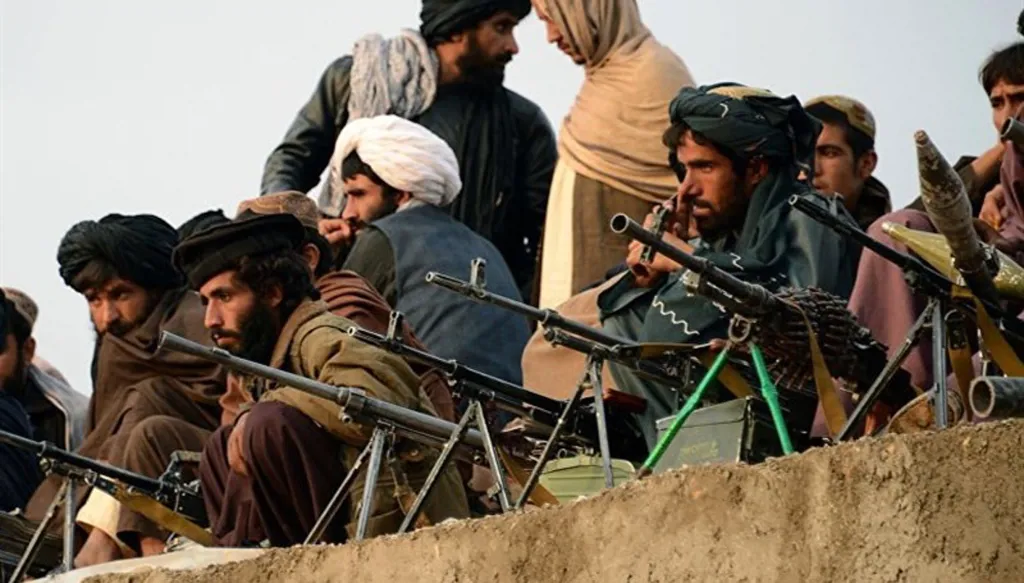
The situation becomes even more dangerous when the ruling group presents itself as the “savior” endowed with a divine mandate, turning its fundamentalist ideas into sacred truths beyond question and justifying its authoritarian practices under the guise of protecting religion or defending a divine project. This is clearly manifested in the experience of the “Taliban” movement, widely regarded as an armed religious group whose worldview, as sociology explains, is shaped by its position at the Pashtun tribal frontiers and by the Deobandi religious school. This has led it to perceive itself as possessing divine legitimacy derived from “divine support” to enforce Sharia. From this standpoint, the movement places little value on the concepts of democracy or the will of voters, believing that its legitimacy is not measured by the people’s votes but by its adherence to what it considers divine commands drawn from the Quran and Sunnah. This explains its attachment to an exclusive form of authority that sees itself as the guardian of society, entrusted with establishing an Islamic state in which sovereignty belongs solely to God, with the movement acting as the executor of that sovereignty on earth.


Under divine authority

Between 18,000 and 23,000 fighters affiliated with more than 20 extremist groups operate within Afghanistan, raising questions about what has made the country such an attractive arena for these organizations. While some reports suggest that fighters from Uyghur, Tajik, and Uzbek groups returning from Syria have found a safe haven in Afghanistan while escaping security crackdowns in their home countries, the issue is not solely linked to geography or state weakness, but also to the nature of the authority currently in power. The governing structure seeks to present the Islamic Emirate as a “divine” model available for export, granting these groups a sense of protection and legitimacy under its umbrella. This is particularly evident in its relationship with “Taliban Pakistan,” which the Afghan movement appears to employ as a tool for pursuing objectives with national and ethnic dimensions cloaked in religious discourse, such as invoking the concept of “jihad” to serve Pashtun nationalist tendencies and expand its influence across the region.

The discourse of the divinely supported group

During the current phase, the “Taliban” media machine—particularly through social media platforms in multiple languages—focuses on promoting a narrative that portrays the movement as a state that successfully restored Islamic identity, liberated itself from Western domination, and achieved victory over the United States. However, this discourse demands rigorous analytical and critical scrutiny to deconstruct it and expose its ideological exploitation of the Afghan experience. Its danger lies in the fact that its influence does not remain confined to Afghanistan, but extends into the Arab world, where it resonates with segments of youth who view the “Taliban” experience as an ideal model to emulate, rather than as a complex experiment that must be critically examined and learned from. Hence, there is a pressing need to build a level of knowledge-based awareness capable of distinguishing between slogans and lived reality, as fascination with ideologically charged models—without deconstructing their political and social foundations—may open the door to reproducing the same crises within our own societies.


Disclaimer: The opinions expressed by the writers are their own and do not necessarily represent the views of Annahar.