

Millions of cubic meters of rubble: who will manage the aftermath of war in Lebanon’s south?
Postwar reconstruction and rubble management across Beirut’s southern suburbs and southern Lebanon




 Messenger
 Whatsapp
 Threads
 Email
Email
 Print
Print
 X
X
 Facebook
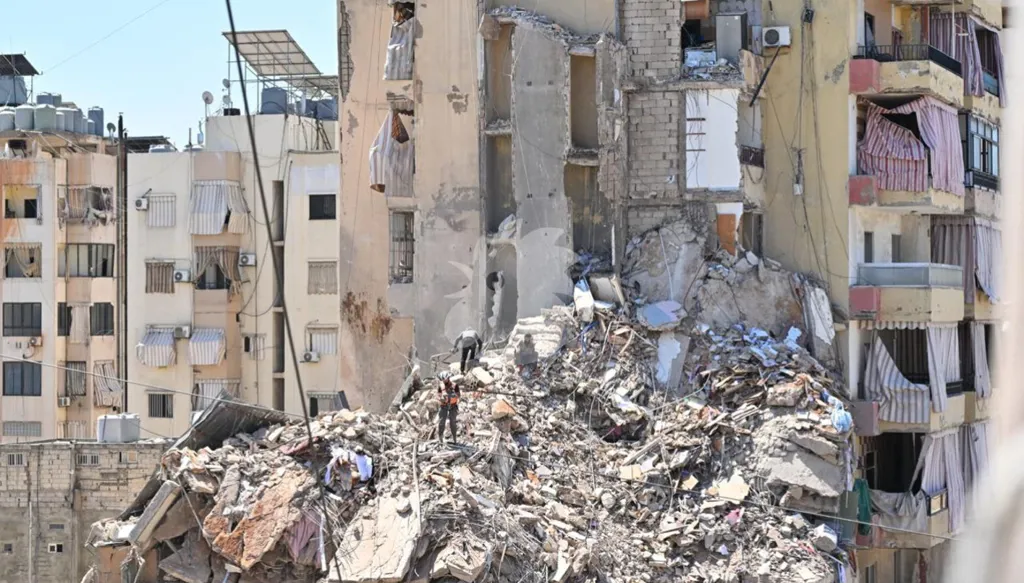


As soon as the announcement of the end of hostilities is made, a new phase will begin in the southern suburbs and South Lebanon, centered on removing the effects of destruction, opening roads, and managing millions of cubic meters of rubble spread between neighborhoods and towns. The debris is not merely accumulated stones and cement; it is a daily image that summarizes the scale of losses left by the war and places the state, municipalities, and relevant authorities before a major undertaking that extends from clearing and sorting rubble to transporting and processing it. This raises many questions about the fate of millions of cubic meters of debris, who will remove it, who will bear the cost, and who will benefit from the extracted iron and concrete. It also raises whether the rubble can be turned into a resource that reduces the financial burden on the state.
Former minister Nasser Yassin points out that in the previous war, tenders were carried out that included removing, processing, crushing, and transporting debris, in exchange for companies obtaining the iron extracted from buildings. He considers that the prices submitted by companies were low and acceptable. Meanwhile, the use of rubble in reinforcing and expanding Costa Brava was a practical solution for dealing with these quantities.
Yassin estimated the amount of debris from the previous war (2023 to 2024) at 17 million tons, relying on a World Bank report that assessed the cost of its removal and processing at about 105 million dollars, to be financed through a loan from the LEAP project.
What about the current war?
According to the head of the Union of Municipalities of the Southern Suburbs, Mohammad Dargham, the data is still changing on a daily basis, which makes it difficult to calculate the final quantities before the removal of damaged buildings is completed. He notes that the Council of Ministers had tasked, in 2024, the Union of Municipalities of the Southern Suburbs with managing the rubble file, and that the decision is still in effect today.
Dargham confirms that the file has been managed through an official tender rather than direct award by mutual agreement, although this option could have been adopted. He explains that the tender complied with the public procurement law after the state set a price ceiling at 6 dollars per cubic meter, while the contract was awarded at 3.61 dollars per cubic meter.
As for the fate of the rubble, Dargham explains that most of it was transported to Cell 3 at the Costa Brava landfill, which is affiliated with the Council for Development and Reconstruction, where suitable fill materials are used to support and expand the landfill. According to the available data, the project requires around 1.5 million cubic meters of suitable fill material for these works.
However, the current rubble file is inseparable from the legacy of the previous war. According to Dargham, the estimated rubble generated from the previous war reached about 1.2 million cubic meters, while preliminary estimates for the current war suggest that the quantities may reach about half this figure, as field inspections and assessments continue.
During the previous war, the debris from 373 completely destroyed buildings in the southern suburbs was removed, whether due to the war or for public safety reasons, meaning that around 1.2 million cubic meters of rubble were cleared in the southern suburbs.
As for the operational mechanism, it relied on a main contractor in the suburbs, the company Al Bunyan, alongside secondary contractors who handled rubble removal from groups of buildings. The work included crushing the debris and extracting iron from it, while the concrete was transported to property number 338 in Ouzai, a property belonging to the Ministry of Public Works and managed by the Union of Municipalities.
What is the fate of the rubble in the south?
In the south, the situation appears more complex, as the head of the Council for the South, Dr. Hachem Haidar, confirms that the decision has not yet been settled regarding the fate of the rubble and debris, which are increasing daily with the continuation of Israeli attacks. He notes that the work will begin as soon as a ceasefire is in place, in parallel with the preparation of tenders for removing the debris, which are expected to fall under the responsibility of the Council for the South. He explains that the tenders from the previous war were awarded to Beta Engineering and Elie Naim Maalouf at prices ranging between approximately 2.5 and 3 dollars per cubic meter.
What about the role of the Ministry of Public Works?
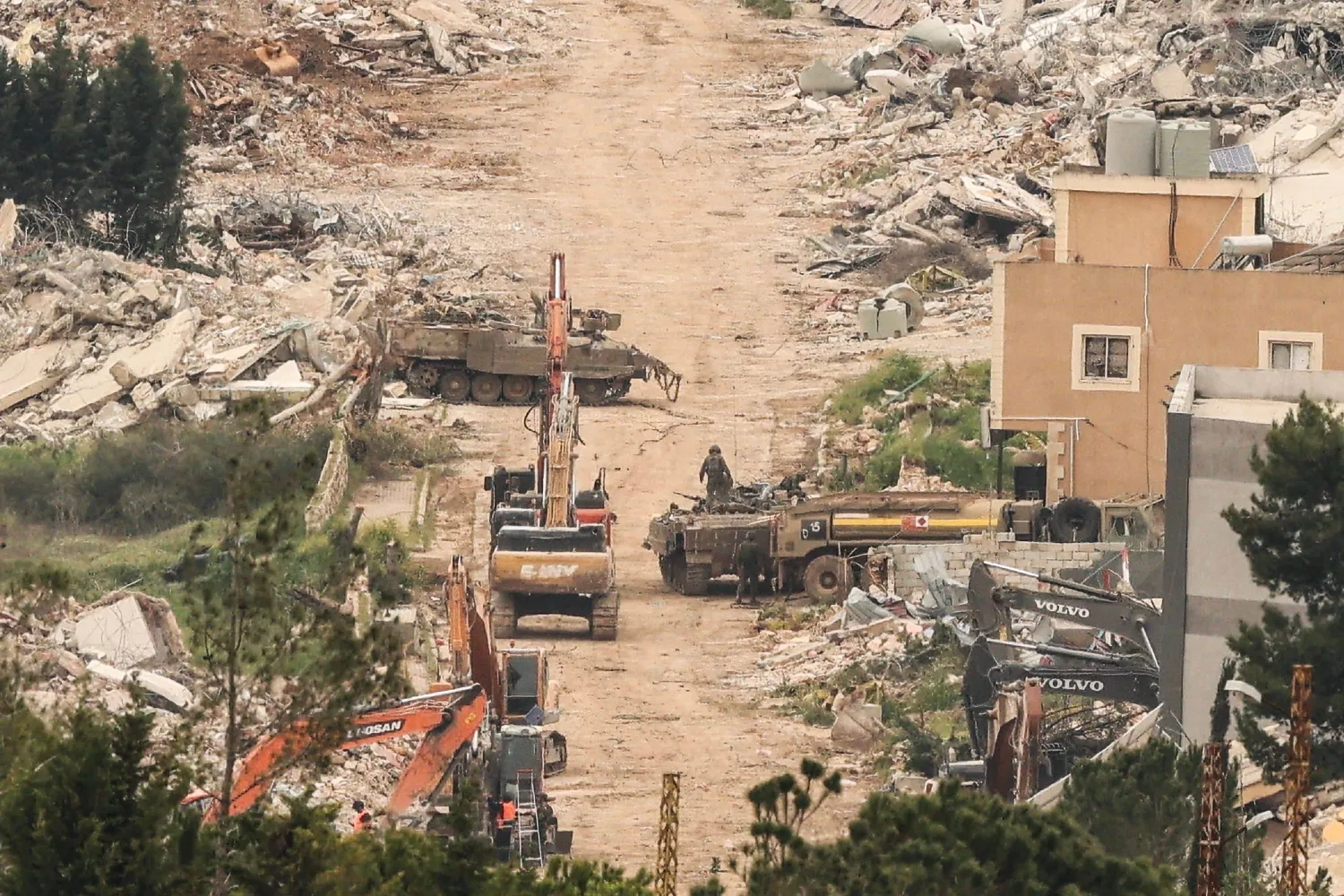
The regional director of Public Works in the South, Haitham Bazzi, explains that the ministry is working according to an emergency plan approved by the Council of Ministers under Decision No. 4 issued on 23 April 2026. The plan includes three main components: removing rubble and debris, securing temporary access routes in areas where bridges were damaged, and preparing the necessary studies for reopening roads and rebuilding bridges after the end of the war.
Bazzi notes that ministry teams have worked in around 50 towns south of the Litani River, but their role has been limited to pushing rubble to the sides of roads and clearing passages, without fully removing debris. He explains that full removal requires different procedures, most importantly dealing with iron, obtaining approvals from property owners and occupants, especially given the possibility that documents, belongings, or safes may be buried under the rubble.
According to Bazzi, the ministry has so far managed to clear about 30,000 cubic meters of debris during this war, compared to 90,000 cubic meters during the previous war, not including villages that were inaccessible in Tyre, Marjayoun, and Bint Jbeil.