

China’s quiet pressure on Iran and the Hormuz calculus
Beijing relies on subtle diplomatic and economic tools to contain escalation, prioritising regional stability and secure trade routes over reshaping the balance of power in the Middle East.



 Messenger
 Whatsapp
 Threads
 Email
Email
 Print
Print
 X
X
 Facebook
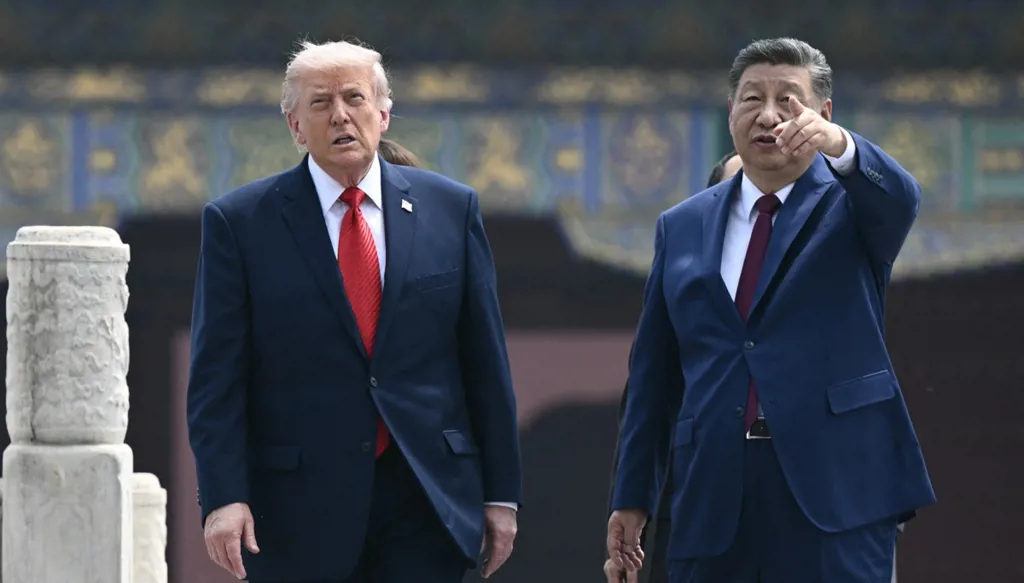


The international community and the global economy have placed hopes on the visit of US President Donald Trump to China and his meeting with his counterpart Xi Jinping, on the basis that the US Chinese talks could, in one way or another, lead to easing tensions in the Middle East, and perhaps reopening the Strait of Hormuz and securing maritime navigation, ultimately reaching an end to the war through an agreement, given that Chinese interests are tied to the interests of the Middle East and the global economy.
Trump is counting on China’s ability to pressure for the reopening of the Strait of Hormuz. China is considered the biggest victim of the closure of the Strait of Hormuz because it benefits from energy supplies from Gulf countries and Iran, which exports oil to it at prices lower than market rates. From this standpoint, China has an interest in reopening the maritime passage, and it also had a role in the Pakistani diplomatic effort to try to reach an agreement behind the scenes.
Chinese pressure on Iran does not mean that Iran acts under Chinese directives, but there are shared interests in maintaining certain balances. However, the cost of China pressuring Iran to reopen Hormuz is high for Trump. China also has interests that it wants the United States to work toward, including those related to tariffs that have led to a decline in Chinese exports to the United States, as well as the Taiwan file and de-escalation.
Reopening the Strait of Hormuz
The head of the Silk Road Institute for Studies and Research, Waref Kumayha, discusses China’s approach to the Iran war and its repercussions, telling Annahar that Beijing does not deal with the current escalation as merely a confrontation between Washington and Tehran, but rather as a test of the stability of the international economic system and the safety of trade routes on which the Chinese economy fundamentally depends.
There are strategic relations linking China and Iran, along with a tactical partnership tied to China’s vision of the international order and global balances, particularly in the Middle East. Iran constitutes a key source of energy for China and a corridor for the Silk Road toward the Middle East. It is also a major military ally and an integral part of China’s policies and equations opposing the West, within the frameworks of the Eastern camp and the Global South and their international systems.
Accordingly, Beijing refuses to see Tehran weakened. For this reason, reports have indicated Chinese military supplies to Iran. China is concerned with finding solutions in the Middle East because any prolonged disruption in the Gulf or the Strait of Hormuz would directly affect energy prices and global supply chains that China benefits from, according to Kumayha, who says China wants to prevent any major destabilization that could harm its industrial and commercial growth.