

Global economy under pressure: Energy, trade routes, and the new competition for supply chains
As disruptions in energy markets and maritime routes intensify, major powers are increasingly competing over trade corridors, resources, and supply chain control, making the Trump–Xi summit a reflection of shifting global economic balance.



 Messenger
 Whatsapp
 Threads
 Email
Email
 Print
Print
 X
X
 Facebook
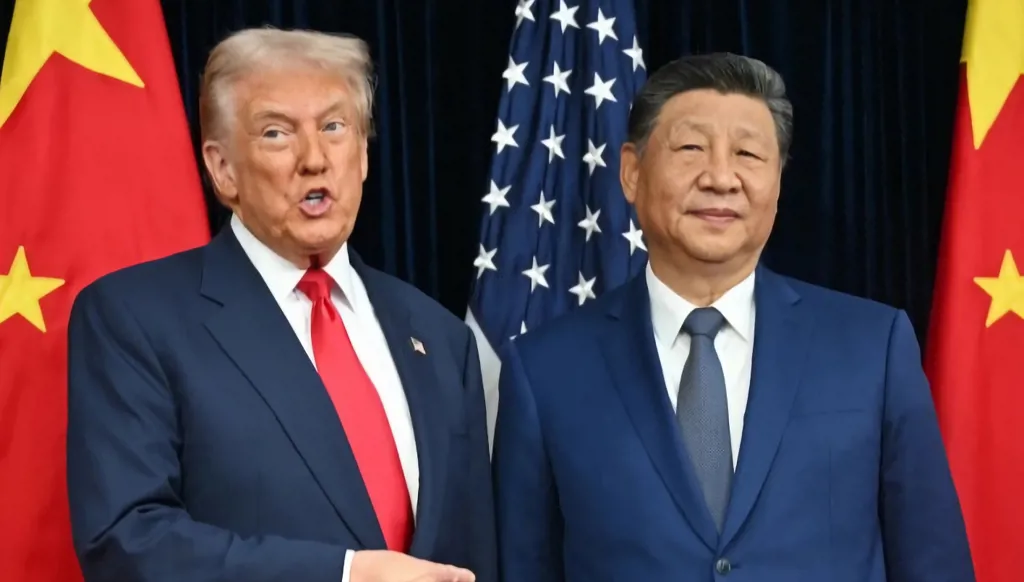


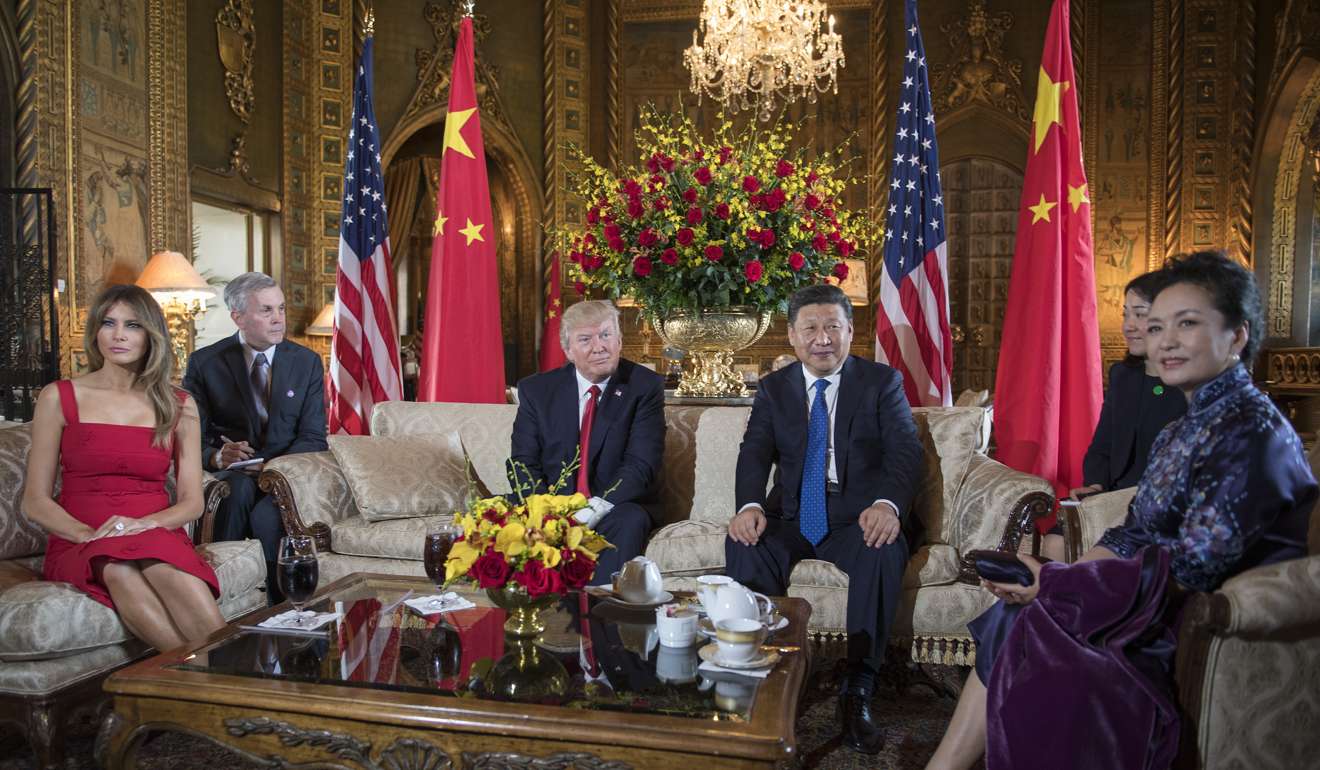
At the Beijing summit between U.S. President Donald Trump and his Chinese counterpart Xi Jinping, tariffs or Taiwan are not the only issues on the table. The war with Iran, which has escalated into a military confrontation in the Arabian Gulf, has quickly turned into a crisis that affects the very core of the global economy: oil, maritime shipping, energy, supply chains, and even the future of trade routes competed over by the United States and China.
The summit, held on May 14 and 15, comes at a highly sensitive time. Relations between Washington and Beijing are already going through an unprecedented phase of trade and technological tension, while China finds itself facing a direct threat to one of the most important lifelines of its economy: the Gulf and the Strait of Hormuz. Despite all the talk about economic “decoupling,” the numbers still tell a different story. The volume of goods trade between the two countries in 2025 reached about 414.7 billion dollars, including more than 308 billion dollars in U.S. imports from China, compared to 106 billion dollars in U.S. exports to China. In other words, the U.S. trade deficit still exceeds 202 billion dollars.
The question of dominance
But the problem today is no longer just a trade deficit. The battle has become much broader: who will control the next global economy? Who owns rare earth minerals? Who controls semiconductors? Who secures energy and sea routes? And who has the ability to choke supply chains when needed?
Over the past two decades, China has built enormous industrial power. It dominates a large share of the refining of rare earth elements, as well as the battery, solar energy, and industrial magnet sectors used in electric vehicles, aircraft, and even military industries. In contrast, the United States still holds the major financial and technological levers of power: the dollar, sanctions, advanced technology, and naval fleets. However, the Iran war has revealed that both sides are more vulnerable than they appear.
China in particular seems to be in a sensitive position. It is the world’s largest importer of crude oil, with imports exceeding 10 million barrels per day. International estimates suggest that in 2025 Beijing imported around 1.38 million barrels per day of Iranian oil, representing the bulk of Iran’s oil exports. For this reason, China does not view Iran merely as an oil supplier. For Beijing, Iran is a key piece in the broader map of the Belt and Road Initiative, as its geographic location provides China with a corridor linking the Gulf to Central Asia, Turkey, the Caucasus, and ultimately Europe. It is also an important part of the routes through which China seeks to reduce its dependence on maritime pathways that the United States can influence militarily.
Iran and the Belt and Road
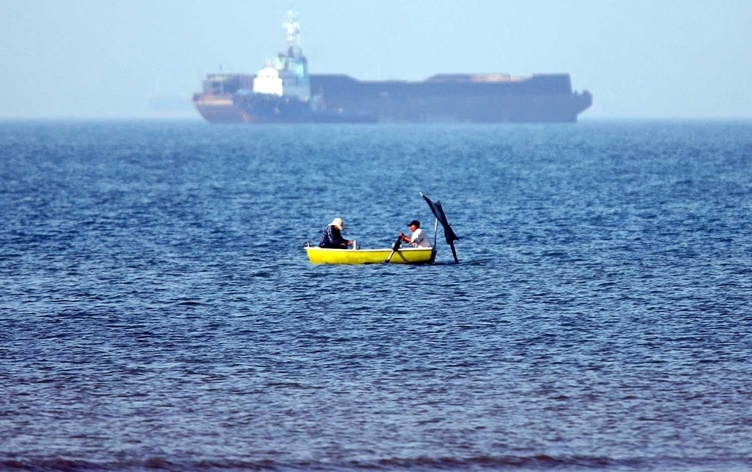
It is true that the Belt and Road Initiative will not collapse if the Iranian regime is removed from the equation, as there are alternatives that pass through Russia, Pakistan, or Southeast Asia. However, the absence of Iran would make the project less flexible and less capable of building a relatively independent Eurasian economic space free from American influence. This is precisely where the danger of the current war becomes clear. The Strait of Hormuz is not just a narrow maritime passage on the map, but a vital artery through which about one fifth of global oil consumption passes, meaning between 20 and 21 million barrels per day. Any disruption there directly affects Asian economies, especially China, India, Japan, and South Korea.
The problem is not only oil, but also its transport costs. In such wars, maritime insurance premiums and so called war risk charges usually rise, and shipping costs increase along with the rerouting of vessels, which quickly feeds into prices, inflation, and supply chains.
The effects of this have already begun to appear inside China. In April 2026, China’s oil imports fell to 9.37 million barrels per day, the lowest level in about four years, while Chinese exports of refined fuel dropped by about 33 percent due to supply disruptions and higher prices.
The problem for Beijing is that this crisis is arriving at an already difficult time. The Chinese economy has been suffering for years from a severe real estate sector crisis, high debts accumulated by local governments, weak domestic consumption, and slowing growth. In other words, China is entering this phase in a less comfortable economic position than it was in a decade ago.
As for the United States, while it has become less dependent on Gulf oil thanks to shale production, it is not fully insulated. Higher global oil prices mean higher costs for gasoline, transport, food, and inflation rates, all of which are highly sensitive issues for any American president, especially with midterm elections approaching.
The battle of corridors
In the background, another equally important battle is taking place: the battle over trade corridors. The United States, together with the United Arab Emirates, Saudi Arabia, the European Union, and India, supports the “India–Middle East–Europe Economic Corridor” project, the main rival to the Belt and Road Initiative.
The project is intended to connect India to the Gulf and then to Europe through a network of ports and railways passing through the region, with an important role for Israel as a technological and logistical hub in the Eastern Mediterranean. However, the Iran war makes these new corridors more fragile, because investors, shipping companies, and insurance firms are always wary of areas exposed to escalation.
Europe, meanwhile, appears caught in the middle. It needs China economically and industrially, but it is moving closer to U.S. policies aimed at reducing dependence on Beijing, while remaining highly sensitive to any rise in energy and shipping costs.
At its core, the world appears to be entering a fundamentally different phase from the globalization it has known over the past decades. Efficiency alone no longer governs the global economy; security does as well: energy security, maritime route security, technological security, and even supply chain security. This is why the Trump–Xi summit seems far larger than a passing political meeting. It is, in practical terms, a summit about the shape of the global economy to come.