

US–China understandings and the shifting calculus of conflict in the Middle East
Preliminary agreements on the Strait of Hormuz highlight strategic coordination between Washington and Beijing, but deeper rivalries and Iran’s regional posture keep the risk of escalation alive.



 Messenger
 Whatsapp
 Threads
 Email
Email
 Print
Print
 X
X
 Facebook


Preliminary understandings
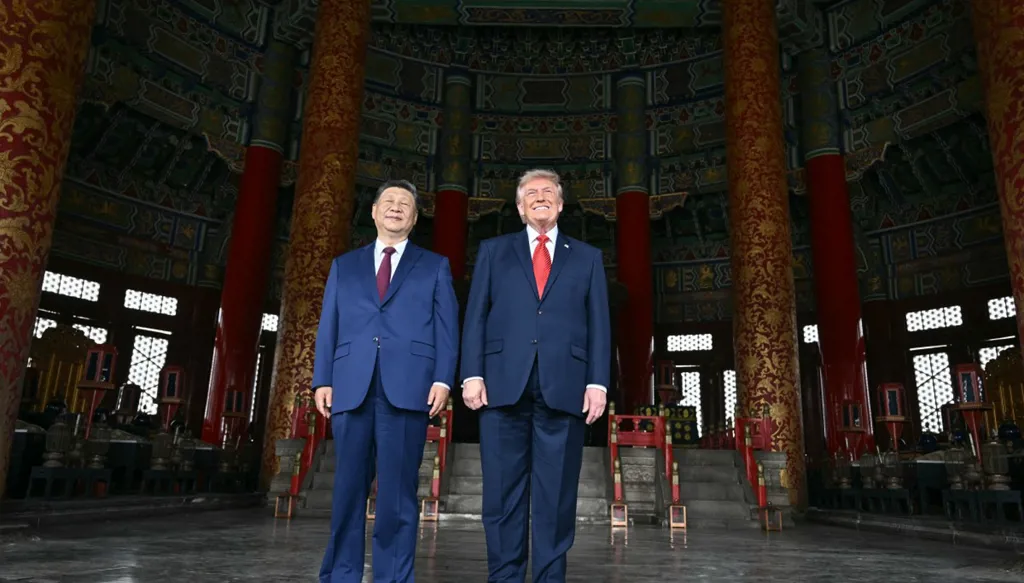
In the US–China summit, it appears that both sides have reached preliminary understandings (the details of which have not been published and could potentially undermine the agreements) based on rejecting the militarization and closure of the strait. However, China’s position on Iran’s system of extortion imposed by military force on passing ships is not clear or decisive, even though the closure or blockade of the strait, as carried out by Tehran, primarily harms China in terms of oil and petroleum product supplies, and secondarily harms it by damaging the economies of many countries linked to major commercial companies with China. The resulting economic difficulties caused by Iran’s behavior in the region reduce their capacity to import manufactured goods from China. In other words, the decline in trade activity is harmful to China, which is considered the “world’s factory”.
The strategic competition between the United States and China is real, as expressed by US Secretary of State Marco Rubio, whom many senior observers consider the most important US secretary of state in a long time in terms of the soundness of his positions, his understanding of international affairs, and his notable ability to communicate smoothly with the outside world. Rubio spoke to the media during the visit about competition and China’s ambitions in a realistic way, describing it as an ambition to achieve victory in the strategic competition with the United States. He said, in essence, that this is legitimate, even if Beijing believes it will inevitably win the race. However, in the meantime, it is important to organize the race so that the two powers, which share many common interests, do not clash, and to manage disagreements that cannot be resolved.
It appears that President Donald Trump asked President Xi Jinping for cooperation on the issue of the Strait of Hormuz, and it is logical for both sides to work together to resolve this dilemma. However, Beijing will be extremely cautious in every step it takes in this area so as not to inadvertently create justifications for the Americans to return to war with Iran in a final confrontation that may aim to complete what the United States and Israel have already begun: a major effort to undermine the regime, its military capabilities, and its internal resilience.
Trump sought to visit China because he also needs a narrative that counters accusations by Democrats who claim that he has isolated the United States internationally through his conduct of foreign relations.
This accusation may be partly valid regarding European allies, but it does not apply to Trump’s relations with Russian President Vladimir Putin. He is now seeking to project an image of being able to go into the heart of rival powers and strike historic deals with them. However, this is not enough to settle the war with Iran, which believes it has achieved a divine victory simply by the survival of the regime, even if it stands atop the ruins of a past era that has truly ended.
Disclaimer: The opinions expressed by the writers are their own and do not necessarily represent the views of Annahar