Lebanon-Israel talks amid escalation and unresolved ceasefire dispute

Lebanon 15-05-2026 | 08:51

Lebanon-Israel talks amid escalation and unresolved ceasefire dispute

US-backed Lebanon Israel talks continue as fighting escalates and core disputes remain unresolved.


Lebanon-Israel talks amid escalation and unresolved ceasefire dispute
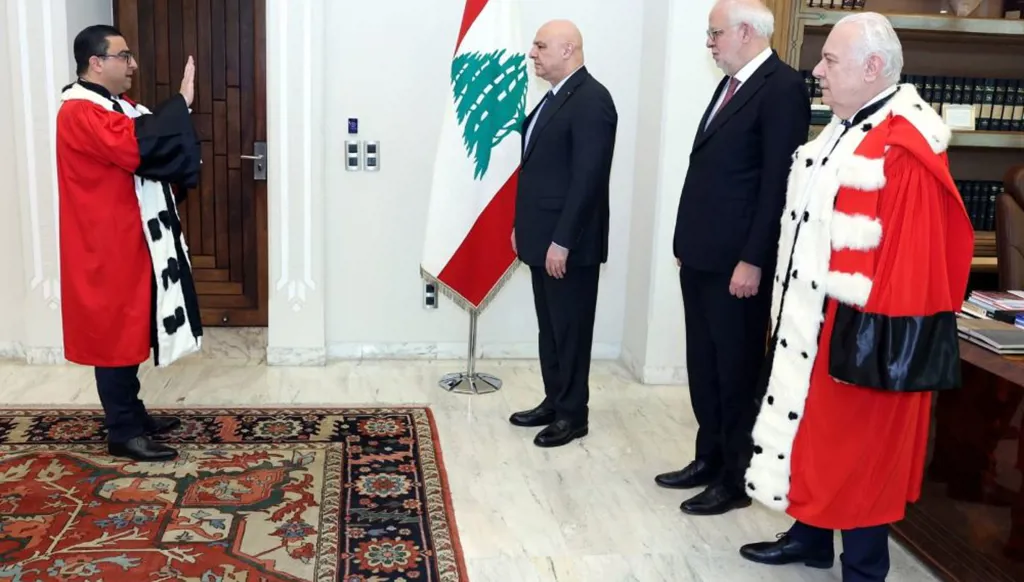
The Court of Cassation Public Prosecutor, Judge Ahmed Al-Hajj, takes the oath before President Joseph Aoun, in the presence of Minister of Justice Adel Nassar and the President of the Higher Judicial Council Judge Suhail Abboud.
Smaller Bigger

Behind closed doors this time and away from cameras and reporters, the first session of the third round of direct marathon negotiations between Lebanon and Israel was held under American sponsorship for more than eight hours yesterday and continues today as well, amid highly complex conditions on all military, field and diplomatic levels, which are expected to reduce optimistic assessments and expectations attached to the outcomes of this round.


While the US State Department has prepared for a deeper round of negotiations under the new procedures, the negotiators have begun an exhausting and difficult negotiating process in the face of diplomacy that is believed to represent, over two days, a major test for the Lebanese state in its attempt to impose the consolidation of a ceasefire as an entry point to discussing other demands, while it faces extremely complex conditions amid escalating war and Israel’s insistence on the demand to disarm Hezbollah before any discussion of other provisions.


While the absence of US Secretary of State Marco Rubio, who is with the US President on a visit to China, from the negotiating round has reduced the expected American weight in shaping a US vision that could create pressure to open a gap in the massive contradictions between the Lebanese and Israeli delegations, several factors from Washington as well as Beirut have converged toward ruling out any substantive breakthrough in this round. This was not far from the atmosphere of the meeting between President Joseph Aoun and Prime Minister Nawaf Salam in Baabda yesterday afternoon, where it was reported that they discussed the start of negotiations at the US State Department between the Lebanese, American and Israeli delegations, in light of the instructions given to the Lebanese delegation during preparations to begin the talks, which both presidents agreed to follow up through continuous communication.


Delegations, demands and conditions


Away from the media, the third round began, during which the Lebanese side was headed by former ambassador Simon Karam, with the participation of Ambassador to Washington Nada Hamadeh Mouawad, chargé d’affaires Wissam Boutros, and military attaché Brigadier General Oliver Hakameh, following two previous rounds held at the level of Lebanese and Israeli ambassadors in Washington. On the Israeli side, the delegation was headed by Israel’s ambassador to the United States Yechiel Leiter alongside the head of the strategic division in the Israeli army Amichai Levin.


The session was attended on the American side by the adviser to the Secretary of State Mike Needham, the US ambassador to Lebanon Michel Issa, and the US ambassador to Israel Mike Huckabee.


According to what was planned, Lebanon presented three main demands: consolidating the ceasefire, stopping Israeli attacks, and the withdrawal of Israel from the areas it occupies in southern Lebanon. In contrast, Israel linked any political process with Lebanon to the issue of disarming Hezbollah and securing its northern borders and refused to discuss a ceasefire as an independent priority without addressing the issue of weapons first.
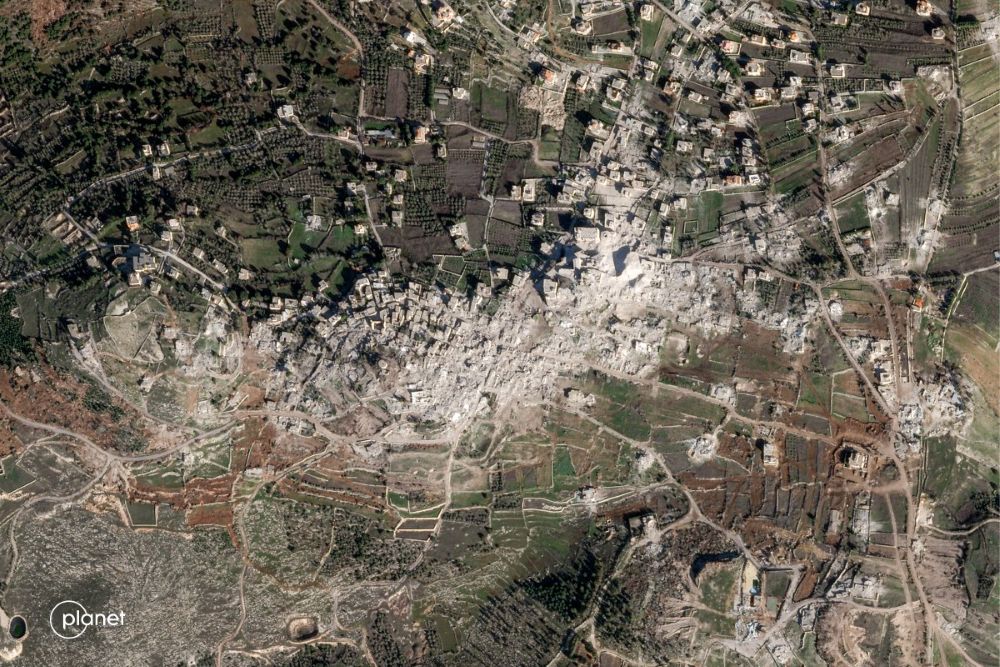
 

Satellite image showing the destruction in Saf al-Hawa near Bint Jbeil.


It has been reported that Israel will not commit to a comprehensive ceasefire and will inform the Lebanese delegation that its government adheres to a clear strategy, namely the strategy of eliminating the threat and preventing any danger to its security or the security of northern residents. As for the United States, despite previous calls by the US President for a ceasefire, it aligns with the Israeli position and will not ask the Israeli government or delegation to agree to a full ceasefire.


After hours of holding the first closed session amid strict secrecy regarding its proceedings, reports indicated an atmosphere that does not encourage optimism. It was noted that Israel is becoming increasingly firm on the issue of disarming Hezbollah through practical steps rather than verbal commitments, while the Lebanese delegation remained in contact with a follow up working group at the Baabda Palace. The Beirut correspondent of “Annahar,” Rania Abu Hassan, reported that despite the launch of negotiations, the road remains long before reaching what the United States ultimately seeks from them, namely a peace agreement.


After the third round, a statement of intent is expected to be issued and a preliminary framework for a comprehensive political agreement is expected to be outlined. Among the files expected to have been discussed yesterday within the political track are the extension of the ceasefire, which Lebanon is pushing for, border demarcation, the return of displaced persons, and the suspension of the anti normalization law. These headings were described as confidence building measures.


“Working on two tracks”


Shortly before the start of the third round of talks, Israel’s ambassador to the United States Yechiel Leiter, who heads the Israeli delegation, took a hard line ahead of the negotiations regarding the conditions for a ceasefire. He said: “We are ready for a broader political track with Lebanon provided Hezbollah is dismantled.” He added in an interview with the Walla website: “We need to see in practice how the Lebanese government strengthens the army and acts on the ground.” He continued: “We will define with the Lebanese government a specific area and plan with it how to clear it of Hezbollah weapons.” He went on to say: “We will never agree to a ceasefire in Lebanon that allows Hezbollah to rearm.” He noted: “We will work with the Lebanese delegation on two tracks, the first a peace treaty and the second a security track.” He considered that “the Lebanese government’s talk about disarming south of the Litani is far from reality.”


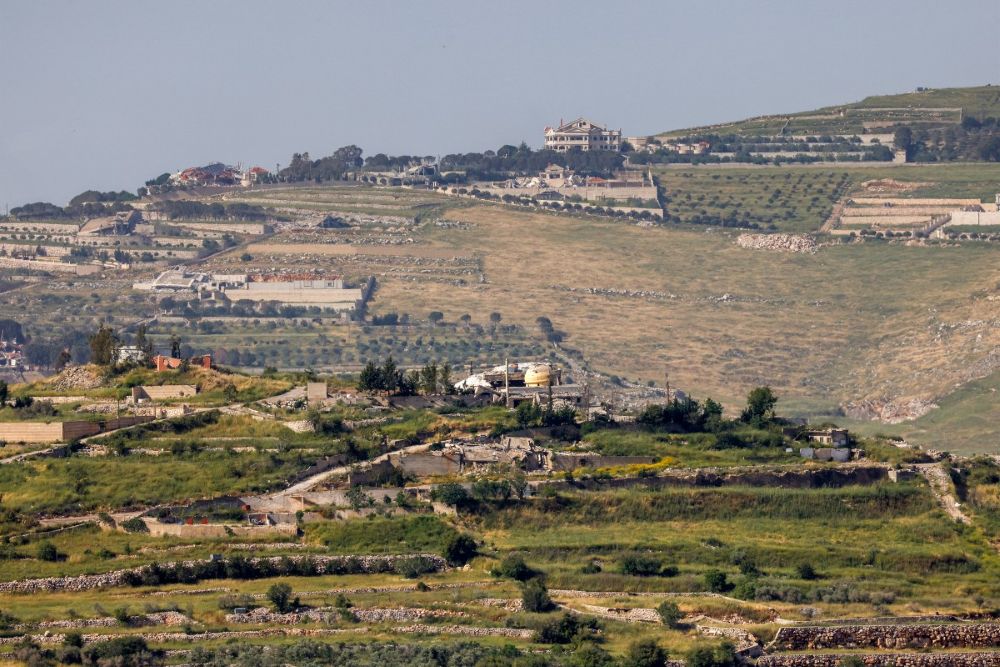
The town of Yaroun in the border strip. (AFP)


Escalation on the ground


Meanwhile, the field situation recorded further escalation in parallel with the negotiations, as well as days before the end of the supposed ceasefire deadline on the 17th of the month. The Israeli army issued evacuation warnings to residents of Labaya, Sohmor, Tefahata, Kfar Melki, Yohmor, and Ain al-Tineh in West Bekaa, as well as Houmin al-Fawqa and Mazraat Sinai, before carrying out heavy airstrikes against them. It also continued its bombardment, strikes, and targeting of villages in southern Lebanon. In response, Hezbollah announced that it had targeted a gathering of Israeli army vehicles and soldiers in the village of al-Bayyada, and a Merkava tank at Tell Nahas on the outskirts of Kfarkela.


Israeli reports confirmed that an explosive drone belonging to Hezbollah struck Ras al-Naqoura, leaving three people injured: two in critical condition and one with minor injuries. Israeli army radio stated that no sirens were activated in Ras al-Naqoura and that air defense systems did not intercept the drone. Hezbollah also announced that it targeted an Israeli force positioned inside a house in the village of Deir Seryan with artillery shells and a rocket salvo, and that a Merkava tank was struck while moving in al-Bayyada with a guided missile.