Lebanon’s lost libraries: Inside the war that turned 20,000 books to ash

Investigations 14-05-2026 | 17:01

Lebanon’s lost libraries: Inside the war that turned 20,000 books to ash

From rare manuscripts and first editions to personal archives, Lebanon’s southern libraries tell a story of cultural loss that goes far beyond destroyed shelves.


Lebanon’s lost libraries: Inside the war that turned 20,000 books to ash
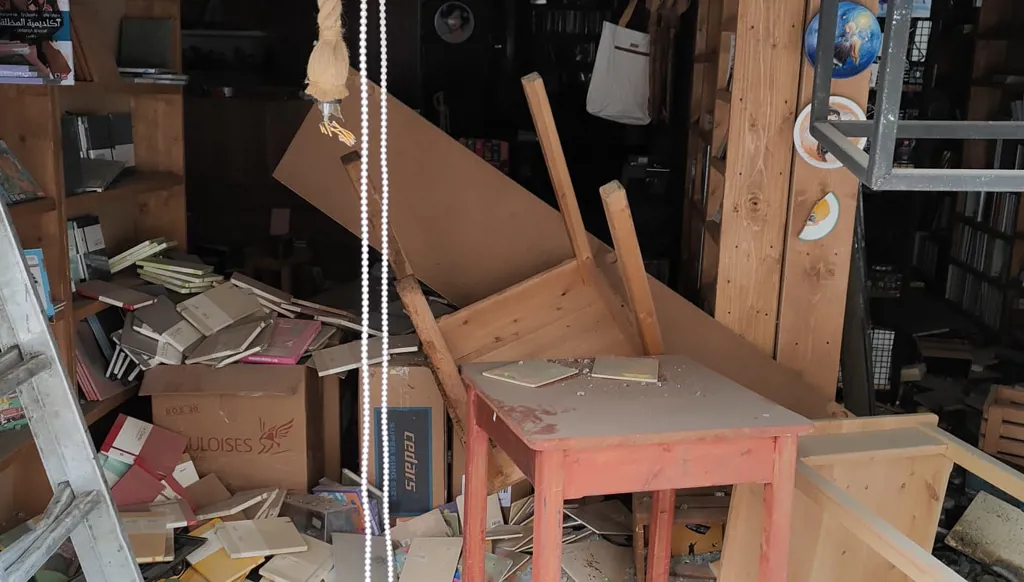
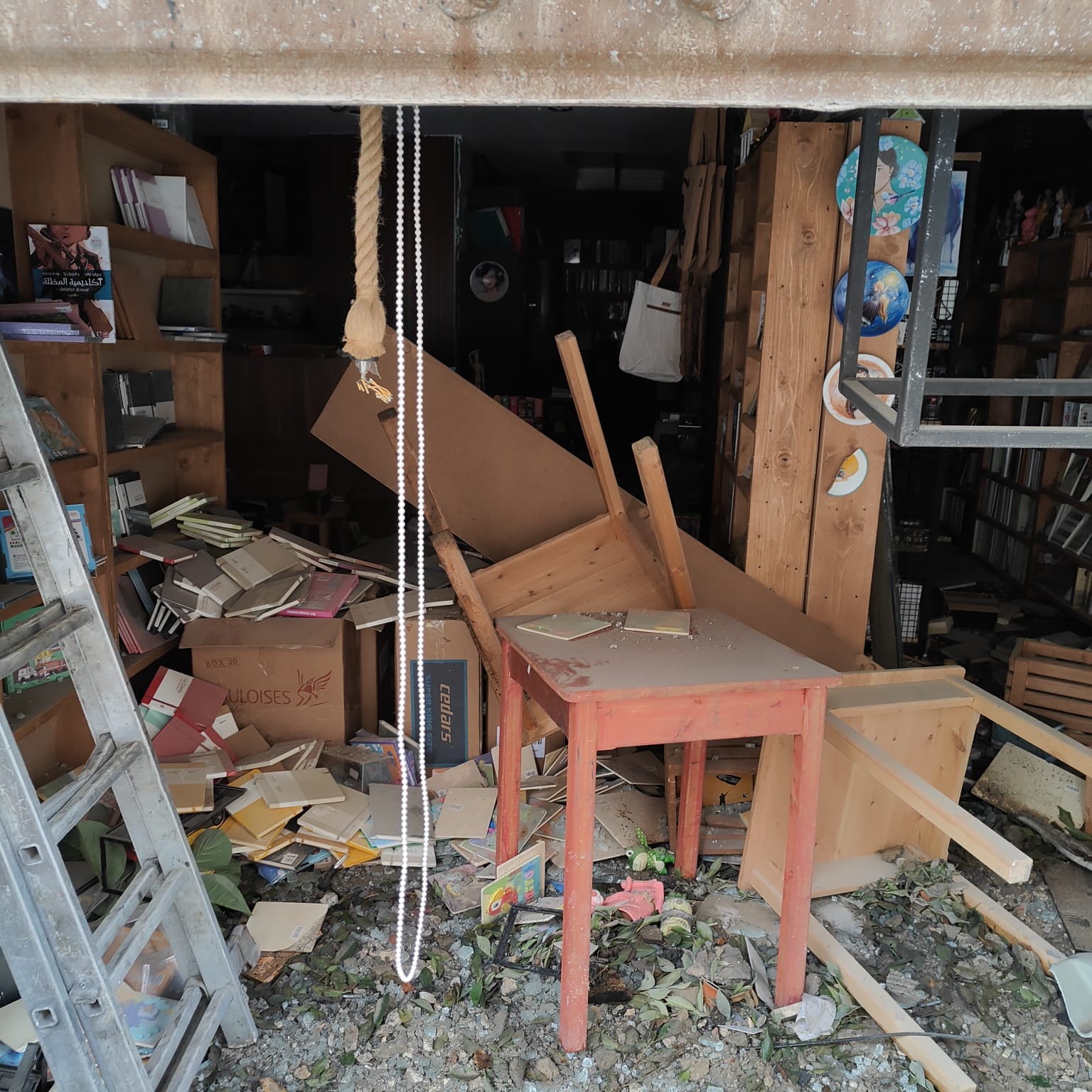
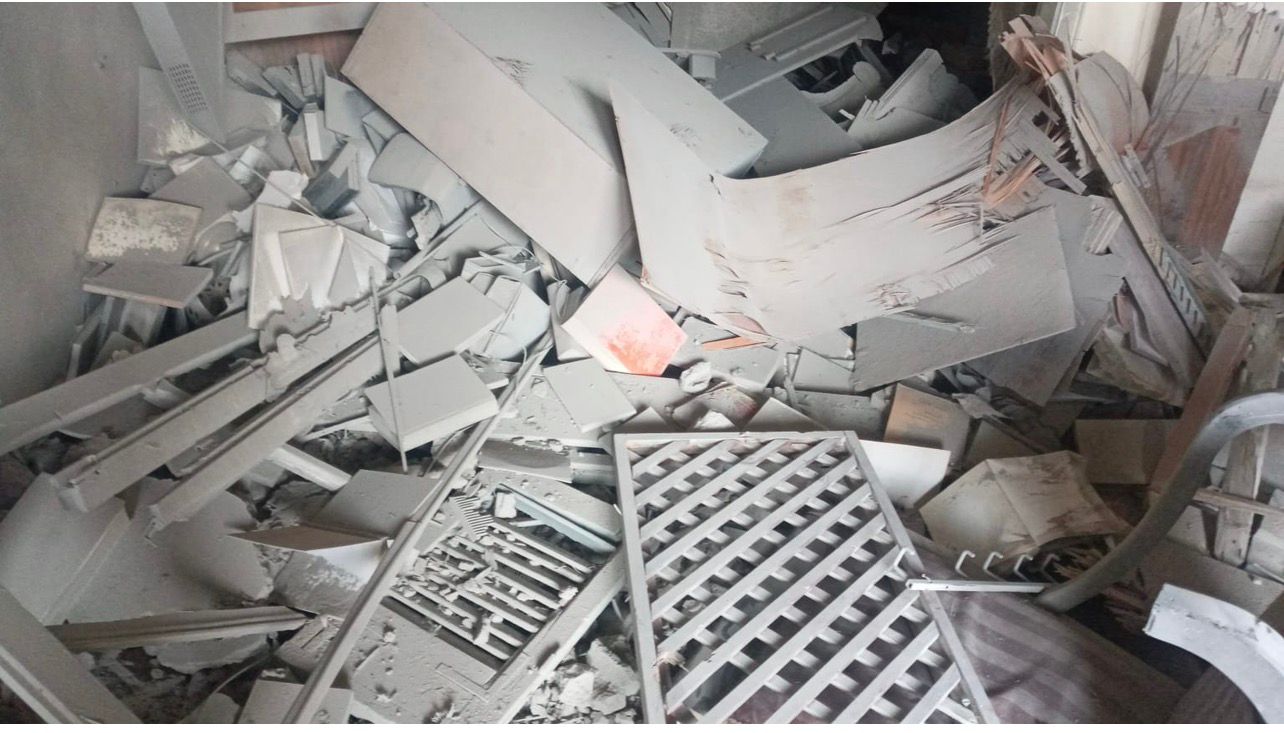
Philosophia Library damaged by Israeli bombing in Harat Hreik on March 14, 2026 (Annahar)
Smaller Bigger


For 18 years, Abbas Fakih, owner of the "Philosophia" bookstore, has been on a long journey of acquiring, collecting, and selling books. A trained electrical engineer, he unexpectedly found himself captivated by a world he never imagined would fascinate him so deeply—so much so that he was willing to sacrifice everything for books.


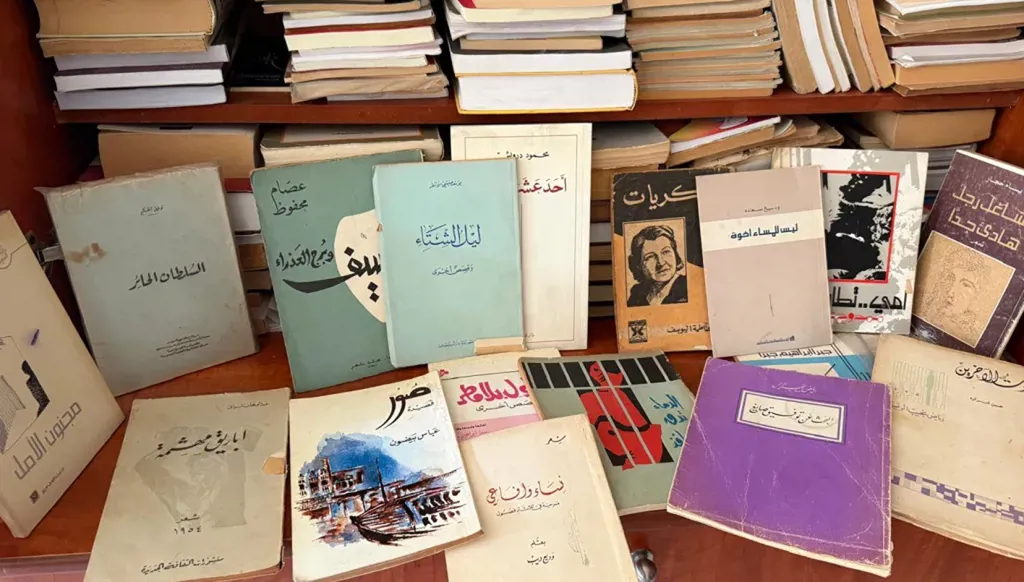
The books he collected over the years were far from ordinary. Some were rare first editions, while others were handwritten manuscripts. He recalls with sorrow "Khawaater," a book that brought together Musa As-Sadr, Kamal Jumblatt, and Ghassan Tueni, describing it as irreplaceable. He also speaks of manuscripts handwritten by Mahmoud Darwish, Samih Al-Qasim, and Amal Dunqul—rare acquisitions that led him to purchase the entire "Dar Al-Awda" collection in order to preserve this cultural legacy.


However, the treasure Abbas had proudly amassed was completely destroyed in a warehouse located in a building targeted by an Israeli airstrike in Haret Hreik, Beirut. He explains that while the bookstore itself was only partially damaged, “the greatest loss was in the warehouse... all the books burned, and I couldn’t save a single one of them,” despite risking his life to reach the site shortly after the strike.


Abbas lost more than 20,000 books, a loss he describes as both painful and unimaginable. He was not alone in enduring this cultural devastation, as the damage also affected his partners in the warehouse, including the "Civilization Center," as well as another warehouse belonging to "Believers Without Borders."


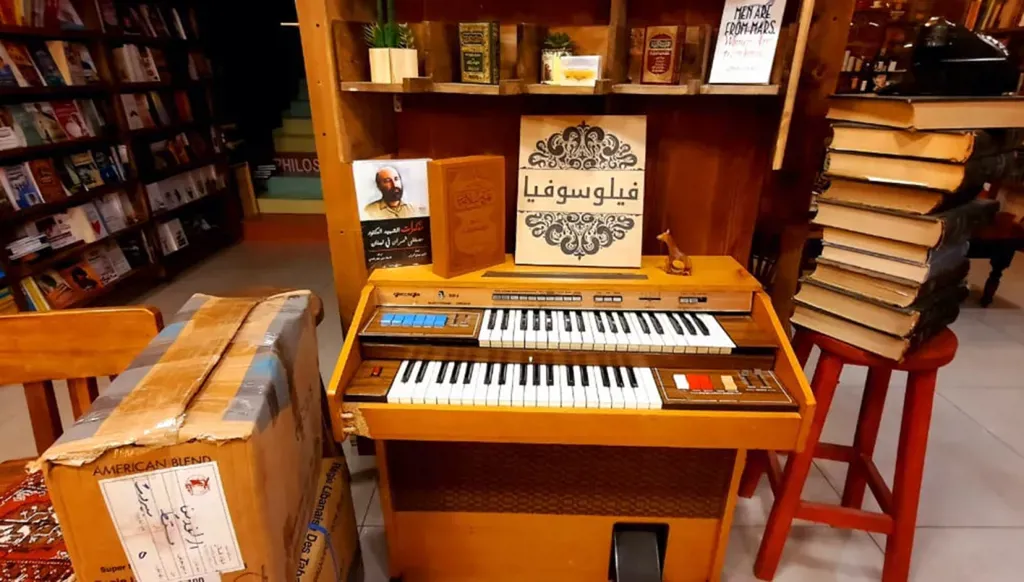
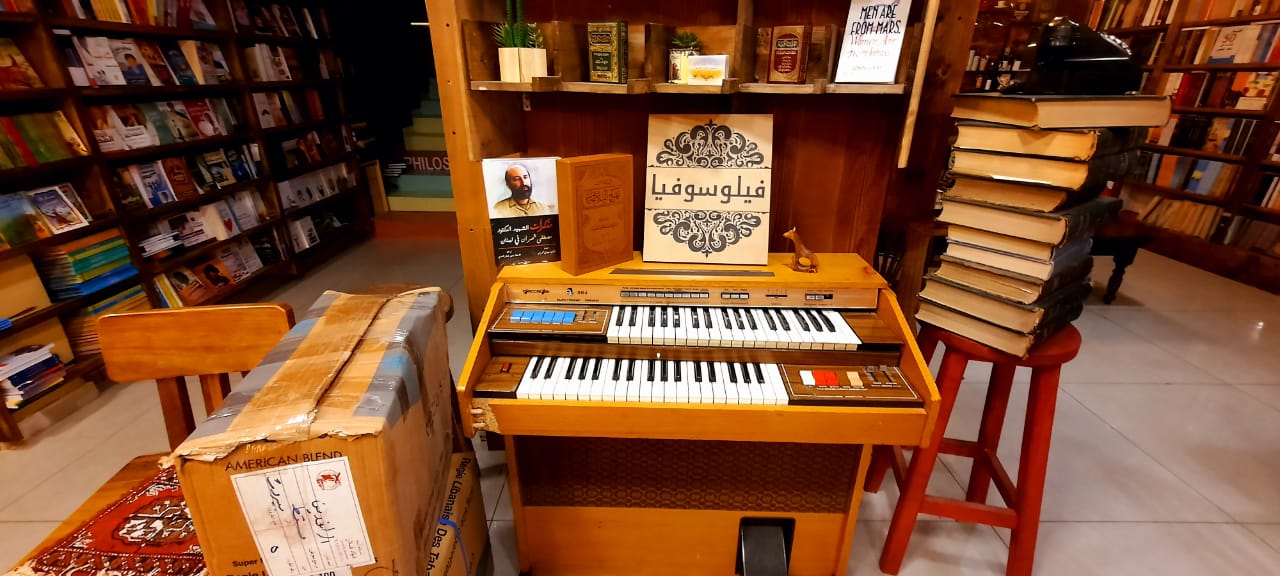
Philosophia Bookstore in Haret Hreik before it was damaged (Annahar)


Destruction of 13 Public Libraries in Lebanon


The war has been described as a war on memory and culture. Despite the protections international law grants to libraries and their contents during armed conflicts—particularly under the 1954 Hague Convention, the primary legal framework for safeguarding cultural property, which prohibits hostile acts against libraries and archives, including manuscripts and rare documents—the reality reflects a devastating level of destruction that has reached this cultural heritage.


The Lebanese Ministry of Culture confirmed to "Annahar" that “the war led to the destruction of 13 public libraries in Lebanon, five of which were completely destroyed, while eight others suffered partial damage or were closed and abandoned due to displacement.”


The Minister of Culture, Ghassan Salameh, told "Annahar" that cultural institutions were not spared from the systematic destruction witnessed in the south, which also affected schools, universities, mosques, and churches. He stated, “Libraries, too, were victims of this destruction.”


Salameh notes that five libraries were completely destroyed in Marjeyoun, Majdal Selem, Ayta al-Shaab, Taybeh, and Bint Jbeil, expressing deep sorrow over these losses, particularly those in Taybeh and Bint Jbeil. He explains that the Bint Jbeil library was housed in an archaeological site known as the “Grand Serail,” where it had been relocated after the 2006 war destroyed the previous library. “I was among those who contributed to establishing it,” he said.

As for the Taybeh library, its loss was especially painful, as renovations had just been completed and it was expected to open before the current war erupted.
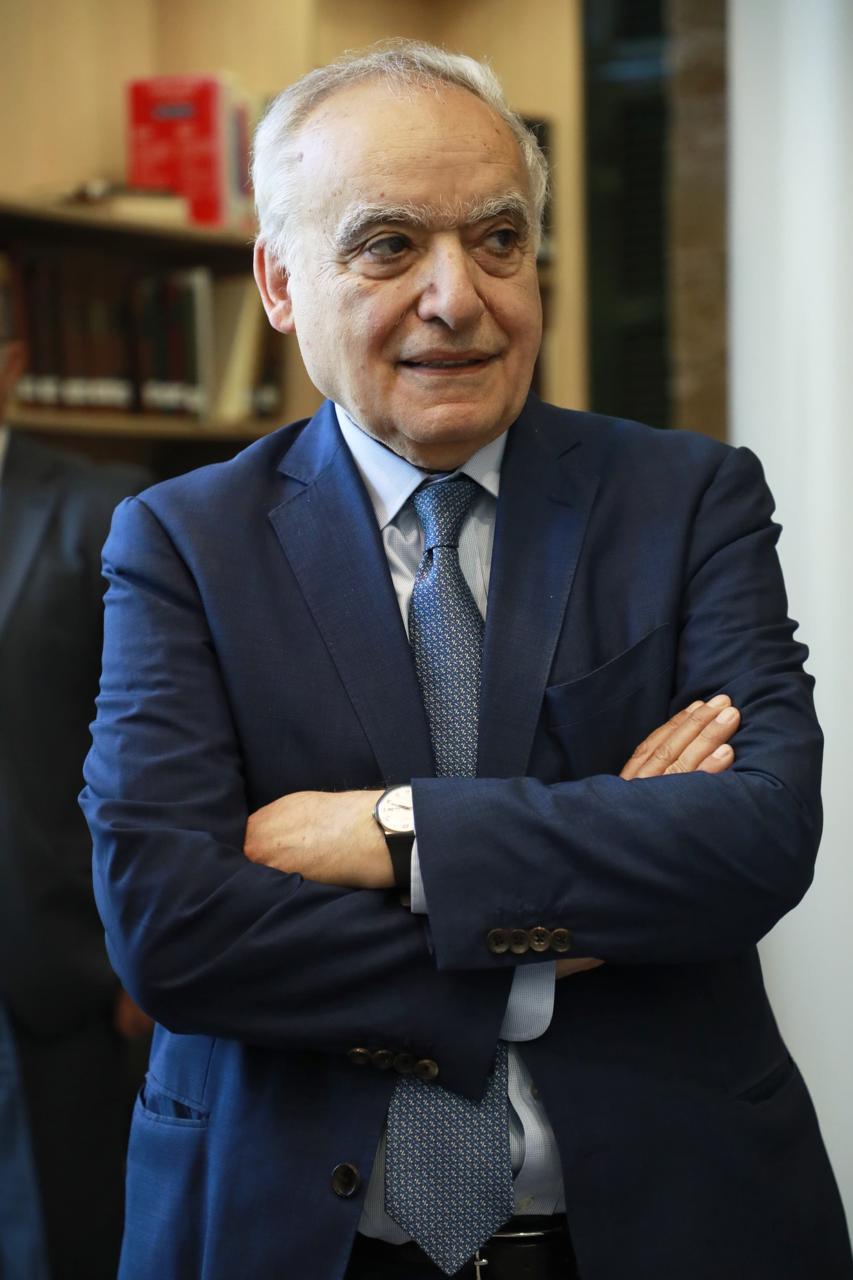
 

Minister of Culture Ghassan Salameh


The minister also pointed to partial damage sustained by other libraries in Hermel, Jabaa, Kfarreman, Ma'arka, Nabatieh, and Nabi Sheet, among other areas. Despite the pain of these losses, he emphasized his commitment to rebuilding and protecting these libraries, as was done after previous wars, noting that the process will be arduous, beginning with clearing the rubble and continuing through reconstruction.


He concludes by affirming that these areas, which witnessed the destruction of both homes and libraries, “will not accept being without libraries and cultural centers to revive them once their residents return.”


"I wished to save this book"

Abbas’s story with books began when he worked at a publishing house during a summer vacation. From the outset, he felt, as he says, “a special chemistry between me and the book. I found in the library what I was missing.” This marked the beginning of his relationship with the world of books over 22 years ago, as he became drawn to selling and buying books, eventually coming to introduce himself as a “bookseller.”


Abbas recalls his beginnings with reading, remembering that the first book he read was Malcolm X from the Bissan Library, which drew him toward the world of Western thought. He still keeps a copy of Zorba the Greek, saying, “this book influenced me a lot, and I still return to it from time to time.”


He reveals that what he most wished to save was a first edition of Victor Hugo’s Les Misérables, over 110 years old and consisting of five volumes.


Partial destruction of Philosophia Library after being bombed by Israel in Haret Hreik (Annahar)


Abbas does not describe his loss as merely financial, estimated between $200,000 and $250,000, insisting instead that it is primarily a “cultural and intellectual loss,” akin to “erasing a part of memory and history.” He describes his feeling as “like losing a dear friend. When I saw the books burn, I felt like I was watching one of my children disappear before me... they are part of me.”

The anthology that became a family part
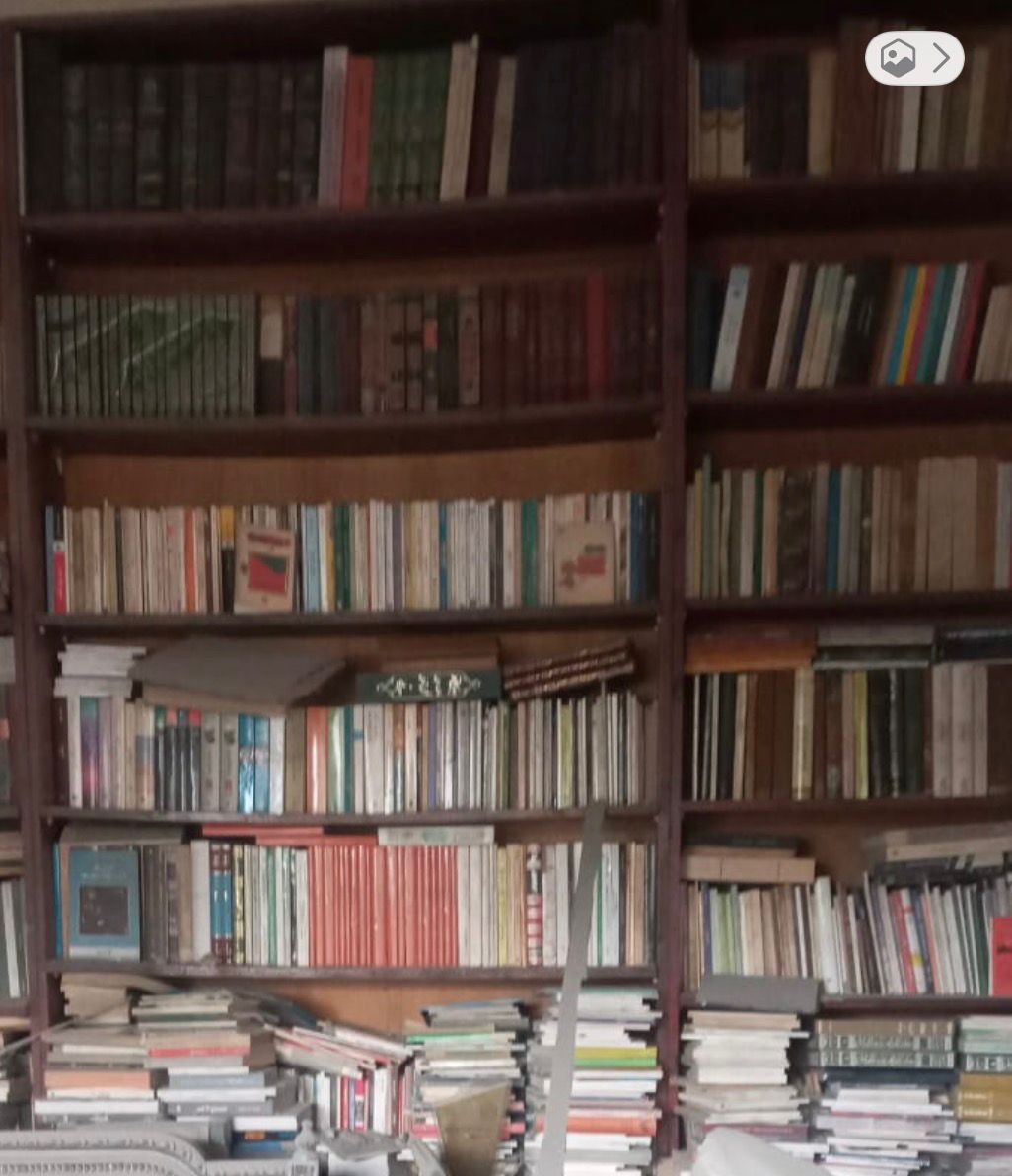
 

From Abbas to the poet Mohamad Nassereddine, there unfolds a journey of small and large losses tied to books, filled with irreplaceable pain. These different stories are united by the memory of paper and by what the war has left behind—an emptiness in the souls of their owners, even before their library shelves.


Nassereddine grew up in a southern home that loved books and reading, where his relationship with reading developed alongside the smell of paper and a passion for collecting books—a tradition he inherited from his father, who was fond of this world.


When his father left their southern village for the city, he worked a small job during the summer to help his family, and that is where his story with books began. Mohammed recounts: “My father started selling books in the Azariyeh area with his friend Khalil Awwad, the owner of the Scientific Bookstore today.” Since then, his passion grew with every book he bought with his modest allowance, until Mohamad’s grandfather began storing these books in the “pie safe,” which, over the years, became a traveling memory that accompanied the family from one home to another.


No longer was the “anthology” just a wooden cabinet; it became part of the family’s history, before the father fulfilled his dream of establishing his library, which included rare books, first editions, and exceptional publications. Among its collections was a complete French library of about five thousand books belonging to Maurice Toby, one of the last Jews who lived in Wadi Abu Jamil. Mohammed’s father bought it in the 1980s, despite the risk of it being lost or burned, even though its price at the time was equivalent to that of an apartment in Hamra. But for him, he was not merely buying books; he was trying to save an entire memory from extinction.


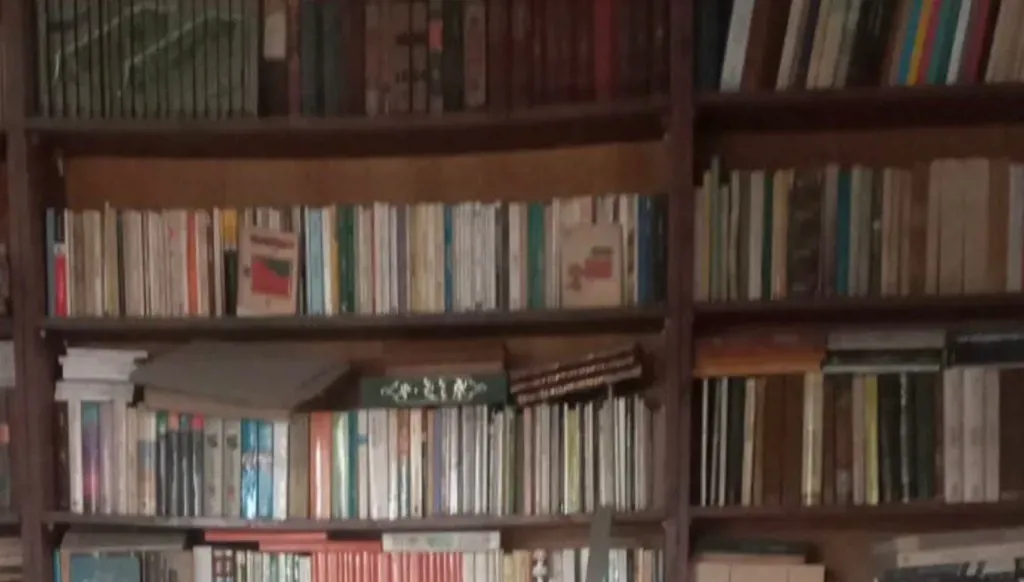
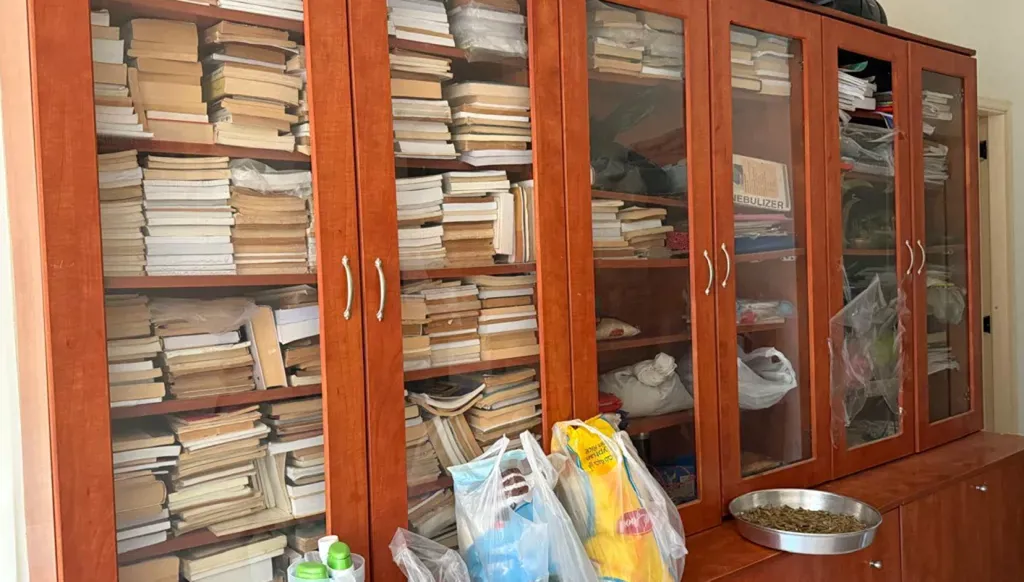
The private library of poet Mohamad Nassereddine


This library, known within the household as the “Jewish Room,” did not survive the war. During the Israeli bombing of Bir al-Abed, a large part of it burned, including rare French books and works by Albert Camus and Jean-Paul Sartre, as well as texts documenting French thought and culture since the 1920s.


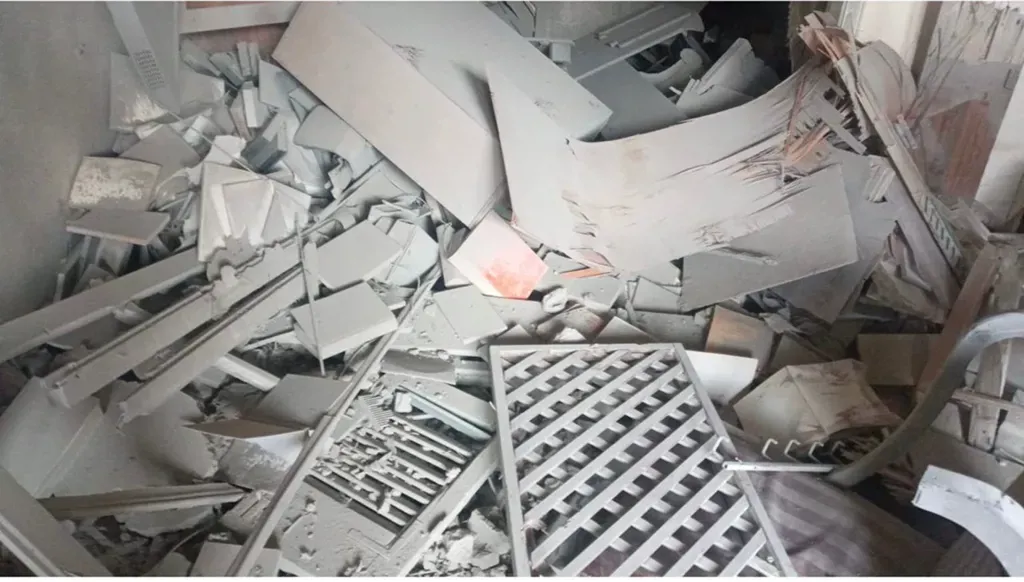
To save what remained, Mohamad Nassereddine moved the Lebanese cultural books and magazines, such as “Shi’r,” “Mawaqif,” “Tariq,” and “Adab,” to the family home in Sujud, Jezzine District. However, this last refuge did not survive either. Mohammed says, “This partial dream that we preserved in the village home has turned into rubble after it was bombed by Israel.”


Every book has a story

Mohammed followed, through his phone, images of destruction that had turned his home into rubble. Between one picture and another, his memory returned to the books he had lost—old and rare editions he had spent years collecting. He remembers with regret the works of writer Youssef Idris, saying, “I bought each part of this trilogy from a different country. As for the poet Alejandra Pizarnik’s book, I traveled to the borders of Spain to buy it.” His library had been a journey of his life, with all its chapters and experiences.


Nothing remains but rubble from the home and library of poet Mohamad Nassereddine