

GCC crackdown on Iran and Hezbollah cells intensifies amid regional missile and drone escalation
A coordinated wave of arrests and cell dismantling across GCC states signals a widening security front where missile escalation is increasingly matched by internal counterintelligence operations against Iran-linked networks.




 Messenger
 Whatsapp
 Threads
 Email
Email
 Print
Print
 X
X
 Facebook
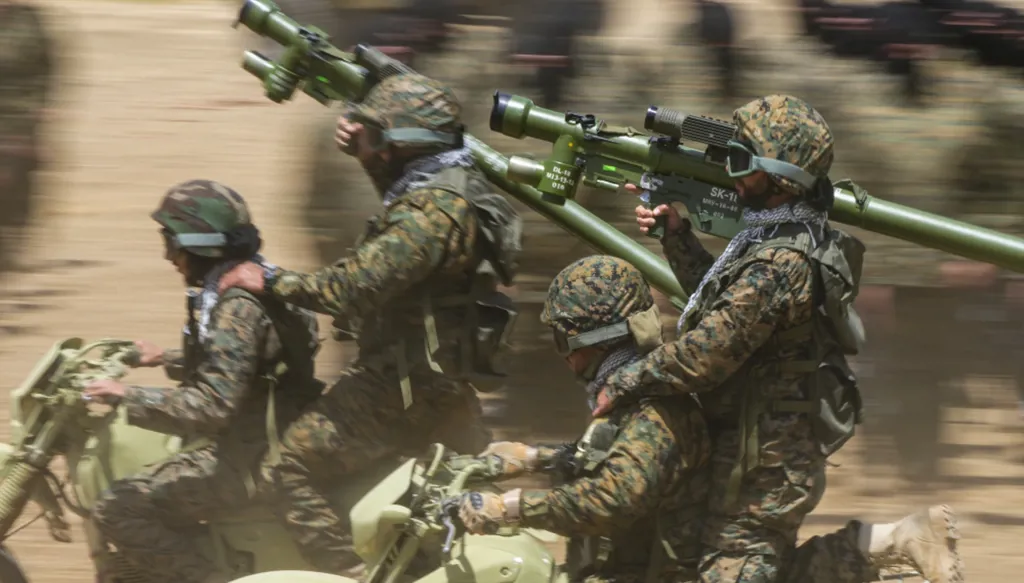


Since Hezbollah was designated as a terrorist organization a decade ago, the Gulf Cooperation Council (GCC) countries have entered a new phase of confronting Iran’s proxies in the region, viewing Hezbollah as possessing extensive expertise in coordinating the activities of various groups and cells ideologically aligned with Iran. In 2016, videos also surfaced showing Hezbollah members training the Houthis in Yemen to carry out attacks against GCC countries.
A sample of Iranian and Hezbollah cells
Some members were reportedly involved in transmitting photographs and information related to the impact of Iranian attacks on GCC countries. This was the case with a three-member cell arrested by Bahrain in late March; according to the Bahraini Ministry of Interior at the time, the individuals had received training in Lebanon from Hezbollah.
In less than two months, the United Arab Emirates announced the dismantling of three cells linked to Iran. On March 20, the UAE uncovered what it described as a “terrorist network funded and operated by the Lebanese Hezbollah and Iran,” whose members were allegedly working under fake commercial fronts in an attempt to infiltrate the national economy and carry out external schemes aimed at undermining the country’s financial stability.
A month later, the UAE dismantled what it described as the “Secret Shiite Organization,” whose members reportedly adhered to the doctrine of Wilayat al-Faqih (Guardianship of the Islamic Jurist) and promoted extremist ideologies. According to the State Security Service, the 27-member cell was involved in covert recruitment activities aimed at infiltrating sensitive positions and collecting funds for external entities. Last Tuesday, the UAE also added 21 individuals and entities to its domestic terrorism list over alleged ties to the Lebanese Hezbollah, which Emirati authorities regard as part of political Islamist movements that pose a threat to state stability and national security.
Qatar also announced two months ago the arrest of two cells allegedly linked to the Islamic Revolutionary Guard Corps (IRGC), comprising 10 suspects. Most of the individuals were reportedly assigned espionage tasks to gather information on sensitive facilities, while three others were tasked with carrying out acts of sabotage within the country. The two cells possessed locations and coordinates of strategic installations and communication systems, and their members had allegedly received training in the use of drones.
Shifting the confrontation with Iran to a higher level
The rapid response of Gulf security agencies deserves attention for several reasons. The GCC countries have managed to establish a proactive general policy that enables them to act efficiently in critical moments. This success did not result from chance or from security gaps in the activity of those cells, or at least this was not the decisive factor in the success of the arrests. Such operations usually require an integrated understanding of ideology, financing, and command structures both inside and outside these cells. Hence, the accumulated experience of GCC countries and their security agencies was crucial at the most sensitive timing. Mutual intelligence coordination among these countries also increased the speed of response. In addition, there is another geopolitical factor.

When Iran began launching missiles and drones toward Gulf Arab countries, the activation of Iran-affiliated cells in the region became only a matter of time. As Tehran deployed a wide range of tools in its confrontation with the Gulf states, its regional proxies were among the available weapons at its disposal. This sudden increase in activity likely left traces that were quickly detected by security agencies. There is no doubt that the Iranians bet on the fragmentation of Gulf leaders and their security services at a time when their countries were being bombarded with missiles and drones. That bet failed decisively.

It is also noticeable that Gulf security agencies have released photos and even videos of individuals involved in those cells, signaling that the confrontation with Iran’s regional proxies is not only a security and ideological battle, but also a media one. It also serves as a psychological deterrent to others who might consider joining such cells in the future.