

UAE designates Lebanese individuals and financial entities on local terroristl list over alleged Hezbollah Links
The UAE added 16 Lebanese individuals and five Lebanon based financial and accounting entities to its Local Terrorist List, accusing them of links to Hezbollah and involvement in financing activities connected to the group.



 Messenger
 Whatsapp
 Threads
 Email
Email
 Print
Print
 X
X
 Facebook
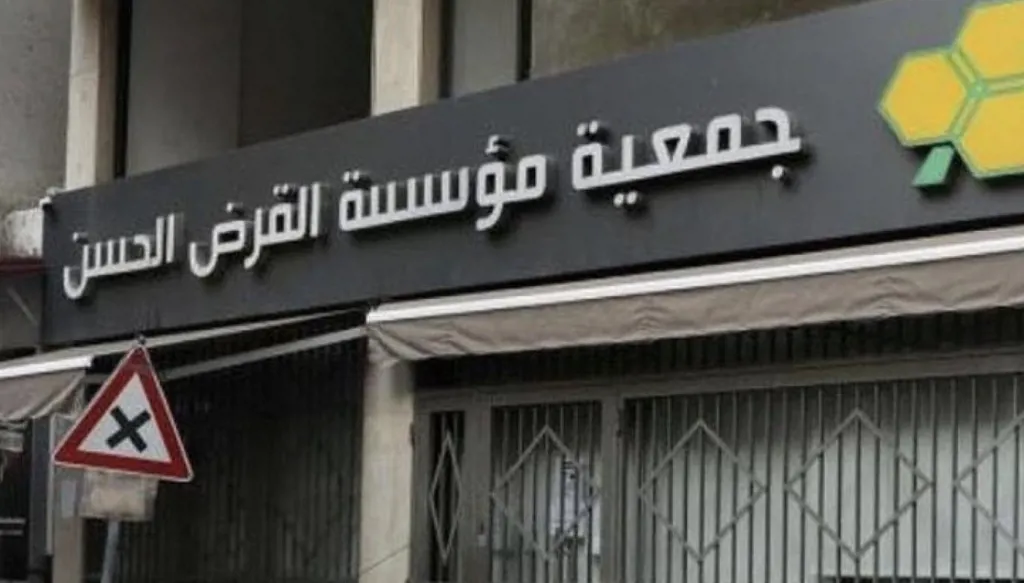
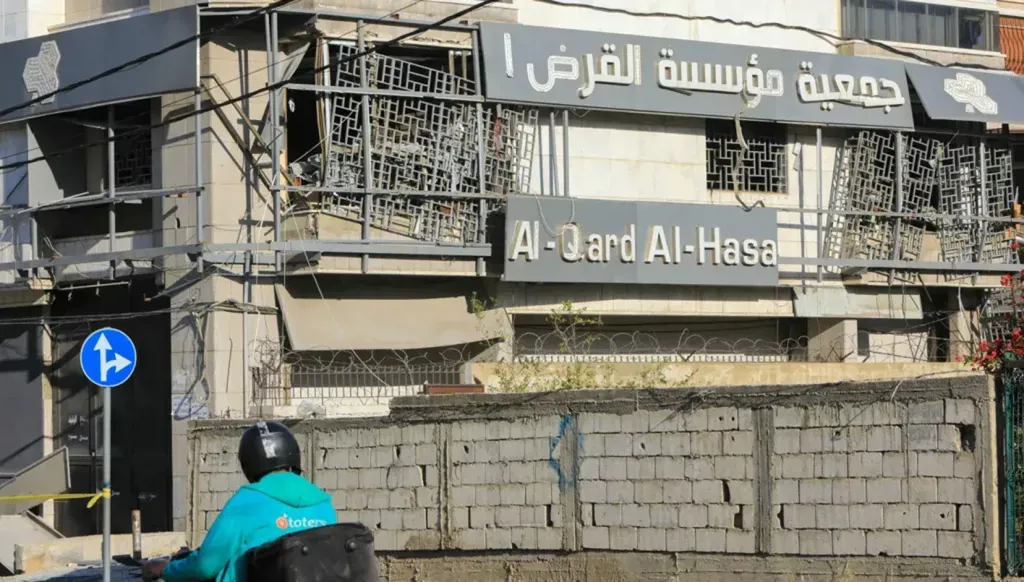


What activities are carried out by the institutions named in the United Arab Emirates decision that added them, along with 16 individuals, to the “Local Terrorist List” over alleged links to Lebanon’s Hezbollah?
Measures and decisions aimed at financially isolating Hezbollah continue to escalate, the latest being those issued by the UAE, which placed individuals and financial institutions on its Local Terrorist List.
The decision included five financial institutions that openly operate in Lebanon: “Bayt Al Mal Al Muslimeen”, “Al Qard Al Hassan Association”, “Al Tasheelat Company”, “The Auditors for Accounting and Auditing”, and “Al Khobara for Accounting, Auditing and Studies”.
Al Tasheelat Company
“Al Tasheelat Company” is registered under Lebanese commercial law and provides short- and medium-term personal loans without complications and away from the bureaucracy commonly associated with Lebanese banks. Its activities include offering financial facilities to individuals and small businesses, in addition to credit and accounting consultations and payment and settlement services.
The company, Al Tasheelat SARL, was established on October 18, 2006, and is headquartered in Burj al Barajneh. It is closely linked to Hezbollah’s financial institutions, specifically Al Qard Al Hassan.
Among the most notable facts about Al Tasheelat Company SAL is that it provided housing loans and financial services after the 2006 war and is considered part of Al Qard Al Hassan’s operations.
However, a distinction must be made between “Al Tasheelat Company” and “Al Tasheelat Foundation”. The latter conducts banking activities and provides various financing services and commercial loans to businesses, although it mainly focuses on personal loans, car financing and other small scale projects.
Operations involving the purchase of used cars have often come under suspicion, with some believing they serve as a channel for money laundering. Certain areas associated with Hezbollah are filled with a large number of car dealerships whose owners allegedly benefited from major customs facilitations. Some believe these dealers were protected by the “Resistance Security”.
“The Auditors for Accounting and Auditing”
“The Auditors for Accounting and Auditing” operates in the fields of accounting, financial auditing and tax consultancy. It was listed under UAE Cabinet Resolution No. 63 of 2026 and is considered one of the recognised firms in the financial and accounting sector. It operates within a network of affiliated institutions, including “Al Tasheelat Company SAL” and “Bayt Al Mal Al Muslimeen”.
Several years ago, the US Treasury Department stated that “The Auditors” was owned, controlled or directed by Ibrahim Daher, who was sanctioned in May 2021 for acting on behalf of Hezbollah in his capacity as head of the party’s Central Finance Unit. According to the Treasury, he is the majority owner and managing partner of the company and held a senior management position within it for years.
In addition, according to the Treasury, “The Auditors” provided financial services to Hezbollah’s Central Finance Unit.
“Al Khobara for Accounting”
Meanwhile, “Al Khobara for Accounting, Auditing and Studies”, a Lebanese company specialising in financial and accounting services, provides paid services to companies, including account auditing, bookkeeping covering revenues and expenditures, tax and financial consultancy, as well as conducting economic feasibility studies before companies or individuals launch commercial projects.
According to a previous statement by the US Treasury Department, “Al Khobara” is owned, controlled or managed by Ibrahim Mansour, who serves as the company’s chief executive officer.
The Treasury also noted that “Al Khobara” is located in the same building as Al Qard Al Hassan, provided accounting services to it and was managed by its senior officials, including Mansour.
It added that among the company’s other senior officials is senior Hezbollah figure Hussein Al Shami, who is under US sanctions and previously headed both Al Qard Al Hassan and another Hezbollah affiliated financial institution, Bayt Al Mal. It also mentioned Ahmed Yazbek, who was designated in May 2021.
“Bayt Al Mal Al Muslimeen” and “Al Qard Al Hassan”
Before the emergence of the “Al Qard Al Hassan Association”, there was what was known as “Bayt Al Mal Al Muslimeen”, an organisation established by Hezbollah to provide loans to individuals against guarantees and without interest. It later became the foundation upon which Al Qard Al Hassan was built.
At the beginning of 1984, Hezbollah launched what became known as “Bayt Al Mal Al Muslimeen”, which provided interest free loans to members of what it described as the “Hezbollah nation”, in accordance with Islamic Sharia principles.
In a 1988 article published in Al Ahd newspaper titled “Bayt Al Mal Al Muslimeen is the Best Path to Al Qard Al Hassan”, Hezbollah said the organisation was created to “solve the major social problems produced by the system in our Islamic regions, which sought to keep us trapped in a cycle of backwardness, dependency and ignorance”.
After 1987, the “Al Qard Al Hassan Association” took over the practice of granting loans against guarantees, especially gold, after reassessing its value at a rate lower than the market price in order to protect the association’s rights. In exchange for the gold, the owner receives a loan not exceeding 5,000 US dollars.
In 2006, the US Treasury Department designated “Bayt Al Mal Al Muslimeen – Al Qard Al Hassan Foundation” as a terrorism financing entity, alleging that it managed Hezbollah’s investments and acted as an intermediary between the group and major banks. Washington imposed additional sanctions on the institution in 2016, creating tensions between Hezbollah and Lebanese banks that complied with US regulations.
On May 11, 2021, the United States imposed further sanctions on individuals linked to Hezbollah and the association. The US Treasury stated that “Al Qard Al Hassan claims to serve the Lebanese people, but in practice it moves money illicitly through shadow accounts and exposes Lebanese financial institutions to possible sanctions”, adding that it contributes to “undermining the stability of the Lebanese state”.
Over time, “Al Qard Al Hassan” evolved into what resembles a bank, installing cash withdrawal machines across various areas and opening banking style branches without any banking supervision, on the grounds that it is registered as an association rather than a bank.
Last February, the Directorate of Political Affairs and Refugees at the Lebanese Interior Ministry refrained from granting the “Al Qard Al Hassan Association” the annual certification required for 2026, which confirms that the association’s legal and administrative status is sound.
However, the association’s licence and official registration were not revoked, as such a step would require a Cabinet decision. Meetings related to combating money laundering and reducing the cash economy were held at the Grand Serail, with the participation of “Al Qard Al Hassan Association”. Banque du Liban had previously prohibited banking dealings with the association.
The accusations directed at these entities
• Alleged links to Hezbollah
• Direct or indirect involvement in the financing of terrorism
• Operating or managing financial and commercial networks linked to the party
• Engaging in financial activities that Abu Dhabi considers supportive of the organisation
Individuals
According to the Emirates News Agency (WAM), the list of individuals includes the following Lebanese nationals: Ali Mohammed Karneeb, Nasser Hassan Nasr, Hassan Shehadeh Osman, Samer Hassan Fawaz, Ahmed Mohammed Yazbek, Isa Hussein Qasir, Ibrahim Ali Daher, Abbas Hassan Ghareeb, Emad Mohammed Bazzi, Ezzat Yousef Akr, Wahid Mahmud Sbeiti, Mustafa Habib Harb, Mohammed Suleiman Badir, Adel Mohammad Mansour, Ali Ahmed Krisht and Nima Ahmad Jamil.