

Ideological narratives behind the conflict
How religious and historical interpretations are used to frame the current confrontation and its geopolitical implications



 Messenger
 Whatsapp
 Threads
 Email
Email
 Print
Print
 X
X
 Facebook
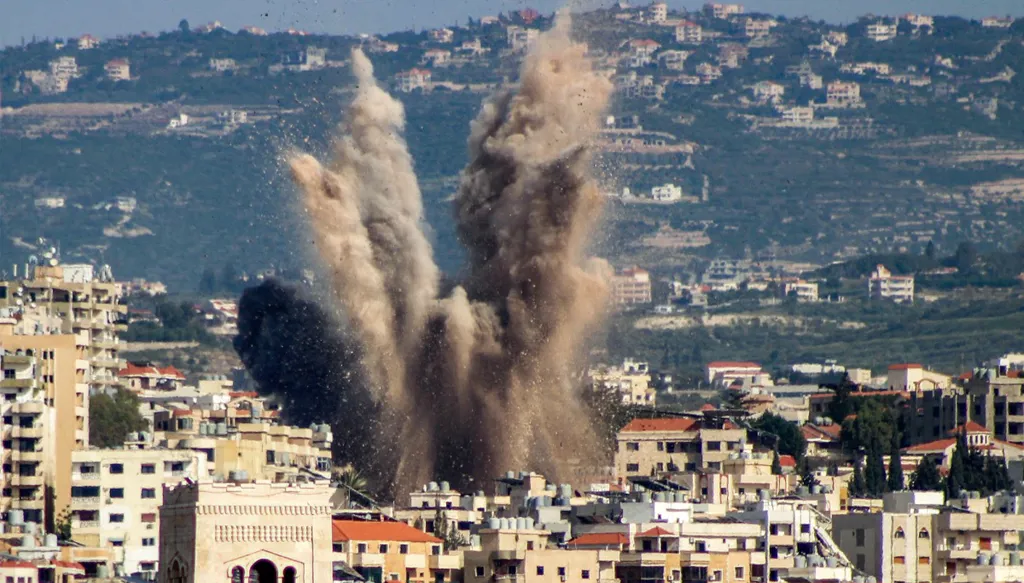


In the general political landscape, the war launched by the United States, together with Israel, against Iran is seen as an attempt to prevent Tehran from acquiring a nuclear bomb that could threaten the existence of Israel and possibly extend its threat to other parts of the world.
It is also viewed as an attempt to impose control over West Asia, given its strong importance in both geopolitics and political economy, which play a major role in the current global conflict. It is an effort to prevent Iran from extending its influence over a strategic region on the global map. Over time, it has indeed become clear that Iran has ambitions to expand beyond its vast own territory.
Ideological backgrounds
In the ongoing confrontation between the two sides, the influence of ideological backgrounds appears clearly. The recent “hot truce” days over the past month have opened the door to interpretations and analyses, and to the instrumentalization of religious aims in the conflict. These aims help justify mistakes and ease the shock caused by the costs of the war so far on both sides. They also serve as a way to escape responsibility for the ongoing international massacre, as the consequences of the confrontation have led to global market instability and created deep fear among neighboring countries regarding the possible outcomes, especially if the ongoing negotiations result in some form of exchange of benefits between the adversaries, which could end up settling bills at the expense of others or at the expense of the overall international system.
The Israeli far-right invokes the battle of Armageddon mentioned in the Book of Revelation in the Old Testament, considering it a historical inevitability that paves the way for the return of the “Messiah of the nations.” The two extremist right-wing ministers, Itamar Ben-Gvir and Bezalel Smotrich, who lead this “theocratic” movement, receive broad support from circles within the Republican Party in the United States. Many leaders in this party believe in “Christian Zionism” and push toward waging a war against Iran, which they view as evil, while defending Israel as a righteous act, as they claim.
On the other side of this hidden mythological stage, Iranian leadership and its allies from the Twelver Shiite tradition stand brandishing the sword of truth against falsehood. They see what is happening as part of historically foretold stages mentioned in sacred texts, a “battle of the end times” that is inevitable and precedes the appearance of the “Mahdi,” when justice will prevail over evil. In the political interpretation of this narrative, those responsible for mistakes can be absolved of their consequences, and sacrifices are regarded as offerings on the altar of truth, where those who die as martyrs in this battle are considered fortunate, according to this view.
End times
These descriptions of the aforementioned battle have been invoked before, particularly during the Battle of Hattin between Arabs and Muslims and the “Romans” or Crusaders in 1187. Some also invoked them during the Battle of Sultan Yaqub in 1982 between Israeli forces and Syrian forces, on the basis that the narrative of the end-times battle points to the sight of abundant bloodshed in the Bekaa region. However, all these narratives have no political inevitability; they are subject to multiple and differing interpretations. Everyone knows that the “Old Testament” has undergone extensive alterations, and that some of what is mentioned there fundamentally contradicts all the tolerant divine messages, as these messages call for love and harmony. God does not permit the killing of innocents and grants sovereignty only to the rightful possessor. In essence, God is truth itself. Therefore, assumptions that use “false promises” to justify expansionist ambitions, such as the claim that Yahweh promised the Jews a land stretching from the Euphrates to the Nile, are unsound assumptions and lack any logical basis.
The world is awaiting the results of the US–China summit taking place in Beijing, hoping that it may produce a breakthrough, as humanity aspires to peace and rejects the use of hidden mythologies to pursue expansionist ambitions, exploit peoples’ resources, and control populations under the guise of ideological legitimacy.
Disclaimer: The opinions expressed by the writers are their own and do not necessarily represent the views of Annahar