Smara attack in western Sahara: Projectile incident rekindles Morocco–Polisario tensions amid renewed diplomatic momentum

Opinion 14-05-2026 | 14:12

Smara attack in western Sahara: Projectile incident rekindles Morocco–Polisario tensions amid renewed diplomatic momentum

A disputed strike near the Morocco-administered city of Smara raises regional tensions as international actors push for renewed negotiations over Western Sahara’s future status.


Smara attack in western Sahara: Projectile incident rekindles Morocco–Polisario tensions amid renewed diplomatic momentum
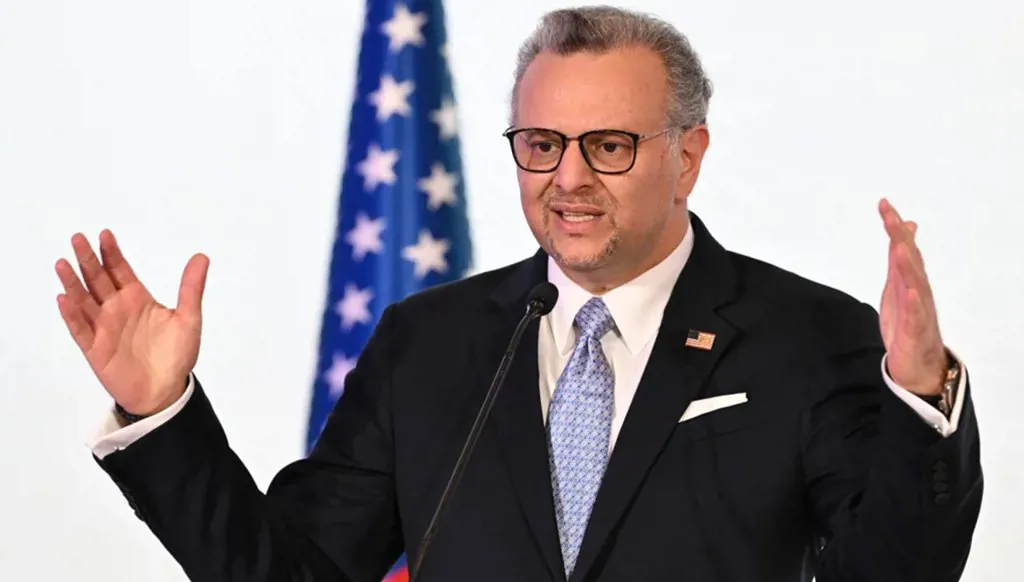
Senior Advisor to the U.S. President on Arab and African Affairs, Massad Boulos. (AFP)
Smaller Bigger


Amid the growing international momentum in favor of the Moroccan autonomy proposal aimed at resolving the Sahara conflict, the separatist Front “Polisario” drank “lion’s milk” and launched several projectiles around the city of Smara, the spiritual capital of the Moroccan Sahara, claiming they targeted military sites. However, reality indicates that the projectiles fell near civilian areas, injuring a woman.


The Polisario Front, supported by Algeria, did not expect the magnitude of international and Arab reactions to these attacks. They were condemned by the United States, France, the United Kingdom, Spain, and several Arab countries, which consider that the Polisario’s actions threaten regional stability and undermine peace efforts. This has provided an opportunity for these countries to renew their support for the Moroccan autonomy project.


Although the Polisario Front launched projectiles toward Moroccan territories, Algeria is considered responsible as it has hosted the separatist front for over five decades, and thus its operations are conducted from the Tindouf camps located in the west of the country, increasing political and diplomatic pressure on Algeria.


Qualitative shift


Remarkably, the Smara attacks served Morocco more than they served Algeria and its creation “Polisario,” as they appeared to undermine regional security, while Morocco’s image shone brighter as a key partner for stability and development in the region.


Additionally, what happened in Smara on May 5 has reinforced calls in some Western circles to classify the Polisario Front as a terrorist organization.


Through these attacks, the Polisario Front attempts to show its refusal, alongside its patron Algeria, to find a solution to the Sahara conflict outside the "self-determination" framework. Although Algerian official rhetoric seems superficially aligned with United Nations Security Council Resolution 2797, which marked a qualitative shift in the Sahara conflict settlement, expressing full support for the United Nations Secretary-General and his personal envoy in facilitating and conducting negotiations based on the Moroccan autonomy proposal, aiming to reach a fair, lasting, and acceptable solution for the parties, consistent with the United Nations Charter.


However, dual stances remain prevalent, as the Polisario Front and Algeria strive to bring the Sahara conflict to the forefront through field escalation, after their diplomatic narratives lost influence due to increasing international support for the Moroccan stance.


Message and fear


The Polisario Front’s fear of being marginalized, if it has a role, prompts it to launch limited and symbolic military operations occasionally, intending to send a message that it still plays an active role in the conflict, which cannot be ignored in any potential future settlement.


The recent attack on Smara coincided with the movements of the UN envoy to the Sahara, Staffan de Mistura, aimed at reviving the political process.


It is clear that there is an attempt to pressure the United Nations and complicate its mission in relaunching negotiations. But wishes are one thing, and the immutable reality is another.


Many noted the tweet posted by Massad Boulos on “X” after meeting, along with the U.S. chargé d’affaires in Algeria, Mark Shapiro, with the Algerian Ambassador in Washington, Sabri Boukadoum.


In Boulos’s tweet, he said: “I reaffirmed the United States’ appreciation for Algeria’s vital and ongoing diplomatic efforts to promote peace and security in the region, including its constructive engagement to reach a mutually agreed-upon solution regarding the Western Sahara conflict, as stated in UN Security Council Resolution 2797. It is time to reach a settlement.”


Before this tweet, Washington’s stance was firm regarding the events in Smara. The United States Mission to the United Nations strongly condemned the attacks in a statement on its official “X” platform, considering these actions as a threat to regional security and undermining peace efforts. This direct American diplomatic pressure on Algeria aims to push it towards committing to a realistic and final political settlement of the long-standing conflict.


The Polisario Front forgets or ignores that the escalation logic cannot change the balance of reality; instead, it deepens its isolation and increases pressure on Algeria to seriously engage in a final political settlement. Let us hope the message is clear to those concerned.


Disclaimer: The opinions expressed by the writers are their own and do not necessarily represent the views of Annahar.