

Hormuz: When a chokepoint starts losing its grip
Repeated threats to key sea lanes are pushing the world to rethink its dependence on narrow maritime passages and accelerate the search for alternative routes and networks for trade and energy.



 Messenger
 Whatsapp
 Threads
 Email
Email
 Print
Print
 X
X
 Facebook
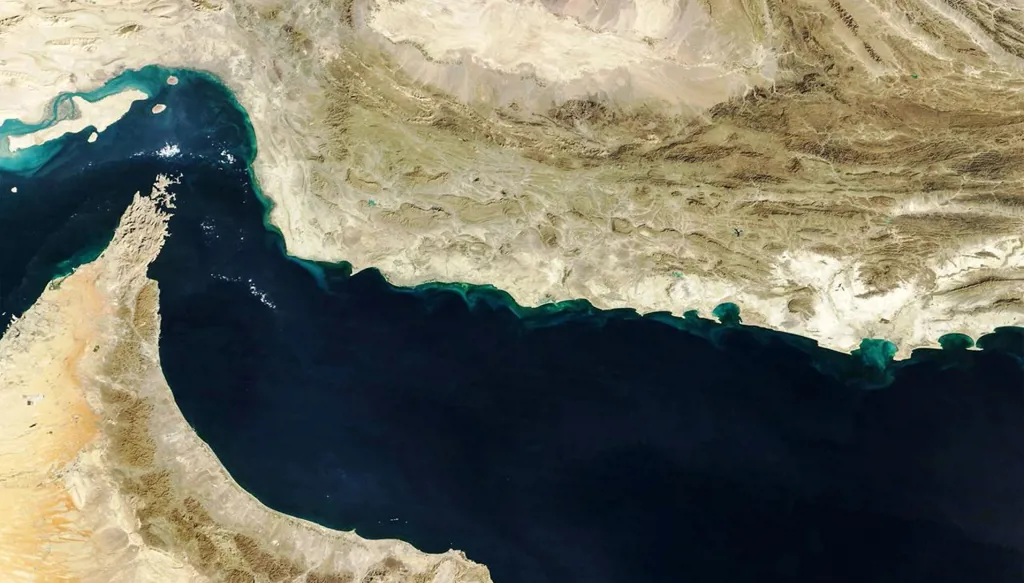


The Strait of Hormuz has never been merely a narrow maritime passage between Iran and the Sultanate of Oman. For decades, it has been one of the most important instruments of power in the international system.
Through this artery, a vast share of the world’s oil and energy trade passes, which has made it a highly sensitive chokepoint capable of turning any regional tension into a global economic crisis. For this reason, it has not been surprising that control over the strait, or even the mere threat of disrupting it, has become a political and strategic pressure tool in the hands of Iran, used whenever pressure on it intensifies.
However, the recent crisis in the Gulf, along with repeated threats to maritime navigation and subsequent broad international attempts to secure sea passage through force or collective protection, has raised a question deeper than the crisis itself: is the world still willing to accept having its economy held hostage by a single waterway, or are we witnessing the beginning of a historic shift in global thinking about strategic maritime routes?
Multiple networks
In the background, the entire world is moving toward a reshaping of the map of trade and energy. The war in Ukraine pushed Europe to diversify its energy sources in an unprecedented way. The attacks in the Red Sea revived the idea of land corridors as a partial alternative to threatened maritime routes. As for China, it has for years been building the Belt and Road Initiative on the basis of reducing the vulnerability of traditional supply routes through a vast network of ports, roads, and railways.
Even climate change has entered the picture, with growing discussion about new Arctic Sea routes that could in the future become part of global trade as ice melts in the north.
In other words, the world is gradually shifting from reliance on a single chokepoint to building multiple networks, so that no single strait alone can paralyze the global economy.
Here lies the major paradox. The more Iran uses the Strait of Hormuz as a pressure card, the faster international efforts accelerate to find alternatives that reduce the value of that very card. This is not a new phenomenon in history. Powers that overuse tools of pressure often push others to find ways to bypass them, until instruments of power gradually become less influential over time.
However, this does not mean that the era of maritime routes has ended. On the contrary, we may witness in the coming years greater efforts to secure these routes by international powers, because the world cannot tolerate continuous chaos in the arteries of trade and energy. The Hormuz crisis may lead to the development of new forms of collective maritime protection, whether through naval alliances or stricter international arrangements.
This means we may be facing two parallel tracks at the same time: increasing militarization and securing of maritime routes, and greater investment in alternatives that reduce dependence on them. This is the real transformation.
The world is not preparing to abandon maritime routes, but it is preparing to prevent any actor from gaining the ability to blackmail the world through them.
The question is no longer only: who controls the strait? but rather: how can a global system be built in which no single strait is capable of threatening the international economy on its own?
And perhaps this is the most important outcome that will remain after the Hormuz crisis. For the world has begun, for the first time seriously, to think about “what comes after chokepoint geography.”
Disclaimer: The opinions expressed by the writers are their own and do not necessarily represent the views of Annahar