

Iran’s regime under pressure: A historic turning point for the Middle East
As Iran faces growing internal unrest, economic decline, and mounting international pressure, the Middle East may be approaching a decisive moment that could reshape the region’s future and balance of power.



 Messenger
 Whatsapp
 Threads
 Email
Email
 Print
Print
 X
X
 Facebook
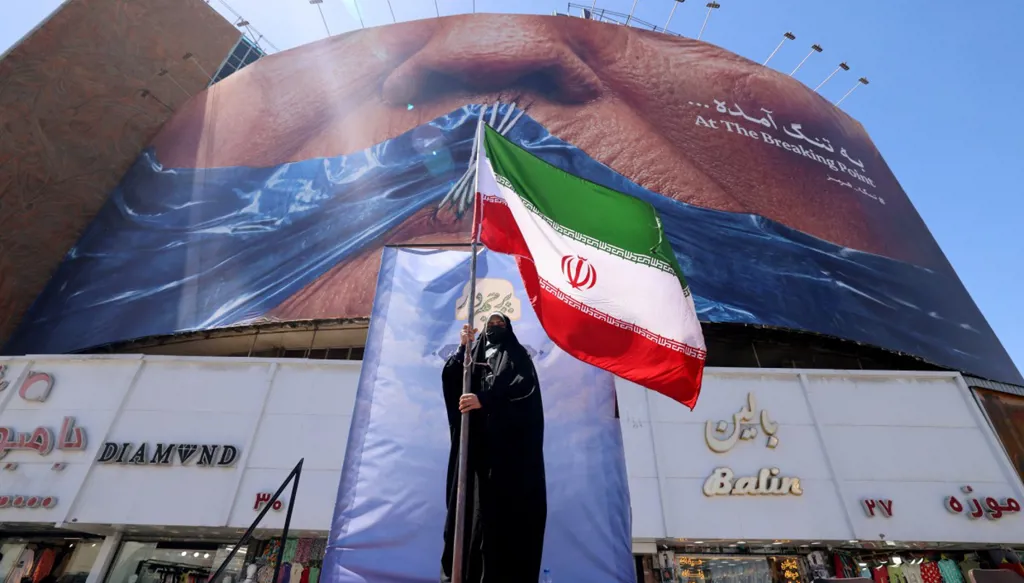


In moments of major historical transformation, regimes do not fall solely because of military power, but also when they lose the ability to convince both their people and the world that they are capable of continuing.
Today, it appears that the Iranian mullah regime is closer than ever to this decisive moment, following decades of policies that have pushed the region into cycles of wars, divisions, and chaos.
Many Arab countries have paid the price for Iran’s expansionist project, whether through support for militias, the export of crises, or the fueling of sectarian conflicts, turning countries that once held great potential for development into open arenas of exhaustion. In contrast, the Iranian people themselves have lost opportunities for development and prosperity, after their country’s wealth was directed toward external conflicts instead of being invested in the Iranian people and the future of coming generations.
Signs of Weakness
Today, signs of weakness within the Iranian regime are increasingly evident: the economy is exhausted, growing public anger is increasingly visible and palpable, while international isolation is deepening and security and military breaches are being exposed, revealing the fragility of the image the regime has tried to project for decades. Most importantly, the “revolutionary” narrative upon which the regime was founded no longer convinces many, even within Iran itself, after Iranians witnessed their country transform from one with immense potential into a nation surrounded by crises, sanctions, and tensions.
This moment may represent a once in a lifetime historical opportunity. The world has begun to realize that the continuation of this regime does not only threaten the region, but also endangers international stability, energy security, and the global economy. Moreover, the current US administration’s firm stance against Tehran’s aggressive policies represents a strategic shift that may not be repeated with the same momentum in the future.
However, any successful action must not be driven by emotion alone, but by strategic intelligence and calculated statecraft that minimizes losses and constrains the regime politically, economically, media wise, and in terms of security. Uncalculated confrontations could push the region into new chaos, while what is required is the construction of an integrated pressure equation that weakens the regime’s tools and contains its influence, without sliding into costly scenarios for all sides.
The Iranian people are not the enemy
At the same time, there must be a clear distinction between the regime and the Iranian people. The Iranian people are not an enemy of the Arabs; rather, they are among the biggest victims of this regime. Millions of Iranians want a normal life, job opportunities, stability, and balanced relations with their neighbors and the world, away from the slogans of perpetual confrontation.
History does not wait for the hesitant, and major opportunities do not come twice. The region today stands at a decisive moment: either confront the project of chaos and expansion with firmness, awareness, and unity, or allow crises to renew themselves for decades to come. Between these two options, peoples understand that the hour of resolution may have already begun.
Disclaimer: The opinions expressed by the writers are their own and do not necessarily represent the views of Annahar.