Oil market outlook turns volatile as geopolitical risks redraw brent price forecasts
Major institutions including Goldman Sachs, JPMorgan, Morgan Stanley, the World Bank, and the EIA warn that Strait of Hormuz tensions and supply shocks are reshaping global energy pricing and inflation risks.
Oil market is no longer priced according to traditional supply and demand alone (AFP)
Expert firms have revised their pricing models, which were prevalent before the war, to be less conservative this year. Brent crude, trading today near $103.54 per barrel, brings the market closer to the strict scenarios proposed by some institutions rather than their more optimistic basic assumptions.
Expert firms agree that the oil market is no longer priced solely according to the traditional supply and demand equation. The geopolitical factor, specifically the fate of navigation in the Strait of Hormuz, has become the primary determinant of price direction in the short term.
In the basic scenario of some institutions, Brent could gradually decline to a range of $86 to $96 during the year if navigation resumes and risks subside. However, if restrictions on Hormuz last longer or the war expands, the range of $110 to $120 remains possible, with potential higher levels should actual supply shortages worsen.
Goldman Sachs Group:
Goldman Sachs Group expects, in its basic scenario that assumes a partial resumption of navigation in the Strait of Hormuz, Brent to reach $90 per barrel and West Texas Intermediate to $83 in the fourth quarter of the year.
But in the strict scenario, which assumes continued closure and a reduction in Gulf production by about 2 million barrels per day, Brent could reach $120 in the third quarter and $115 in the fourth quarter.
The bank highlighted a fundamental change in the market balance, moving from an estimated surplus of about 1.8 million barrels per day in 2025 to a significant deficit in the second quarter of 2026, reflecting the scale of supply disruption compared to demand.
JPMorgan Chase & Co.:
JPMorgan Chase & Co.revised its previous conservative stance after the war’s impact on supplies widened. In early April, the bank warned that prices could exceed $150 per barrel if disruptions persisted until mid-May.
In a subsequent report issued on April 24, the bank’s analysts noted that spot delivery prices in some shipping markets reached about $121 per barrel. They considered this level insufficient to reduce demand enough to compensate for the supply gap, indicating that the market has yet to reach a balance capable of automatically curbing prices.
The bank expects prices to remain above $100 during the second quarter before a partial recovery in supplies in the second half of the year, if shipping conditions improve and geopolitical risks decline.
Morgan Stanley Index (AFP)
Morgan Stanley:
Morgan Stanley maintained its forecast for Brent crude at $110 per barrel in the second quarter and $100 in the third quarter, making it one of the most aggressive positions among major expert firms in the medium term.
The bank does not link its forecast solely to the closure of the Strait of Hormuz, but to longer-term impacts on supply chains. Even if the strait is reopened, shipping, tankers, refineries, and storage markets may require months to return to their previous efficiency. This, according to its estimate, may keep prices above pre-war levels for a prolonged period.
U.S. Energy Information Administration:
U.S. Energy Information Administration raised its forecast for the average price of Brent crude in 2026 to $96 per barrel, compared to a previous estimate of $78.84 per barrel, in a revision reflecting the magnitude of the shock caused by the war in the energy market.
However, these forecasts are based on an important assumption: that the conflict will not extend beyond April, and that navigation through the Strait of Hormuz will gradually resume. With tensions continuing until May 11, this assumption is being tested, making actual prices closer to the higher risk ranges noted by the agency.
World Bank:
World Bank predicted that the average price of Brent crude would reach $86 per barrel in 2026, compared to about $69 in 2025. It also indicated an expected increase in average global energy prices, amid one of the largest shocks faced by commodity markets since the disruptions of 2022.
In a scenario of further escalation, the bank set a higher price range between $95 and $115 per barrel. However, its basic estimates remain conditional on the gradual reduction of disruptions and the return of shipping movements through the Strait of Hormuz to more stable levels.
The shock effect is not limited to energy markets. Rising oil prices impact transportation, production, and fertilizer costs, increasing pressure on food prices, especially in developing countries and energy- and food-importing countries.





 Messenger
 Whatsapp
 Threads
 Email
Email
 Print
Print
 X
X
 Facebook



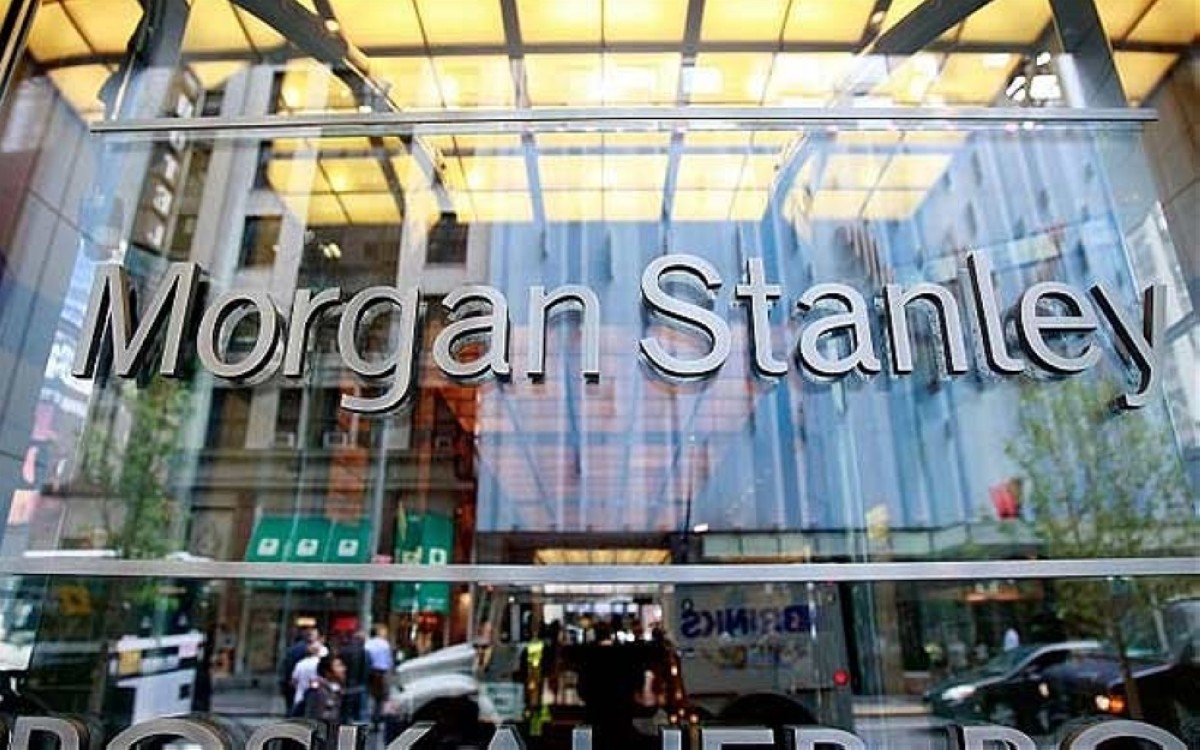 Morgan Stanley Index (AFP)