

The missing role of Algeria’s soft power in its relations with Turkey
As Algeria and Turkey deepen political ties, observers highlight the absence of cultural diplomacy and soft power initiatives.



 Messenger
 Whatsapp
 Threads
 Email
Email
 Print
Print
 X
X
 Facebook
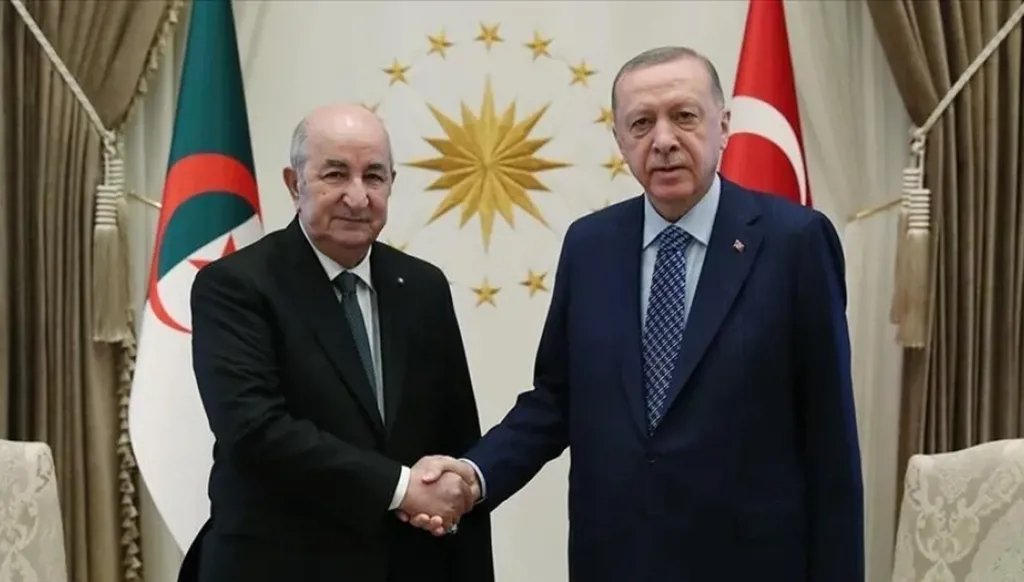


Are purely political visits enough to build international relationships, and why is there no Algerian interest in activating culture as a soft power tool?
This question has been repeatedly raised before and during the official visit made last week by Algerian President Abdelmadjid Tebboune to Turkey at the invitation of his counterpart, Turkish President Recep Tayyip Erdoğan. The visit was marked by an exclusive focus on signing several agreements and memorandums of understanding related to media, economic, commercial, agricultural, industrial, transportation, and disaster management issues, including a memorandum of understanding for cooperation between the Algerian Ministry of Communication and the Directorate of Communications of the Presidency of the Republic of Turkey in combating media misinformation, as well as a memorandum of understanding on bilateral investment cooperation, among others.
Why Is Soft Power Being Excluded?
In this context, Algerian observers specializing in cultural and artistic affairs questioned why Algeria excluded national figures with expertise in culture and the arts from the official delegation, and why no agreements or memorandums of understanding related to cultural and artistic fields were signed. These fields include film and theater production, publishing and distribution, translation, the exchange of expertise, and the establishment of partnerships and ongoing cooperation in areas considered civilizational drivers. Such initiatives could contribute to strengthening the ties between Algeria and Turkey, especially given that relations between the two countries span more than three centuries and are reflected in shared ethnic, cultural, and artistic connections.
It is worth noting that most Algerian official diplomatic and presidential visits, whether domestic or international, do not give cultural and artistic matters the importance they deserve, such as including prominent cultural figures, writers, and artists within official delegations.
The absence of these figures from official delegations has partly hindered the presentation of a national soft power image and its diverse intellectual, cultural, and artistic expressions. The modern world views this form of vital power as one of the essential and exceptional foundations that give life to political relationships and protect them from sudden interruption or rupture.
Political Delegations Alone Are Not Sufficient
In fact, including prominent representatives of Algerian culture is of utmost importance, as they fulfill two interconnected roles: closely observing the cultural, civilizational, and artistic landmarks of the host country, while also introducing the spiritual and cultural identity of their Algerian homeland to the people of the countries being officially visited.
Algerian experts in civilizational relations between nations believe that neglecting the important cultural, artistic, and spiritual dimensions in shaping and strengthening international relations has, since independence, contributed to the limited recognition of Algerian national culture and its prominent figures, whether in the Arab world or in countries across the globe, including Turkey.
Historical facts confirm that the long-standing Turkish-Algerian relationship, in which positive security cooperation helped thwart numerous European attempts to conquer Algeria alongside the imperial influence that followed Algeria’s incorporation into the Ottoman Empire, is rich in cultural and artistic exchange. This exchange extended to architecture and urban planning, kasbahs, music and song, various lifestyles, clothing, and literary traditions, among other areas.
Despite this rich past, it is noticeable that since Algeria’s independence, there has been no serious cultural cooperation project with Turkey that includes, for example, the fields of translation and distribution of representative selections of cultural production, sustainable partnerships between associations and unions of writers, intellectuals, and artists of various disciplines, or cultural centers dedicated to promoting cultural and artistic exchange and dialogue between the two countries.
Disclaimer: The opinions expressed by the writers are their own and do not necessarily represent the views of Annahar.