

World Cup 2026 expansion: Global inclusion or loss of competitive edge?
Expansion of the World Cup to 48 teams sparks debate over balance between global inclusion and competitive intensity.



 Messenger
 Whatsapp
 Threads
 Email
Email
 Print
Print
 X
X
 Facebook
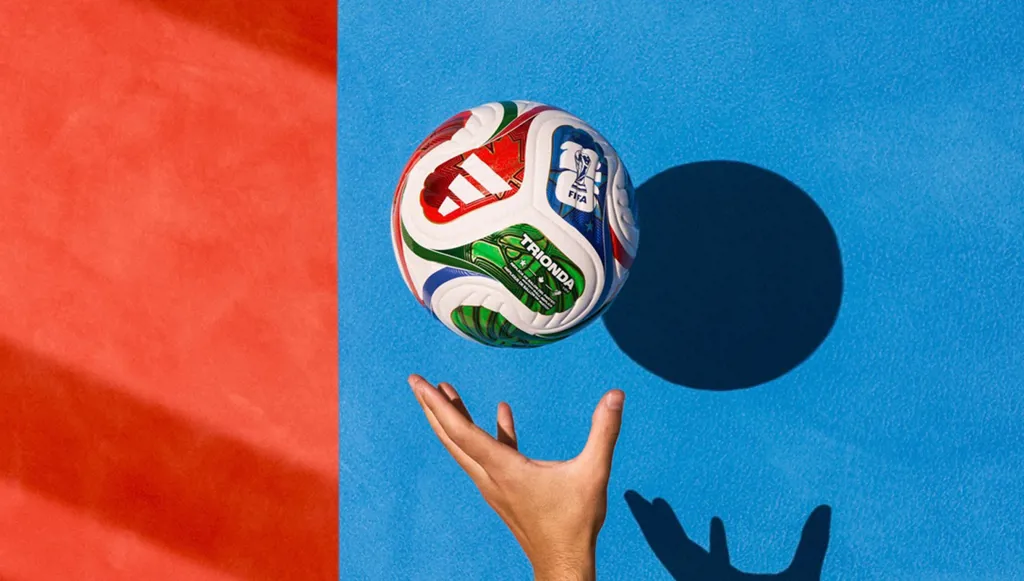


The 2026 FIFA World Cup will witness, for the first time in its history, the participation of 48 national teams in an unprecedented expansion of the tournament. This move has sparked widespread debate over whether the change will reduce the excitement and unpredictability that have long been among the defining features of the world’s most important football event.
This expansion was a direct implementation of one of the main proposals put forward by FIFA President Gianni Infantino shortly after taking charge of FIFA in 2016.
At the time, Infantino stressed the importance of giving “more opportunities to more national teams,” noting that the World Cup should be viewed as “more than just a sporting competition, but also a social event.”

“A Natural Evolution”
For a large part of its history, the World Cup could hardly be described as a truly global tournament, as it was dominated by European teams and a limited number of South American nations before eventually settling on a 16 team format, then expanding to 24 teams in 1982.
In the 1978 edition, 10 of the 16 participating teams were European, while at the 1990 World Cup in Italy, European teams accounted for 14 of the 24 participants.
Africa, meanwhile, had only four representatives in total across the first 11 editions of the tournament before 1982. Even by the 1990 World Cup, Africa, Asia, and the CONCACAF region (North and Central America and the Caribbean) each had no more than two participating teams.
The expansion to 32 teams starting from the 1998 edition provided a fairer global distribution of spots, yet the 2022 World Cup in Qatar still featured only five African teams compared to 13 European sides.
The increase to 48 teams aims to achieve a more balanced distribution without reducing Europe’s allocation, as the “Old Continent” will now have 16 spots, compared to 10 for Africa, nine for Asia, and six each for South America and CONCACAF, in addition to New Zealand representing Oceania.
In this context, FIFA’s Chief of Global Football Development, the Frenchman Arsène Wenger, said in December: “It is a natural evolution. We want to make football widespread all around the world.”
He added: “I think 48 teams is the right number. It is still less than 25 percent of FIFA’s 211 member nations.”
This expansion has allowed several smaller countries around the world to qualify for the finals for the first time, most notably the small Caribbean island of Curaçao, whose population does not exceed 160,000 people.
The national teams of Cape Verde, Jordan, and Uzbekistan have also qualified for the tournament for the first time in their history.
The new system also gives underdog teams the chance to progress beyond the group stage and reach the Round of 32, which will be the first knockout round. The top two teams from each of the 12 groups will qualify, along with the eight best third placed teams, meaning that in some cases a single win in the group stage could be enough to reach the knockout rounds.
“Decline in Excitement”
However, the expansion raises growing concerns that the tournament could lose part of its early “risk factor”, as top teams may not feel the same pressure even after an early defeat. This contrasts with the 2022 edition, when the Argentina national team, which later won the title, experienced real tension after losing to Saudi Arabia.
Similarly, shock eliminations of major teams in the group stage, such as Germany in recent editions, may become less likely under the new format.
In 2022, teams played 48 group stage matches to eliminate 16 teams, whereas under the new system this will rise to 72 matches to eliminate the same number.
To go all the way, teams will now need to play eight matches instead of seven to reach the final, adding significant physical strain, especially in the demanding summer conditions of North America, and increasing pressure on key players in top squads.
In this context, Jonathan Wilson, author of The Names Heard Long Ago: How the Golden Age of Hungarian Football Shaped the Modern Game and The Power and the Glory: A New History of the World Cup, believes the previous 32 team system was ideal.
He says: “I understand the argument for greater representation, but I think the 32 team format was perfect.”
He adds that the main issue is not the technical level, but rather “the reduced excitement in the group stage because eight third placed teams qualify,” warning that this could make the group stage “drag on too long and test fans’ patience.”
He also warns that adding an extra knockout round could encourage more cautious and defensive tactics from some teams.
For major teams, the priority in the opening stage will simply be avoiding early surprises.
In this context, Thomas Tuchel, head coach of the England national team, said: “You focus only on the group stage, that’s what you do, and make sure you are in the right mental state.”