

Saudi Arabia reaffirms neutral stance and push for regional de-escalation amid Gulf tensions
Riyadh stresses diplomacy, rejects offensive involvement claims, and calls for stability in the Strait of Hormuz.



 Messenger
 Whatsapp
 Threads
 Email
Email
 Print
Print
 X
X
 Facebook
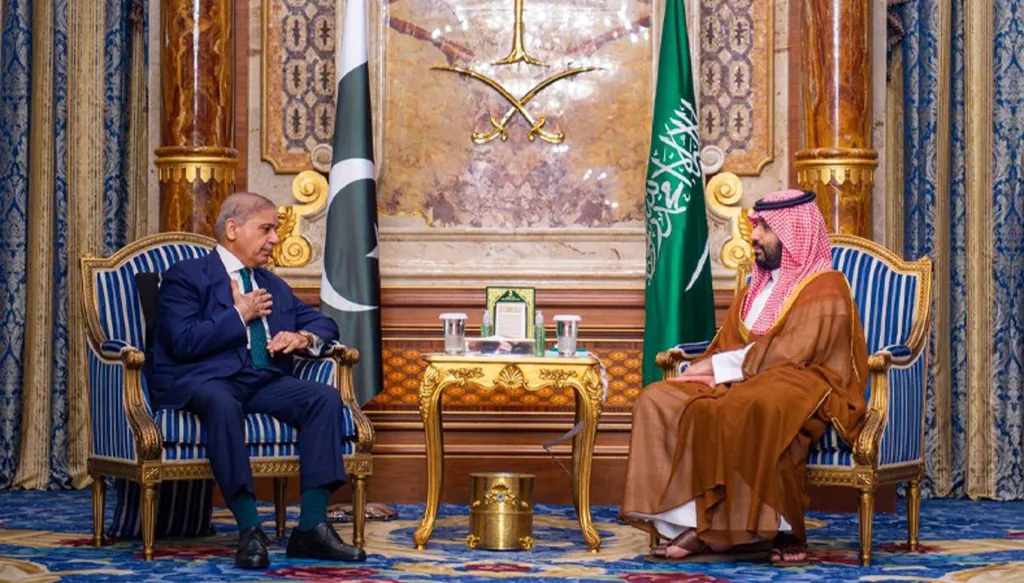


“The Kingdom of Saudi Arabia continues its supportive stance toward de-escalation, avoiding escalation, and supporting negotiations and the efforts being made regarding them.” This is what Raed Qarmali, Saudi Arabia’s Deputy Minister of Foreign Affairs for Public Diplomacy, confirmed on May 8.
He added via his account on the platform X that “one must be cautious of what is being attributed in the media to anonymous sources, some of which are claimed to be Saudi, when it contradicts this position.”
In the same context, a Saudi source confirmed to Al Arabiya Network that the Kingdom “did not permit the use of its airspace to support offensive military operations,” revealing that there are “parties seeking to portray a misleading image of the Kingdom’s position for suspicious motives,” through the publication of reports in certain newspapers and platforms containing false and unreliable information.
This explicit position announced by Raed Qarmali and the Saudi source is fully consistent with the statement issued by the Ministry of Foreign Affairs of Saudi Arabia on May 5, which stressed “the necessity of de-escalation, avoiding escalation, and exercising restraint” in the Arabian Gulf.
Although the Kingdom was not part of the Israeli-American war against Iran, it was nevertheless subjected to Iranian ballistic missile and drone attacks, while Iraqi militias affiliated with the Islamic Revolutionary Guard Corps targeted vital facilities within the Kingdom. This partially disrupted energy supplies for a short period before the government quickly repaired the damage, demonstrating a high level of efficiency.
During this period, Riyadh adopted what could be described as a policy of “strategic patience.” It did not engage in offensive operations, while its air defense systems intercepted the attacks.
The Iranian ambassador remained in Riyadh throughout the war, and the Kingdom continued to warmly receive Iranian pilgrims, maintaining a clear distinction between serving the Guests of Allah and political matters.