

The Iranian discourse and the politics of meaning
How Iran’s political language is constructed across identity, strategy, and history, and how it is interpreted and contested in the Arab regional context.



 Messenger
 Whatsapp
 Threads
 Email
Email
 Print
Print
 X
X
 Facebook
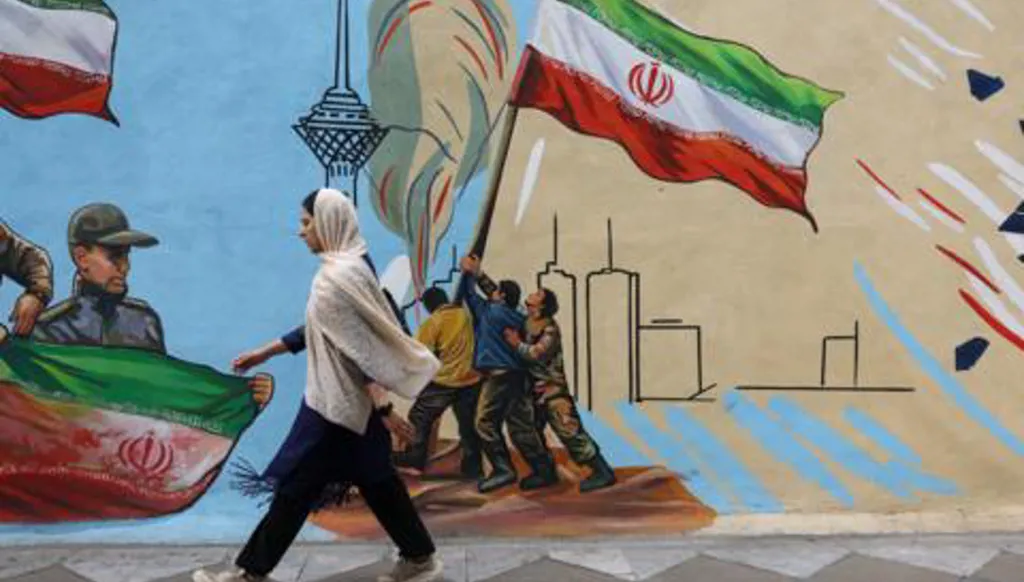


In the absence of Arab nationalist discourse, neighboring nationalisms have exploited this vacuum by presenting misleading internationalist narratives under the name of Islamic discourse, which has made our region hostage to narratives that do not reflect our interests and do not serve our strategic visions.
This has reached the point where an Arab person may accuse himself or his brother of betrayal under the influence of these narratives.
This has become clearly evident since the events of the so-called Arab Spring up to the war on Iran. While neighboring powers remain internally cohesive and use us as tools in their battles, we suffer from division and from being preoccupied with interpreting the discourse of those powers instead of formulating our own discourse.
This is because the reader of this article may determine their position based on the interest of one of the parties within that neighboring environment rather than from an independent objective perspective, as if the stance has become limited to being for or against rather than being based on facts and interests.
The Iranian discourse
Understanding this discourse is not limited to simply translating it from Persian into Arabic. Rather, it requires grasping the intellectual and strategic structure that governs the behavior of the Iranian state and even going further than that toward understanding its history, which has preserved a continuous strategy despite changes in governments and shifts in leadership.
The Iranian discourse is a complex and layered system in which history overlaps with geography, ideology with politics, and revolutionary and internationalist slogans with pragmatic calculations.
Understanding this system begins first with understanding the particular worldview that the Iranian holds about themselves, the world, and everything around them, what is known as a worldview. Shiism, for example, as a religious doctrine, has become for the Iranian part of their national formation and political identity.
From an objective standpoint, we can say that the Iranian is not the only one who operates in this way, but it is also necessary to acknowledge objectively the existence of a complex Iranian discourse that requires deep analysis and deconstruction, so that we do not fall victim to deception or be carried away by slogans.
The multiplicity of faces of discourse necessarily means the multiplicity of its functions according to its direction. The discourse used by the Iranian system internally is aimed at consolidating its legitimacy, protecting its foundations, and maintaining societal mobilization in the context of the erosion of the social contract as a result of policy failures and accumulated crises.
As for the discourse directed outward, it is more strategic and broader in time horizon, extending beyond the limits of the existing regime itself.
When Tehran speaks of resistance, this term, despite its ability to appeal to Arab public sentiment, becomes in practice a tool for managing regional influence, building networks of alliances, and applying pressure on competing regional powers, in addition to being used to counter international pressures.
Thus, the Arab citizen finds themselves, knowingly or unknowingly, merely a bullet in someone else’s gun. In plain terms, they become a soldier in the battle of strategic depth that Iran has been seeking to build since the time of the Achaemenid Persians in the Eastern Mediterranean region, where, even before Western colonialism, they dug the Sesostris canal to connect the Nile River with the Red Sea for their trade and influence.
The Iranian Identity
Iran has the right to take pride in itself, but it does not have the right to strip us of our own identity in the name of its transnational internationalist slogans.
Even the concept of independence from dependency, which is frequently repeated in its discourse, is not understood as complete liberation from foreign domination, as Tehran tries to portray through the slogan neither Eastern nor Western, as if the Iranian state since the 1979 revolution has achieved absolute independence, in contrast to an Arab world that, according to that discourse, is still subject to Western dependency and colonialism.
Deconstructing this discourse reveals that Iran has used it to manage its own interests, meaning for the sake of its own self, rather than to lead a regional project toward independence as its rhetoric suggests.
The Iranian self, in its internal discourse, clearly speaks of the Iranian nation and Iranian civilization.
Disclaimer: The opinions expressed by the writers are their own and do not necessarily represent the views of Annahar.