

US 2026 counterterrorism strategy: A shift toward a comprehensive security doctrine
The new US strategy signals a broader redefinition of terrorism, linking jihadist groups, political Islam, and transnational networks into a single evolving security framework centered on deterrence and structural disruption.



 Messenger
 Whatsapp
 Threads
 Email
Email
 Print
Print
 X
X
 Facebook
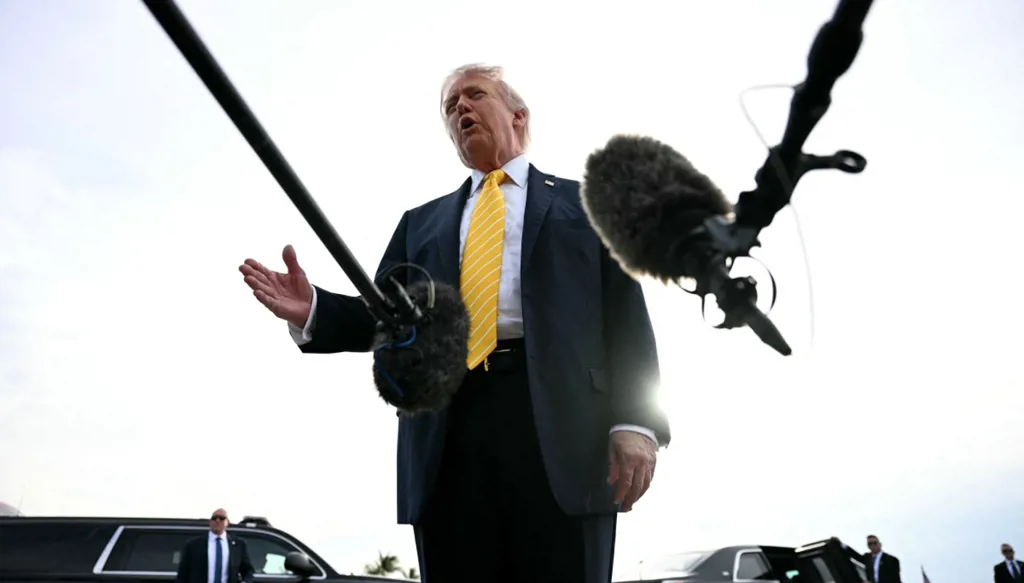


At the conclusion of his presentation of the new United States counterterrorism strategy published on May 6, 2026, the president of the United States said: If you harm Americans or are planning to harm them, we will find you and we will kill you.
This statement did not come as a passing rhetorical phrase but rather reflects features of a new security doctrine based on moving from managing the threat to eliminating it, and from traditional deterrence to direct offensive deterrence. The introduction shows that the strategy does not view terrorism as isolated acts, but as an extended system that includes armed organizations, supporting networks, and ideological environments that produce violent extremism or justify it.
In this context, Trump adds in the introduction a more sensitive indication when he confirms that the United States has designated major branches of the Muslim Brotherhood as terrorist groups as it has always done, in a clear shift from political debate over the nature of the group to a security approach that considers some of its branches not as exceptions, but as parts of an extended organizational structure that is being redefined within the threat system.
The foundational structure
The strategy developed a broader causal narrative that no US president before Trump had explicitly articulated. It states clearly that all modern jihadist groups, from Al Qaeda to ISIS to Hamas, can trace their roots back to the Muslim Brotherhood, which is presented as the structural origin of modern Islamist terrorism based on a project of restoring the caliphate and employing violence against non-Muslims.
Based on this perspective, the strategy speaks of what it describes as a historic step, consisting of an executive order that classified the original branches of the organization, including the Egyptian branch, the Jordanian branch, and the Lebanese branch, as foreign terrorist organizations, with the intention of later expanding this classification to include other branches in the Middle East and beyond. This is understood to mean that the new approach is moving toward dismantling the organization’s network through its branches rather than treating it as a single unified entity.
The strategy emphasizes that the goal of this approach is not limited to containment but extends to dismantling the organization and undermining its global operational capacity, by targeting funding networks, organizational links, and transnational structures that connect the different branches.
In parallel, the strategy links this approach to a set of core US interests in the Middle East, including ensuring the flow of energy in the Gulf and preventing it from falling under the control of hostile adversaries, maintaining freedom of navigation in the Strait of Hormuz and the Red Sea, and preventing the region from becoming a source or safe haven for terrorism against US interests or domestic security, while emphasizing that Israel’s security is one of the strategic constants in this framework.
Traditionally, previous US administrations, particularly Democratic ones during the periods of Barack Obama and Joe Biden, distinguished between armed jihadist organizations such as Al Qaeda and ISIS, and political Islam groups operating in political or religious spheres, foremost among them the Muslim Brotherhood. However, the 2026 strategy indicates a gradual erosion of this separation in favor of a more comprehensive approach that links transnational political Islam with environments that produce extremism.
Within this framework, Al Qaeda and ISIS are classified as direct operational threats, while Hamas is placed within a broader regional network in which political and military dimensions intersect with regional influence.
Enabling environment
In the new approach, the Muslim Brotherhood appears as part of the ideological and organizational structure that may provide an enabling, supportive, or justificatory environment for violence, even without direct involvement in it. The regional implications of this shift are clearly reflected in several Arab arenas. In Jordan, which for decades represented a model of cautious balance between the state and the Muslim Brotherhood, this shift imposes increasing pressure on local branches of the group, particularly amid growing links being drawn between political Islam, Hamas, and Iran, and the potential consequences this may have for reassessing funding, organizational activity, and cross border networks of relations.
In Lebanon, the new US shift is linked to rising concerns about the overlap between political Islam, regional influence networks, and armed groups, within an extremely complex political and security environment where non state actors intersect with the sectarian structure of the state. This reinforces a more stringent approach to dealing with these networks within the framework of regional security. However, the fundamental question remains: is this shift permanent or tied to the Trump administration?
It is clear that part of this direction reflects Trump’s approach based on firm deterrence and direct rhetoric. However, deeper indicators suggest that the shift is not limited to a political moment, but extends into security thinking institutions, where a traditional assumption separating non armed political Islam from armed jihadist organizations is being reassessed. Several factors have accelerated this shift, most notably the rise of transnational threats, the expansion of non traditional organizational networks, the repercussions of regional wars, and the decline or failure of previous models in containing what is referred to as political Islam.
Accordingly, even if a future US administration changes and Democrats come to power, it is likely that the language and style will change, but Washington will not necessarily return to the previous strict separation between political Islam and violent extremism. The current trajectory appears closer to a gradual transformation in the definition of threats rather than a temporary political choice.
In conclusion, President Trump’s 2026 counterterrorism strategy reveals a clear return to the logic of force and deterrence, but at the same time it points to a deeper phase in US security thinking, in which the relationship with political Islam is being redefined, not as a neutral political actor, but as a potential part of the strategic environment that produces cross border threats.
Dr. Saud Al Sharafat
Founder and Director of the Shurafat Center for Globalization and Terrorism Studies, Amman, Jordan
Disclaimer: The opinions expressed by the writers are their own and do not necessarily represent the views of Annahar