

Iraq’s government formation: Between external pressure and domestic expectations
As the Iraqi Prime Minister Ali Al-Zaid iattempts to build a new cabinet, Iraq stands at a delicate crossroads where regional tensions, foreign influence, and internal demands are all shaping the outcome of one of the country’s most sensitive political processes.



 Messenger
 Whatsapp
 Threads
 Email
Email
 Print
Print
 X
X
 Facebook
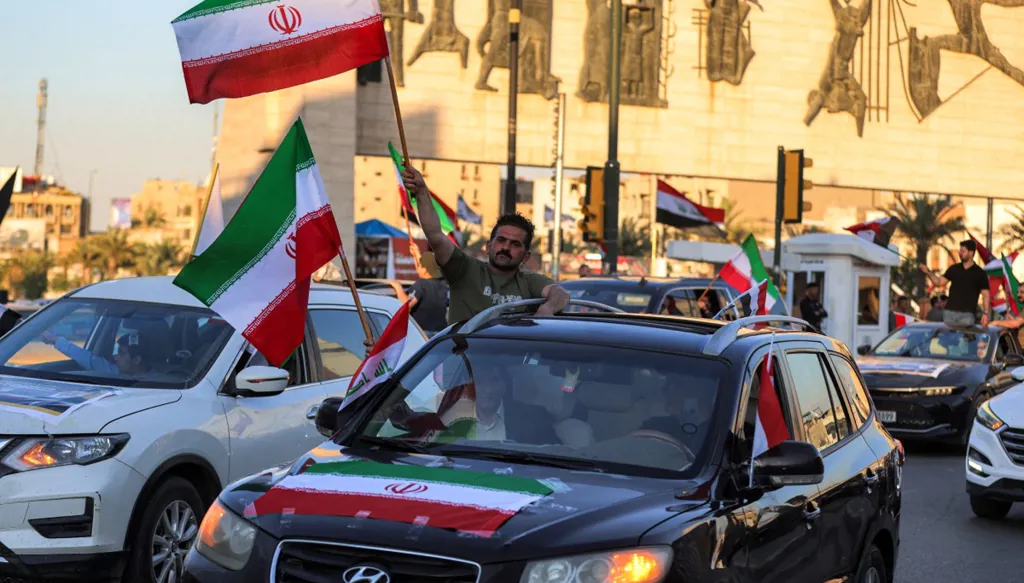


In the context of a regionally unstable security and political environment, attention is turning to the designated Iraqi Prime Minister, Ali Al-Zaidi, who faces a complex test in forming a government capable of achieving a delicate balance between domestic requirements and external pressures, at a time when the repercussions of tensions linked to the war on Iran and their impact on the region and Iraq in particular are escalating.
Iraq faces a test of delicate external balances
Al-Zaidi’s appointment comes in a political context characterized by a clear overlap between local will and international influence, as external powers, foremost among them the United States and Iran, continue to play influential roles in shaping the trajectories of the Iraqi political process. External support is seen as a decisive factor in facilitating or obstructing the formation of the government, depending on the extent to which it aligns with the interests of those powers.
According to various Iraqi sources, the international community, particularly Western and Arab countries, is awaiting the formation of an Iraqi government that demonstrates a degree of independence in decision making, while maintaining balanced regional relations and avoiding sharp alignments.
External support, while providing political and economic backing for the anticipated government, also imposes indirect constraints on the choices of the designated prime minister, whether in selecting his ministerial team or in setting the priorities of his government program.
Observers believe that Al-Zaidi is operating within a narrow margin, as any clear alignment with a regional axis could negatively affect his government’s chances of gaining international confidence and weaken its ability to attract economic and investment support.
What are the implications of regional tensions on Al-Zaidi’s mission?
These developments come amid rising tensions related to the war on Iran, which cast a shadow over Iraq as a balancing arena between conflicting parties. The most prominent of these implications include security and political pressures, in addition to their impact on Iraq’s relations with its Arab surroundings.
There are concerns that these tensions may complicate the process of forming the government, particularly regarding the distribution of sovereign ministries, which are often a focus of attention for regional and international powers.
In this context, Iraqi parliament member Ahmed Al Sharmani told Annahar that external support has become a directly influential factor in determining the path of government formation, but the challenge lies in how to utilize this support without compromising national decision making.
Al Sharmani believes that the designated prime minister is required to find a balancing formula that ensures both domestic and international acceptance, which requires high political skill in managing contradictions, especially since Baghdad operates within a complex network of regional balances, making the government formation process closer to unannounced understandings between influential forces.
He adds that tensions related to Iran increase the sensitivity of the current phase and place the upcoming government before challenges that go beyond domestic affairs to regional and international dimensions. Therefore, Al-Zaidi’s mission will not be easy, and he must work to gain the trust of the regional and international community, as this is the foundation for the success of any new government.
What are the decisive factors in the process of forming Iraq’s government?
The challenge facing Al-Zaidi is not limited to securing the confidence of parliament; it also extends to winning the trust of the Iraqi street, which is looking forward to a government capable of improving economic and service conditions, as well as restoring the confidence of Arab countries and the international community. The success of the next government will also largely depend on its ability to achieve a balance between the requirements of national sovereignty and the pressures of the regional environment, in the context of a complex political reality.
For his part, political science professor Hazem Al Shammari told Annahar that “the influence of external support has become a decisive factor in determining the path of forming the next Iraqi government, and Al Zaidy faces a complex challenge in achieving a precise balance between domestic demands, regional pressures, and the international community, and this is evident to everyone.”
Al Shammari says that “the current political environment in Iraq is no longer governed only by internal consensus but is now directly influenced by the calculations of regional and international powers, especially in light of tensions related to Iran and the complex political and security reality it imposes. External support can facilitate the process of forming the government by providing political and economic cover, but at the same time it can turn into a pressure tool that imposes unofficial conditions on the shape of the government.”
He points out that “the main challenge facing Al-Zaidi is maintaining the independence of national decision making while not losing international and Arab confidence. This is a highly sensitive balance that requires flexible political management and the ability to maneuver without drifting into opposing blocs, especially since regional escalation directly reflects on the internal situation in Iraq, which increases the complexity of forming the government and makes it closer to a multi-party political settlement in which local considerations intersect with external interests.”
In light of these factors, it appears that forming an Iraqi government that enjoys both internal and external confidence has become a difficult task requiring precise management of balances and strong political maneuvering skills. Between external support and regional pressures, the future of Al Zaidy’s government remains dependent on his ability to turn challenges into opportunities without falling into the trap of alignment.