

Nabil Nahas at the Venice Biennale: A vision of cosmic unity and Lebanese identity
Through abstraction, repetition, and cultural layering, the Lebanese pavilion reflects on humanity’s place within an infinite, interconnected universe while asserting Lebanon’s pluralistic heritage on the global stage.



 Messenger
 Whatsapp
 Threads
 Email
Email
 Print
Print
 X
X
 Facebook
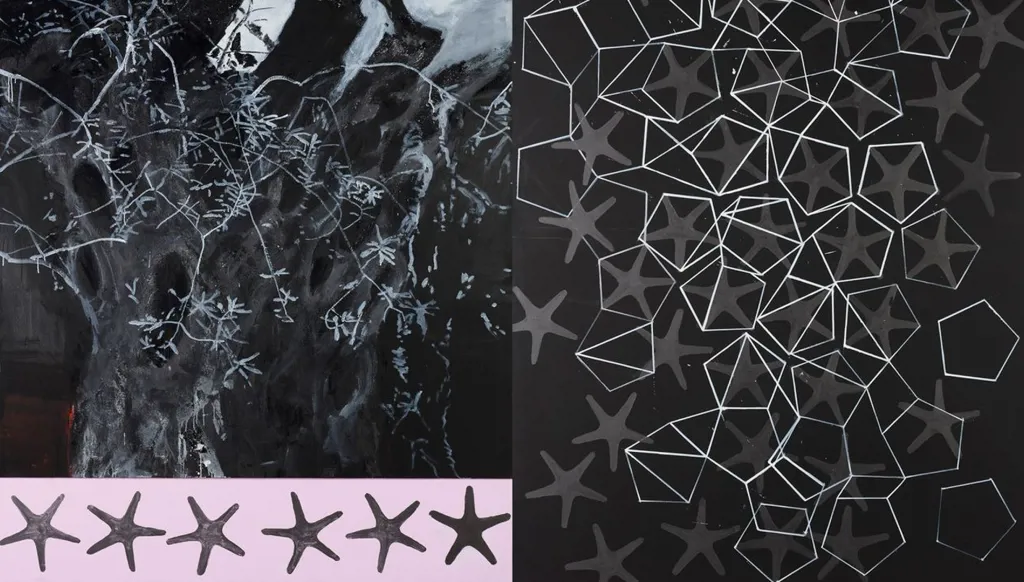


In his large-scale preparatory work “Don't Get Me Wrong” presented at the Venice Biennale, Lebanese artist Nabil Nahas explores the profound relationship between humans, nature, and the universe, offering an immersive visual and spiritual experience grounded in a captivating visual atmosphere that invites self-reflection.
The pavilion, stretching 45 meters in length at the Arsenale site, is composed of 26 acrylic-on-canvas paintings, each three meters high. These works are placed side by side to form a monumental frieze that surrounds the visitor and invites them to engage with a space that is not so much seen from the outside as it is experienced from within.
A view of the Lebanese pavilion at the Venice Biennale
Inspired by Persian miniature painting, the work breaks away from linear narrative and single interpretation, presenting a sensory experience that cannot be reduced to a fixed explanation. The paintings are rich with a dense visual language in which geometric abstractions drawn from both Islamic and Western art intersect with figurative elements and luminous fractal structures, creating a surprising visual continuity that pulses with movement and transformation.
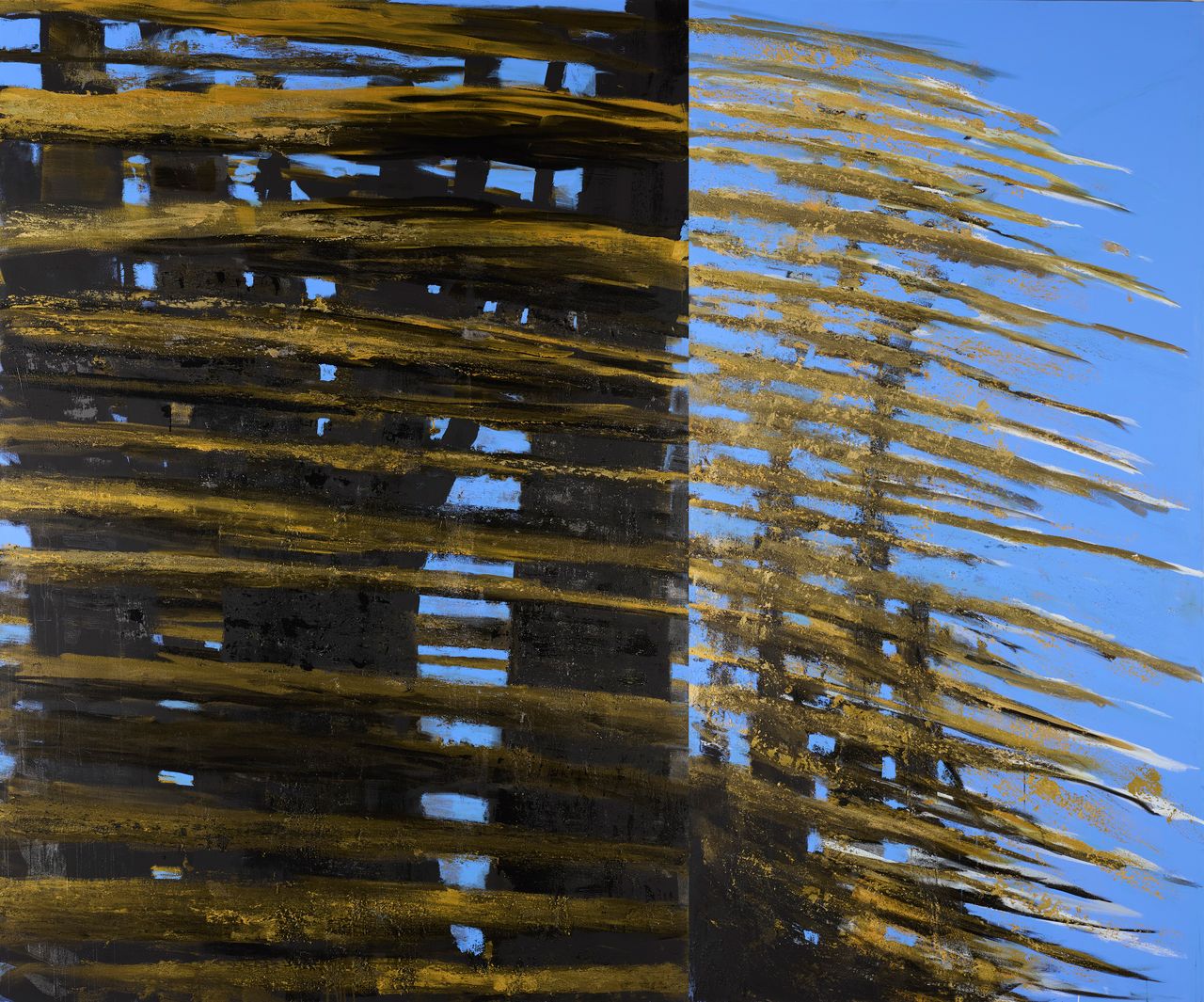
Geometric forms are transformed into the mathematical structure of the cosmic system, where the infinitely small and the infinitely large coexist within a single unity. Certain motifs are repeated across different scales, in animals and nature, as a reminder of humanity’s belonging to an endless whole. The spiral form, with its connotation of infinity in Sufi rituals, emerges as a rhythmic force that influences the mind, pointing to an inward and intimate search.
The curator of the Lebanese pavilion, Dr. Nada Ghandour, tells Annahar: “It is true that we are currently abroad, but we are here to extend a hand to all Lebanese and to help them, including artists, because the Biennale is a very important space for promoting artists, Lebanese art, and Lebanese culture.”
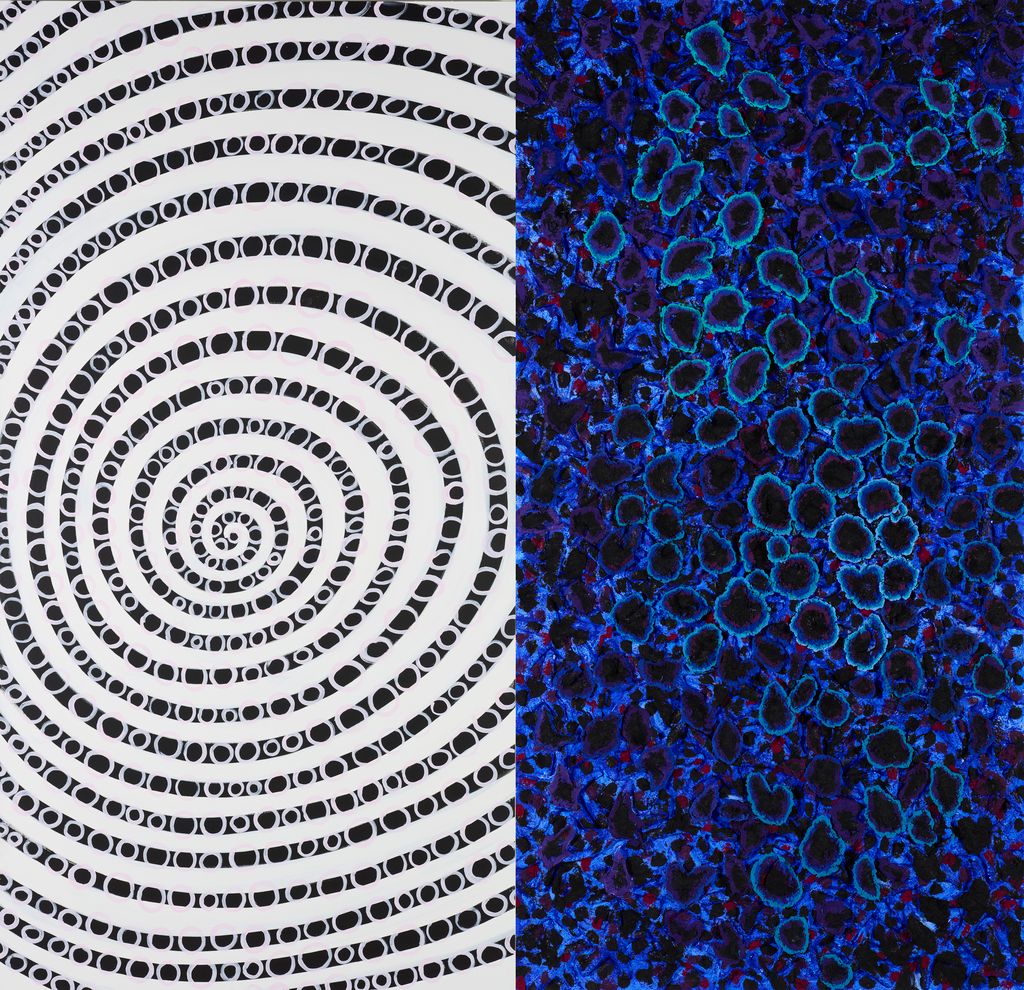
In the current circumstances Lebanon is going through today, its presence on the global stage becomes essential. It is the only way to preserve Lebanon’s presence and continuity within the ongoing dialogue with other countries participating here today.
For Ghandour, this pavilion “is a national pavilion representing Lebanon, and we present it today through Lebanon’s pluralistic identity; an identity that holds within it all the civilizations that have passed through this land: from the Greco-Roman civilization, to the Judeo-Christian Byzantine civilization, and up to the Islamic civilization.”