

Ain al-Mreisseh: A building reduced to memory and loss




 Messenger
 Whatsapp
 Threads
 Email
Email
 Print
Print
 X
X
 Facebook
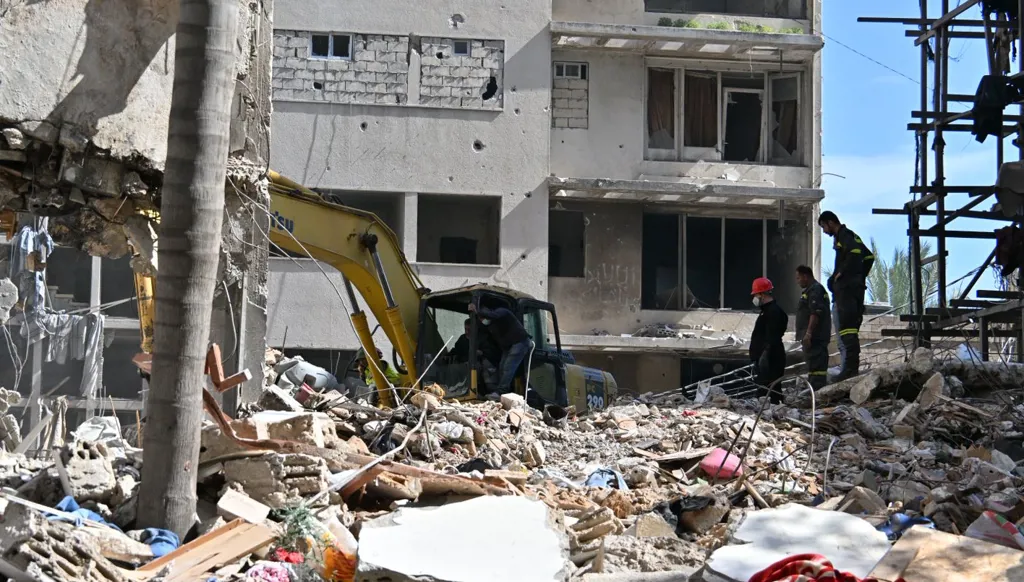


The child, Layal Hamadeh, was not given the chance to experience the joy of her Arabic assignment titled “In Our Home Again,” nor the satisfaction of the check mark drawn on the page. It is as if language itself arrived before the tragedy, recording the final trace of a girl who had been living in a safe home in Ain al-Mreisseh, before everything ended on Wednesday afternoon, April 8.
Her neat handwriting remained on the grammar notebook as a witness to an ordinary moment that suddenly turned into a memory. She was studying before an Israeli airstrike killed all the residents of the building. Her school notebooks, from her studies at the Sisters of Charity School, are still among the rubble, still present ten days after the massacre that shook all of Lebanon.
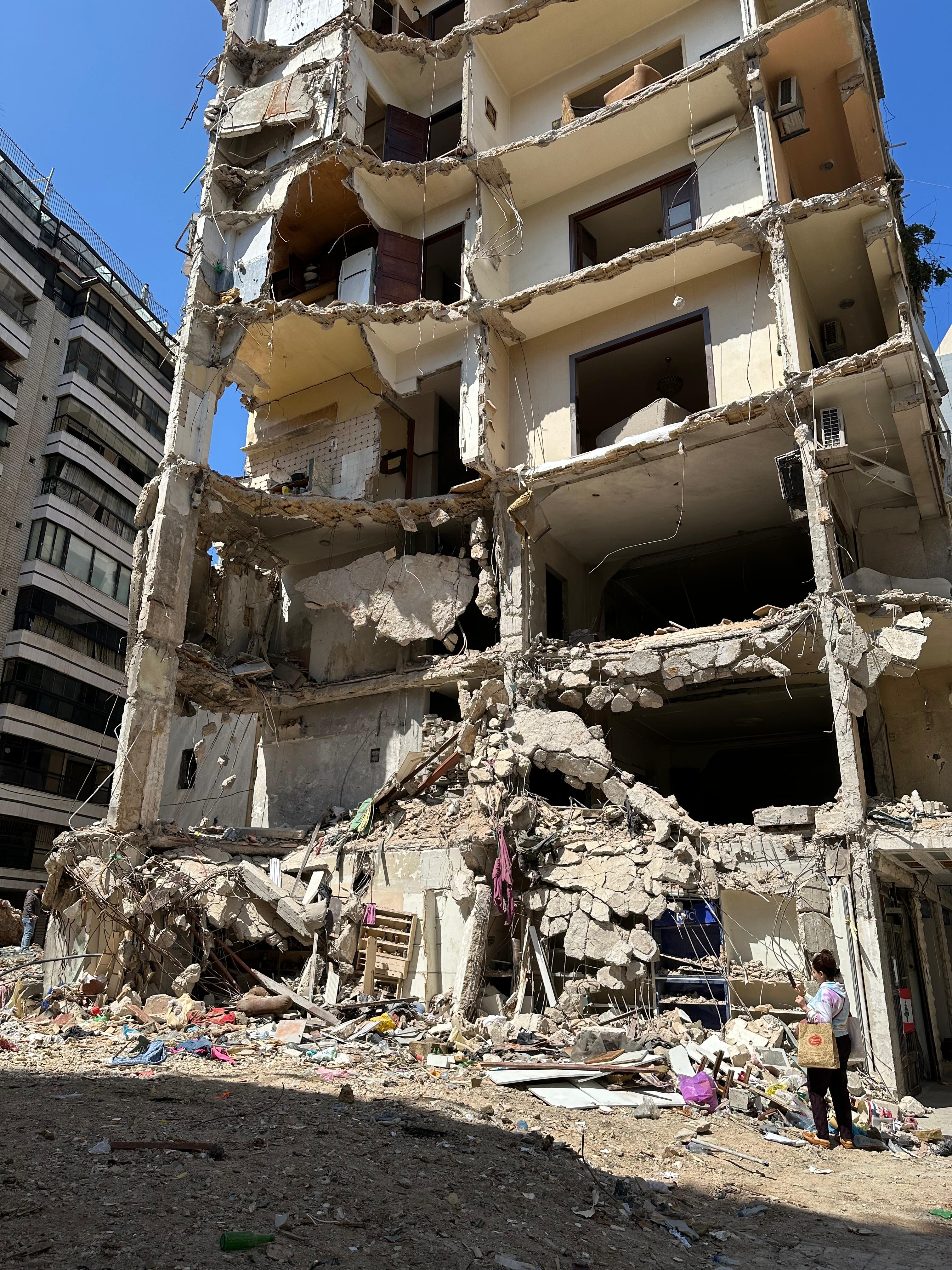
Her scattered books, bearing her name “Layal Hamadeh,” confirm that this child was here, like the other children who fell in the “Black Wednesday” inside the building consisting of 12 residential apartments. The building caretaker, Abu Ali, says that “between 10 and 12 children were among the victims, in addition to about 12 other residents, a large number of whom were Syrian families.”
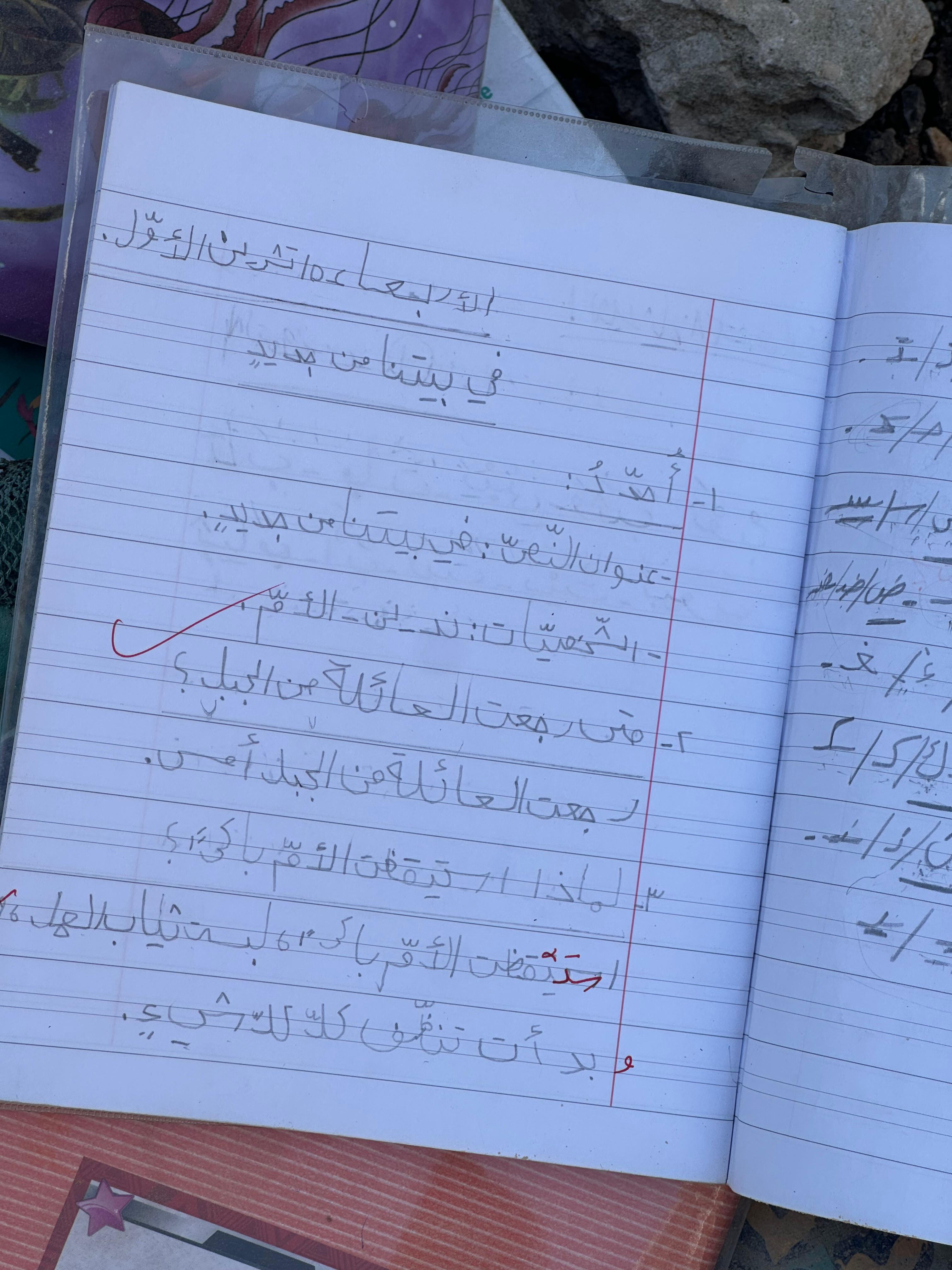
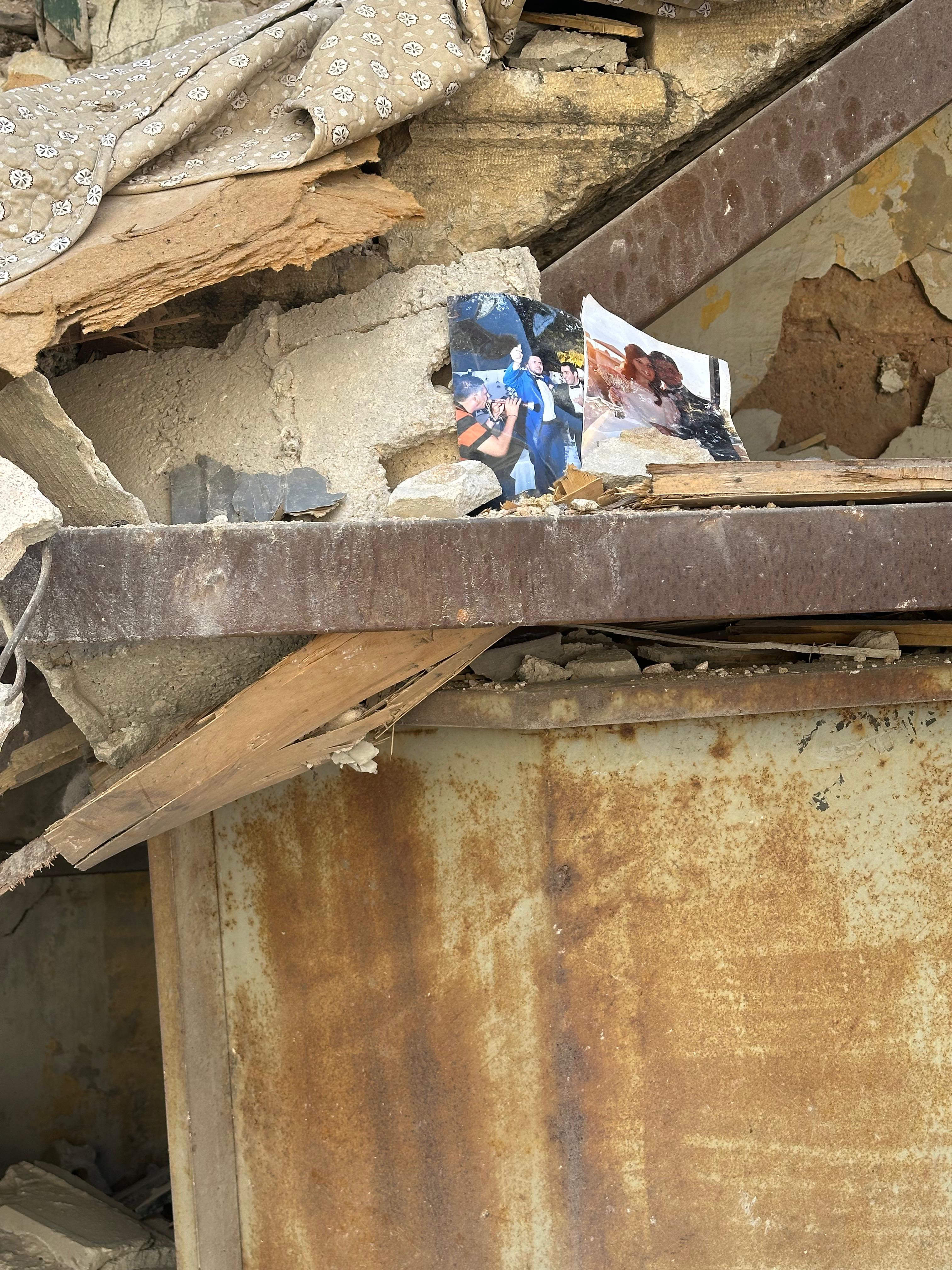
In another corner of the place, papers and photographs are scattered as if trying to survive beneath the rubble: an official civil registry document bearing the name “Adam,” next to it a child’s photo, another picture capturing a moment of joy for a newlywed couple, and a torn newspaper that its owner never finished reading. Small details, yet heavy ones, accompanying anyone trying to pick up what remains of the lives of the residents of the Ain al-Mreisseh building before disaster swallowed it.
Ten minutes
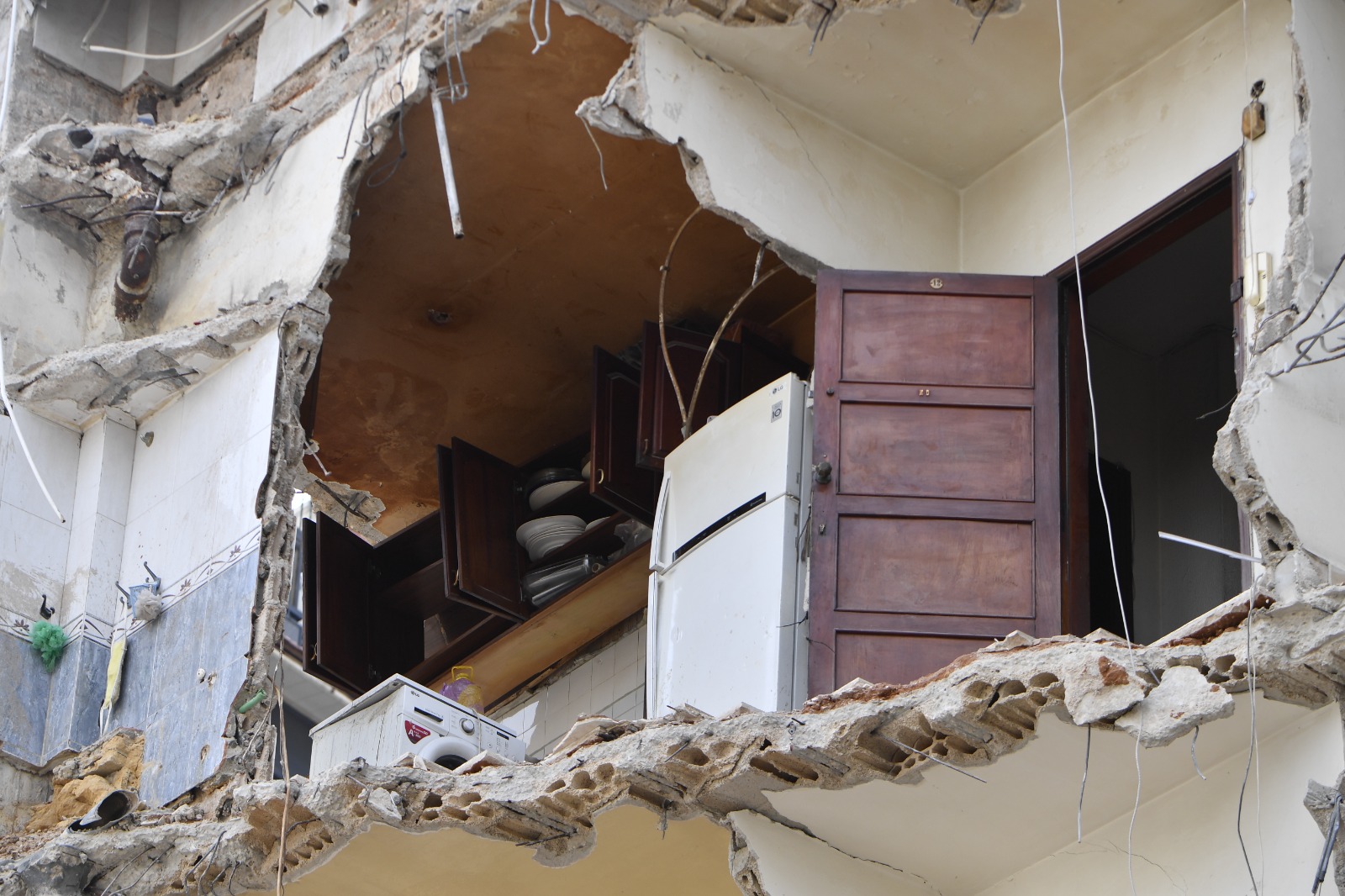
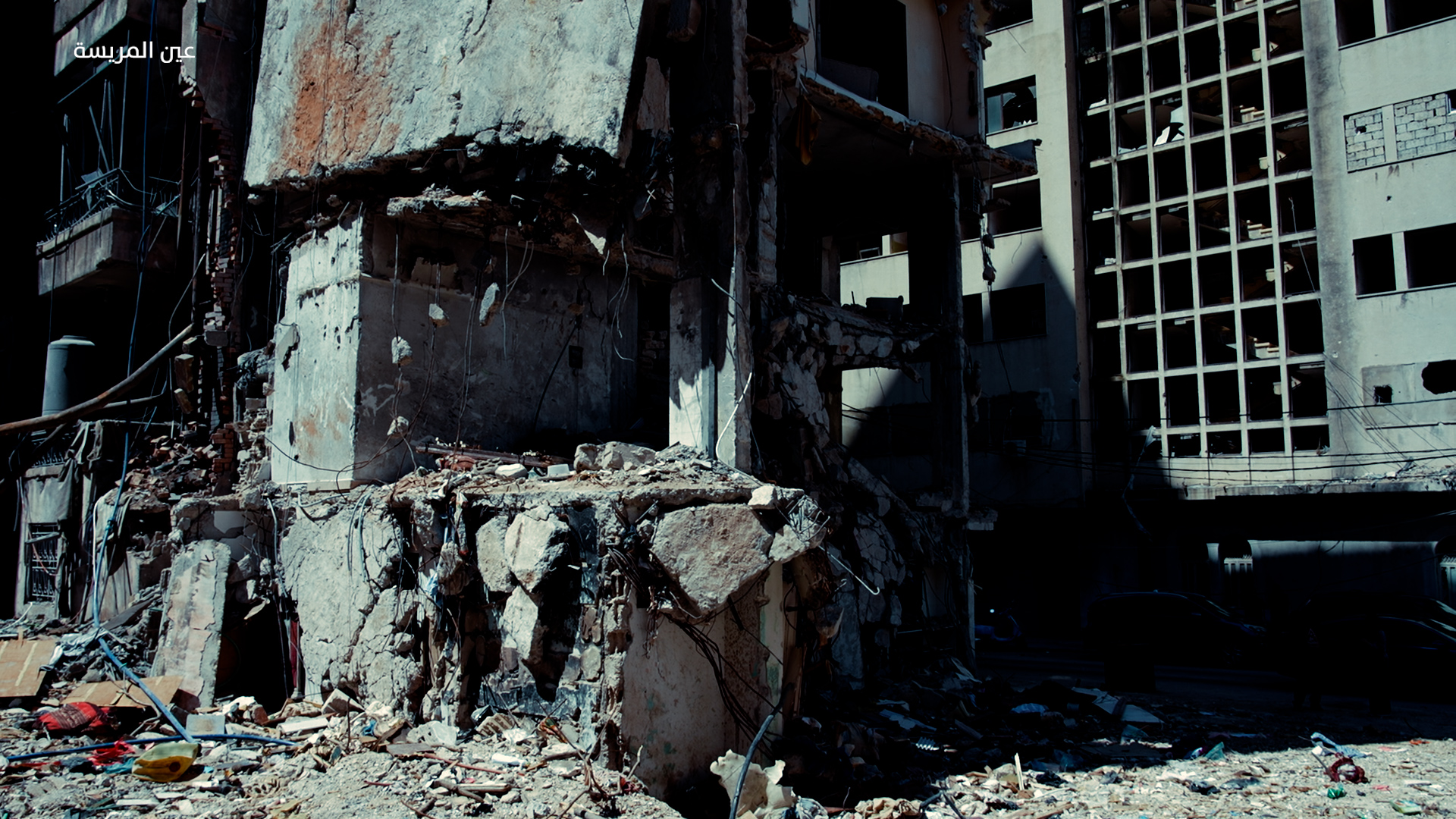
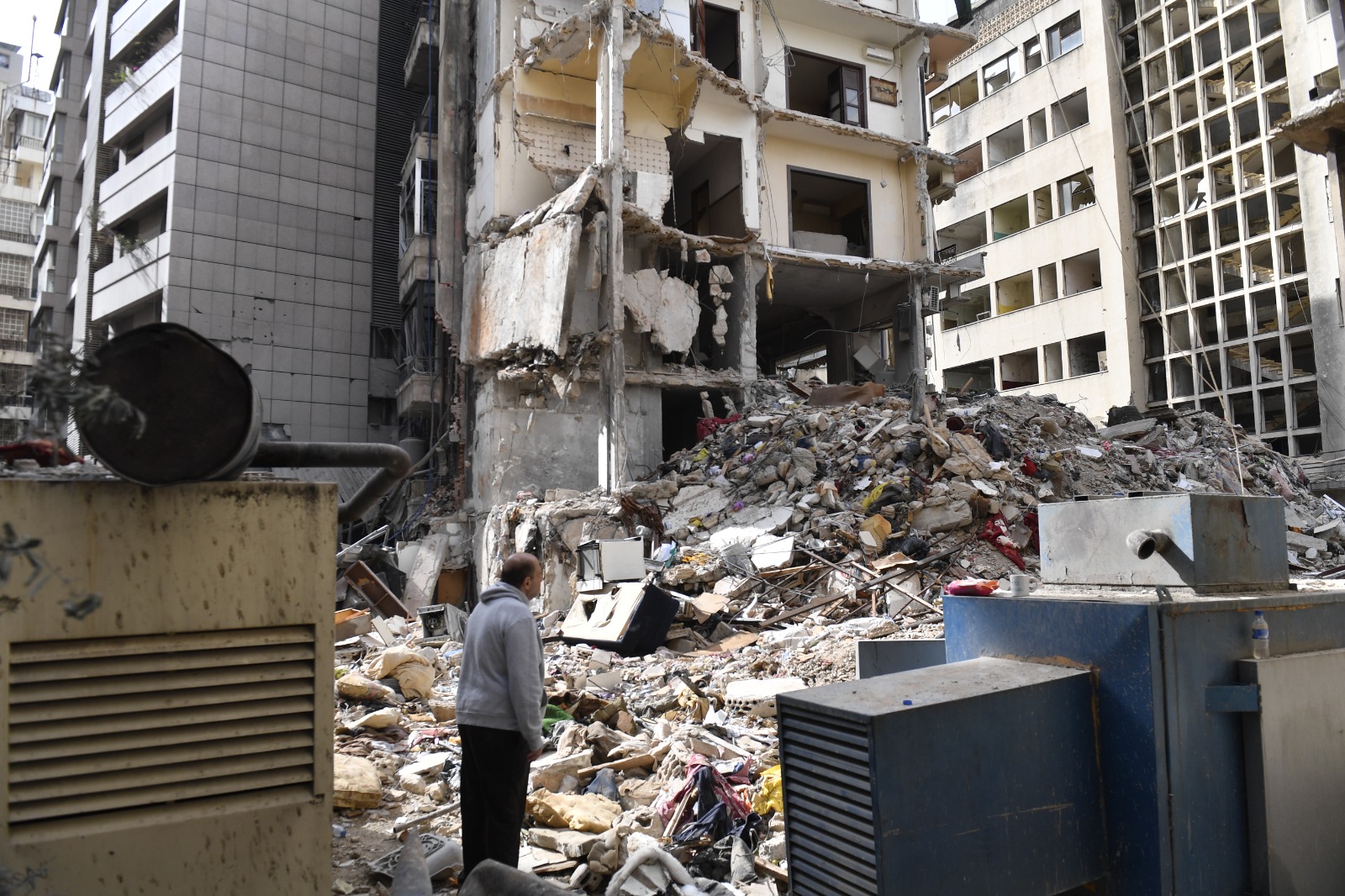
Eyewitnesses and residents of nearby buildings confirm that the Israeli strike targeted the building with two to three missiles, focusing mainly on the first and second floors. It took no more than ten minutes for a large part of the building to collapse after the series of airstrikes, and those inside did not come out except as lifeless bodies.
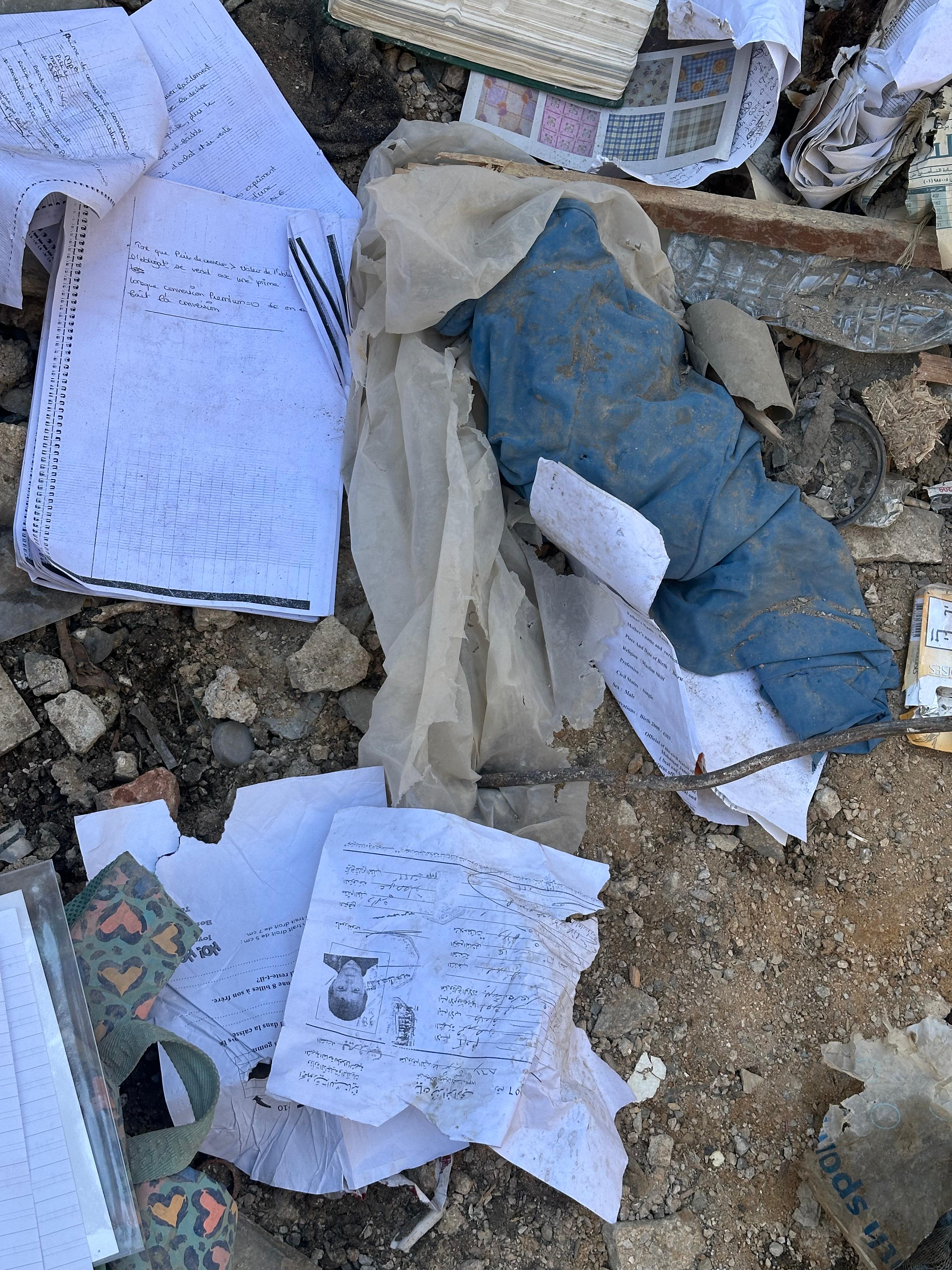
The local leader of the area, Aref Chaqir, notes that this is the first time an entire building has collapsed in Ain al-Mreisseh, saying: “No one expected this strike… it is beyond description.” The targeted building is estimated to be between 60 and 70 years old, while its caretaker, Abu Ali, adds: “Some people have been living in it since the building was first constructed.”
Hakim al-Bani, a Syrian national and one of the survivors who was not inside the building at the time of the strike, recounts what happened, saying: “We received a warning to evacuate the building two days earlier, and indeed all the residents left that night and we went to the sea. But two days later, Israel targeted the building without any warning or notice, and everyone inside was killed.”
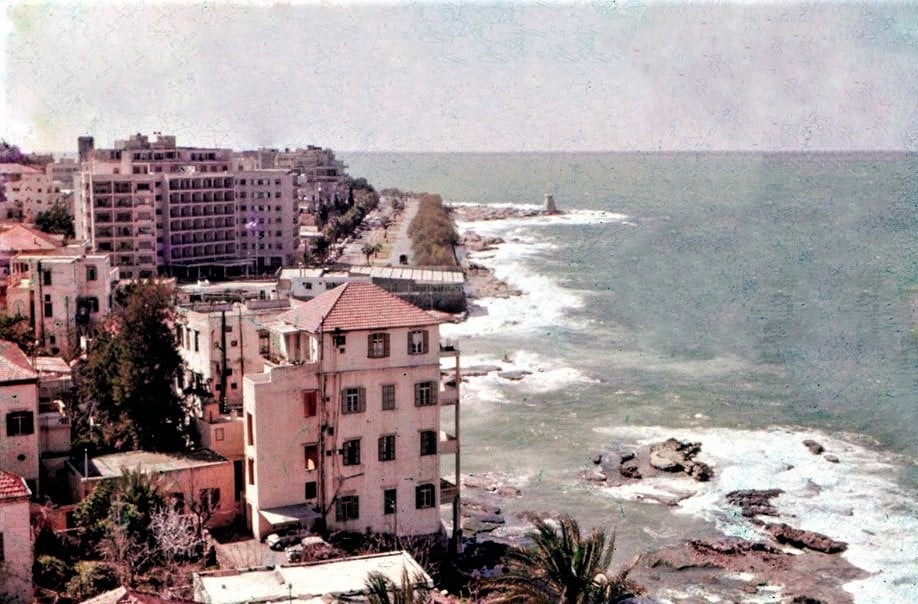
History of the Ain al-Mreisseh area
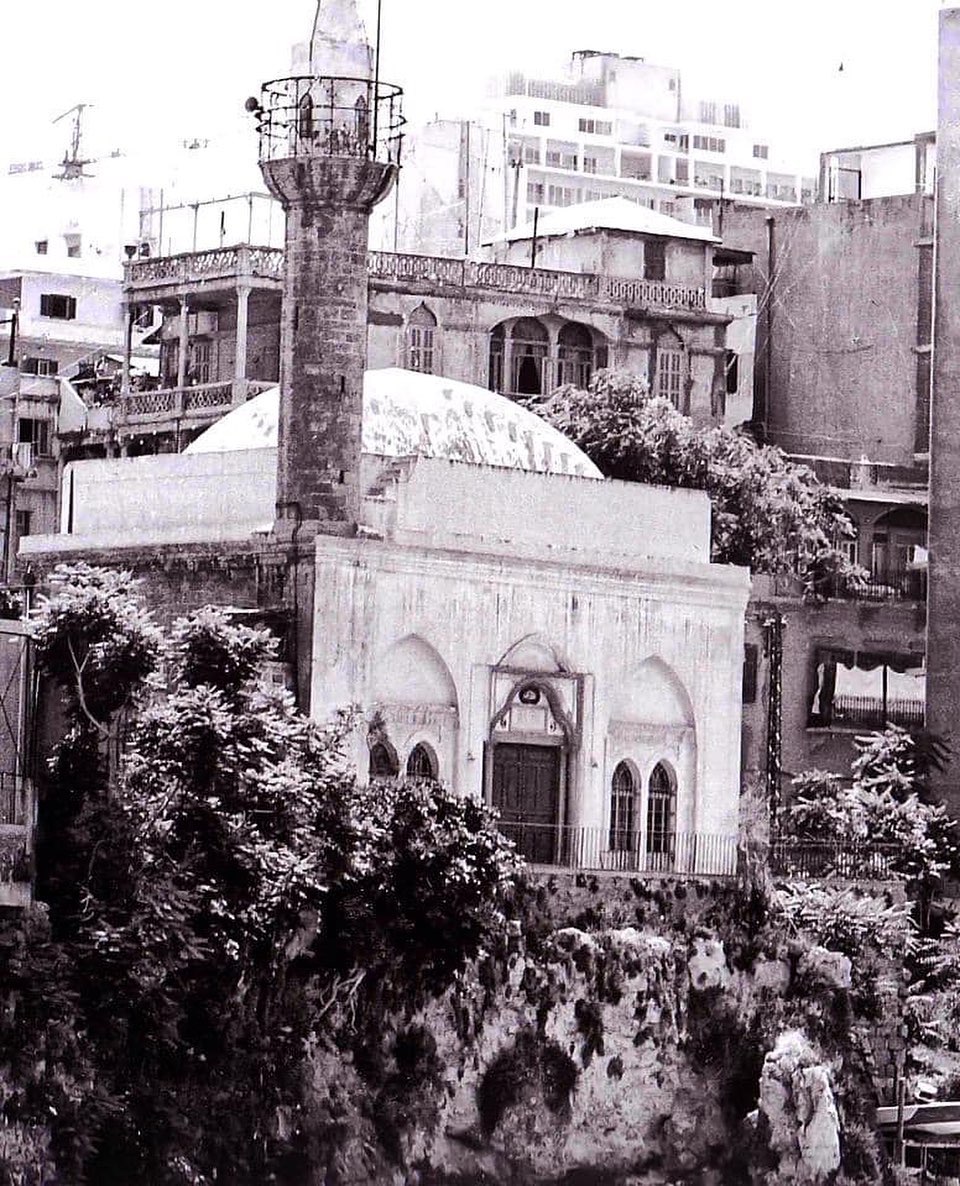
This area was originally a small coastal village that depended on fishing, as explained by researcher Dr. Zakaria Al-Ghoul, who holds a PhD in political history. He notes that its name is linked to the presence of a water spring, an essential element in the formation of human settlements.
With the rise of Beirut as a major port in the nineteenth century, the area began to gain increasing importance. However, the most significant transformation came during the French Mandate period, when hotels and tourist facilities were built, gradually turning it into a modern seaside front.
Hajj Qassem says he spent days searching for his missing daughter before later discovering, according to what he confirmed to Annahar, that she had been transferred on the very first day to the American University Hospital, and that two thirds of her body were later handed over to Rafic Hariri Hospital. He kept moving between the strike site and hospitals, exhausted and desperate, searching for any trace. He says: “I just wanted to find her… I wanted something of her.”
The first response team in Ain al-Mreisseh was led by Youssef Al-Mallah, head of the special operations unit in the Civil Defense. He says with sorrow: “Unfortunately, the number of victims was very large. Within just one hour, we recovered eight bodies, while many times that number were still under the rubble.” He is well aware that such disasters place rescue teams in front of scenes heavy with destruction and blood, and one question that keeps chasing them: where do we begin… and how do we end?
Amid this chaos, the greatest pain remains the fate of the missing. He explains: “When a missile explodes near a person, their body can be torn into pieces.” Youssef recalls one of the most painful moments, when he pulled a woman from under the rubble, with a very small child beside her. He describes that moment: “When I carried him, I felt how light he was… and I asked myself: what was this child’s fault?” He then adds: “Unfortunately, there were many children among the victims of this massacre.”
The lack of any clear documentation of the bodies and the exact location of the strike further deepened the sense of confusion and compounded the tragedy of the father’s search, a grief that became unbearable.
Only his daughter Malak survived the targeted building in Ain al-Mreisseh; she underwent surgery on the same day, while all those inside were killed at the moment of the strike. Hajj Qassem recalls the details in a voice heavy with pain: “I recovered 24 bodies from here, including children’s remains. Every time I look at one of them, I remember my daughter… I am a father, and these children also had families. They all died.”
The pain of Zahraa’s father is no less than the sorrow of everyone who knew the residents of this building. The building caretaker, Abu Ali, says that “some Syrian families had been living here for about eight years, and others for more than twenty years. The sound of children, especially on the lower floor, used to fill the place, and sometimes it annoyed the neighbors who would ask me to quiet them. Today… everything has gone silent, and none of them are left.”
Abu Ali grieves the fact that the victims were not just residents, but neighbors, friends, and long-standing companions. Ten minutes after the building was bombed were enough to turn the place into a massacre. Nothing withstood it. Even the pharmacy on the ground floor could not bear the weight of the collapsing rubble and fell as well, while its employee survived by a miracle after being pulled out from under the debris by the caretaker. Moments separated life and death, and with the same speed, entire stories came to an end.
Hakim al-Banni is one of those who survived by chance. His wife was preparing to give birth to their daughter, and because of the situation in Lebanon they decided to return to Syria, their place of origin. Indeed, the family packed a few belongings and left, and the disaster struck the building where they had lived for more than eight years. He says with bitterness: “There is nothing here… I don’t know why it was hit. You cry for those who are gone, they were family and friends. I broke down crying when I heard the news.”
He gathers what remains of his belongings from the apartment, his eyes filled with tears. He admits: “These are people worth crying for… what was their fault to leave like this? Every time I remember one of them I cry from my heart… it is a huge loss.” In his hand, he holds a box of sweets that his wife had prepared for the neighbors on the occasion of their daughter’s birth. He carries it while recalling the names of the families who were killed in the massacre, for no clear reason.
He speaks as if part of his memory is still trapped under the rubble with the building’s residents. He does not know what to do. He quickly gathers a few of his belongings, waiting for what the municipality will decide regarding the building. He prays for the victims one by one, then leaves the place… without knowing if he will return, or when.
“Nothing is more precious than life”
In the building opposite the targeted one, Dr. Naji, an economist, works on repairing the shattered glass in his apartment, as if trying to rearrange what can still be salvaged from the impact of the shock. He says in an interview with Annahar: “We did not expect Ain al-Mreisseh to be hit… it was a harsh and painful strike. Only one person came out of there alive. It is a real massacre.”
Dr. Naji realizes that stone can be rebuilt, but lives cannot be replaced. He adds: “Nothing is more precious than life.” For that reason, he tries to quickly clear the traces of destruction, without waiting for any official body to assess the damage, in a scene he describes as resembling the Lebanese reality that “rises like a phoenix after every strike.” He emphasizes that people, despite everything, still cling to life and search for peace.
Regarding the scale of losses, he notes that material damage is estimated at around 10 to 15 million dollars, including the targeted building and the contents of nearby homes. However, he points out that the indirect losses resulting from this war, which extend far beyond place and moment, may collectively exceed the losses of the 2006 and 2024 wars, reaching between 13 and 15 million dollars.
12 death certificates in a single moment
The scene continues on a quiet street, after some residents left following the strike, leaving behind a heavy trace of destruction and absence. In his office, the local leader of Ain al-Mreisseh, Aref Chaqir, sits focused on completing official paperwork, but he does not hide the scale of the shock. He describes it sorrowfully: “What happened that day was very difficult… the smoke, the screams of people, and a sound that cannot be forgotten. A whole building collapsed; it is the first time we witness something like this in Ain al-Mreisseh.”
The harshness of the scene is matched by what it left on paper the next day, as he confirms: “It was the first time I wrote death certificates for more than 12 people, all of whom I know. It was a painful and sad moment… it is not easy to document the names of those who left in an instant, for no reason, in this way.”
I leave the Ain al-Mreisseh area, and in my mind remains the words of Hajj Qassem, Zahraa’s father: “I will keep visiting this building even if it is rebuilt… something keeps bringing me back to it. I feel as if part of Zahraa is still here, so I will keep passing by whenever I come to Beirut.”