

Corniche Al Mazraa in Beirut: A historic urban district turned into a disaster zone after April 2026 strikes
Once a bustling urban artery of Beirut, Corniche Al Mazraa has been transformed into a scene of rubble and shock following the April 8, 2026 strikes, leaving residents displaced, grieving, and searching for clarity amid conflicting accounts and widespread destruction.




 Messenger
 Whatsapp
 Threads
 Email
Email
 Print
Print
 X
X
 Facebook


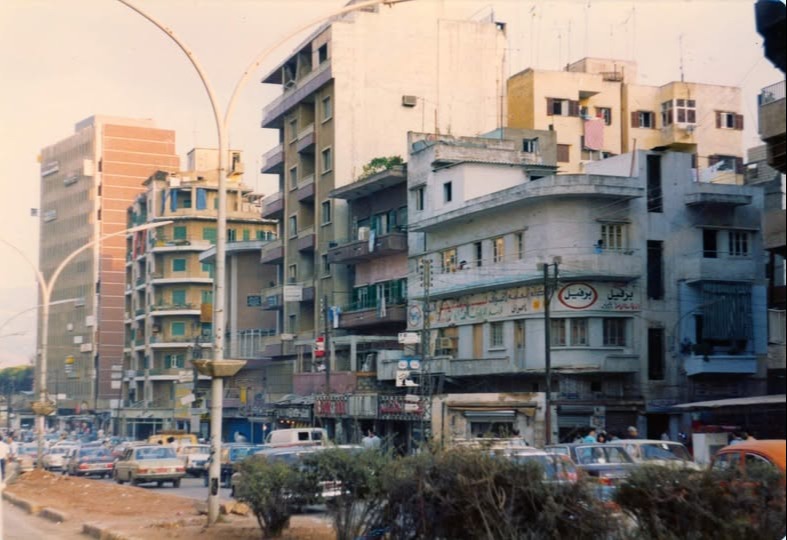
This area, whose name clearly reflects its agricultural roots, now finds itself facing a harsher history and a bloody chapter that will remain etched in its memory. Lawyer and historian Zakaria Al-Ghoul explains that Corniche Al Mazraa was originally an agricultural area representing the natural extension of Beirut. With the city’s development in the late Ottoman era, it gradually transformed into a vital corridor connecting Beirut with its surroundings. This transformation is summarized in the phrase: “Corniche Al Mazraa reflects the shift from countryside to city.”
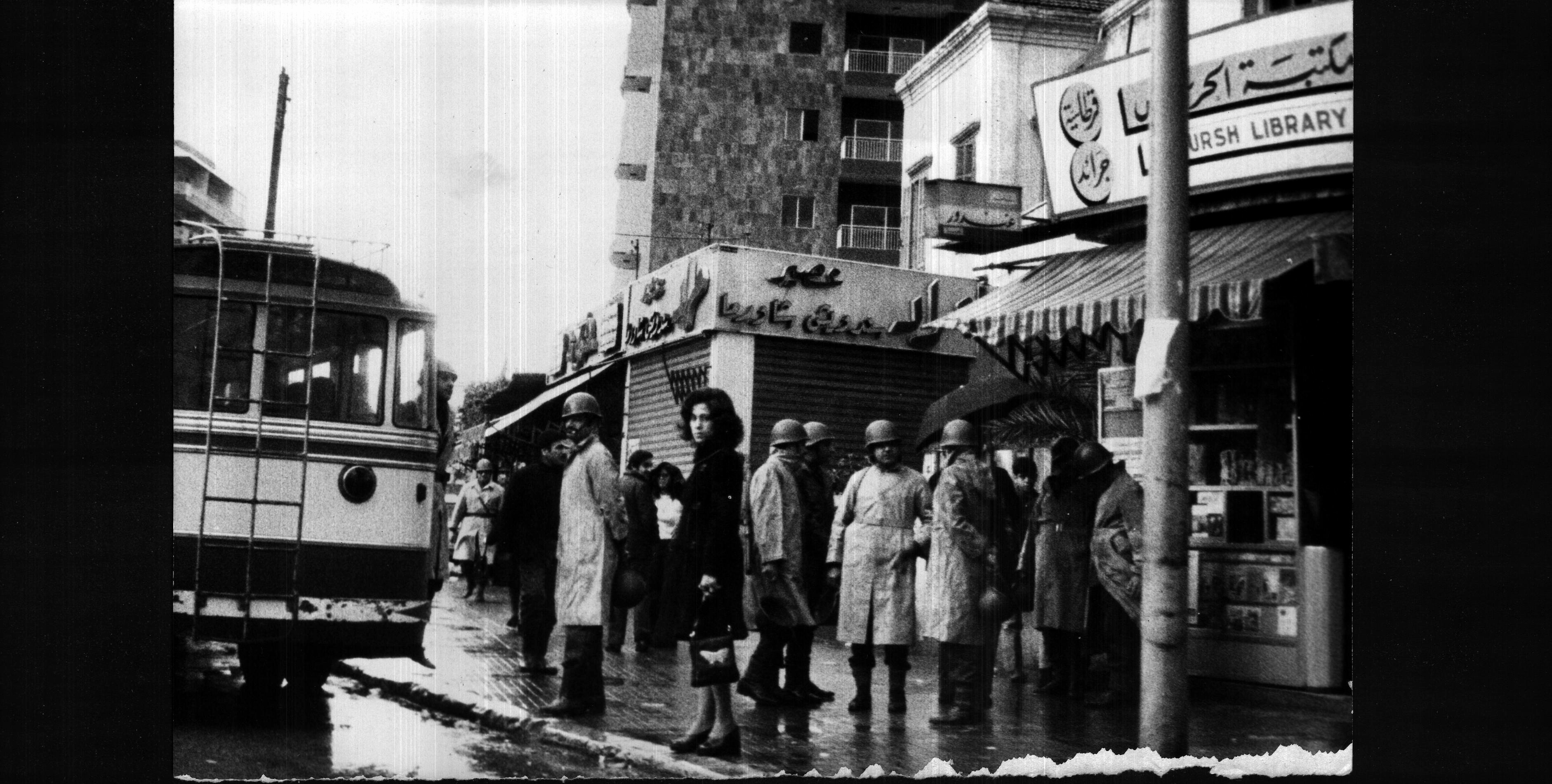
With the entry into the mandate stage, as he points out, the area acquired its modern urban features, transforming into an organized street and a prominent urban center where educational and administrative institutions emerged. It gradually expanded into an open space for social and political life. Its streets witnessed movements and gatherings, reflecting the daily pulse of Beirut, until it became one of the city’s vital arteries.
But this historical and demographic heritage now finds itself facing a completely different reality. As the residents say, “To have a finger in every pie,” yet before April 8 no longer resembles after it. Fear looms, and anticipation settles into the details, while a silent migration of residents from damaged buildings and those surrounding the targeted site has already begun.
Today, the neighborhood appears to have collapsed all at once, and amid the rubble and anxiety, residents cling to a thread of hope: that life will gradually return to the area and that field surveys will conclude to reveal the actual losses resulting from the April 8 massacre.
Documenting the Disaster
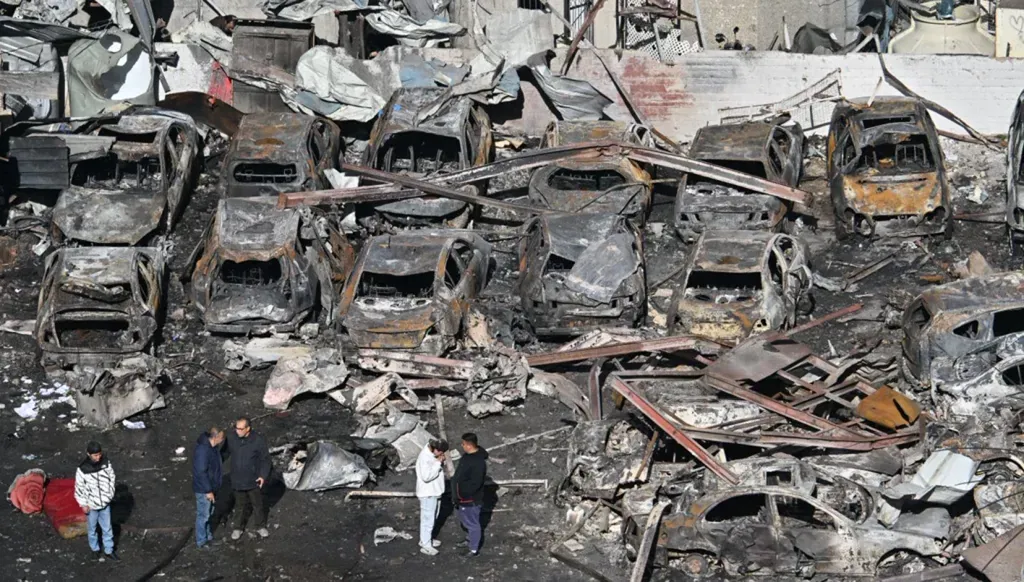
Accounts differ on what happened. Israel states that it targeted a warehouse containing Hezbollah weapons, saying it struck the site with four missiles. In contrast, residents insist that the warehouse held food aid and gas cylinders for refugees, along with a residential building that included medical clinics and apartments.
The bombing did not stop at this site. The building opposite also suffered four raids, causing severe damage, with no casualties recorded, but with varying injuries among its residents. Between these narratives, only one thing remains certain: a swath of destruction, faces that have vanished, and others still seeking answers.
Nothing Remains...
Rabih Maghrebi recalls the moment that changed everything. The missile that hit his apartment on the second floor of the “Bella Flora” building did not just destroy the walls but struck something deeper. He says, “When I heard the blast, I was nearby and told my friend: the house is gone.” In that moment, he felt that the fruits of his life were collapsing before he could even see the devastation with his own eyes.
Looking around at the rubble in his apartment, he confirms, “Nothing remains… I lost irreplaceable memories. You can build a new home, but you can’t regain the details and memories lost.” He estimates his loss at about $300,000, adding, “When you look around, realizing the loss of lives is harsher… thank God.”
Today, his suffering and the residents’ suffering turn into a clear plea: the need to reinforce the building so that residents can restore their apartments and return to them, especially since a large number of them are elderly and retired people who do not have the means to start anew.
The building, which is about seventy years old, is considered one of the largest in Corniche Al Mazraa, according to Maghrebi. It comprises 29 residential apartments distributed over two blocks, one containing 14 apartments and the other 15, in addition to three commercial shops. An entire residential block was suddenly reduced to a scene of rubble and anxiety.
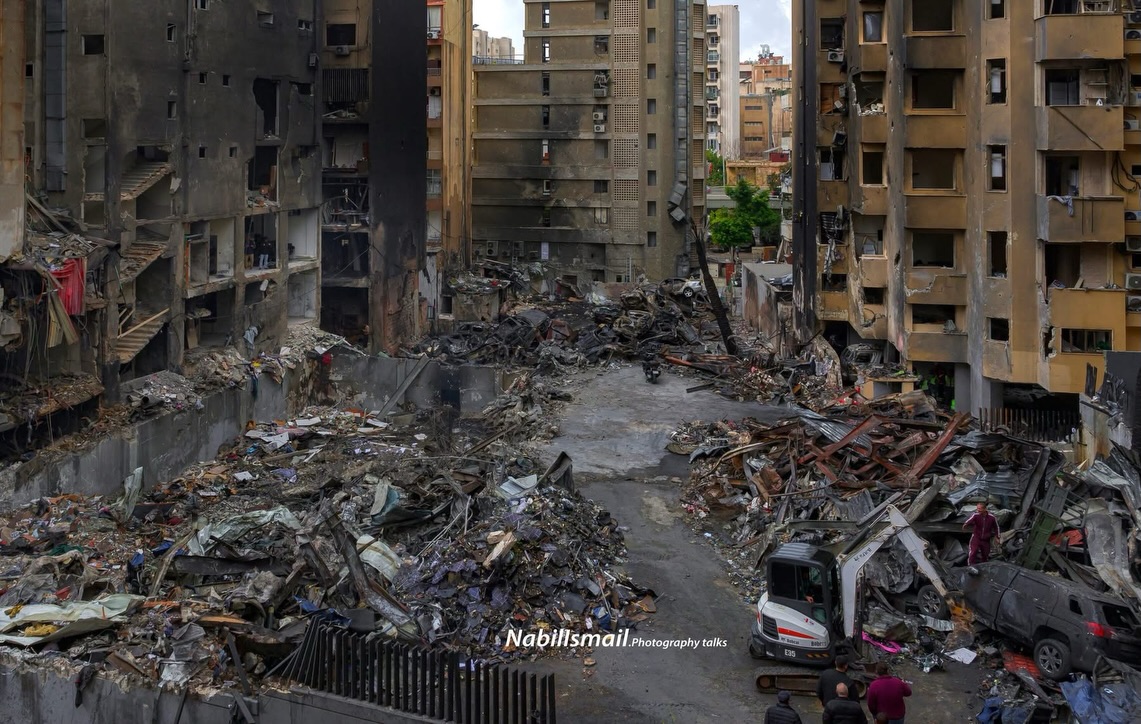
The neighborhood, once bustling with life and unceasing traffic, now seems to move at two contrasting tempos: a heavy stasis imposed by the expanse of destruction and rubble, countered by a timid determination to restore life. Small renovation workshops have begun to appear, with hands trying to gather what can be salvaged, attempting to move forward—even if only at a slow pace.
Despite the extent of the destruction, no fatalities were recorded inside the building. However, the owner of “Bella Flora” remains in critical condition in intensive care, while several residents suffered minor to moderate injuries. Between survival and loss, the building remains a witness to a moment that could have been even more brutal.
Remains Amidst the Rubble
In the car park, where the raids left a deep crater in the ground, Abbas Mustafa, a member of the “Health Authority” search and rescue teams, stands silently overseeing the debris removal. His mission does not end with clearing the rubble, but extends to a heavier task: ensuring that no human remains are left beneath the debris.
He explains that “even days after the massacre, we are still finding scattered remains. We found a hand on the second floor of the adjacent building, and a day earlier we found a body thrown onto the third floor by the force of the blast. Even near Salim Salam Bridge, there were scattered remains.”
Despite rescue teams being accustomed to the harshest conditions, Mustafa admits that the event exceeded expectations: “We didn’t expect this number of strikes… eight raids on Beirut in just five minutes.” Those minutes plunged the area into chaos and panic, as the injured were initially transported on motorcycles after ambulances alone could not accommodate the large number of casualties.
When the blast's impact is this powerful, scenes blur: widespread destruction, disfigured corpses, scattered remains, and missing people with unknown fates. Thick black smoke covered the surrounding buildings, like another layer of memory refusing to be erased.
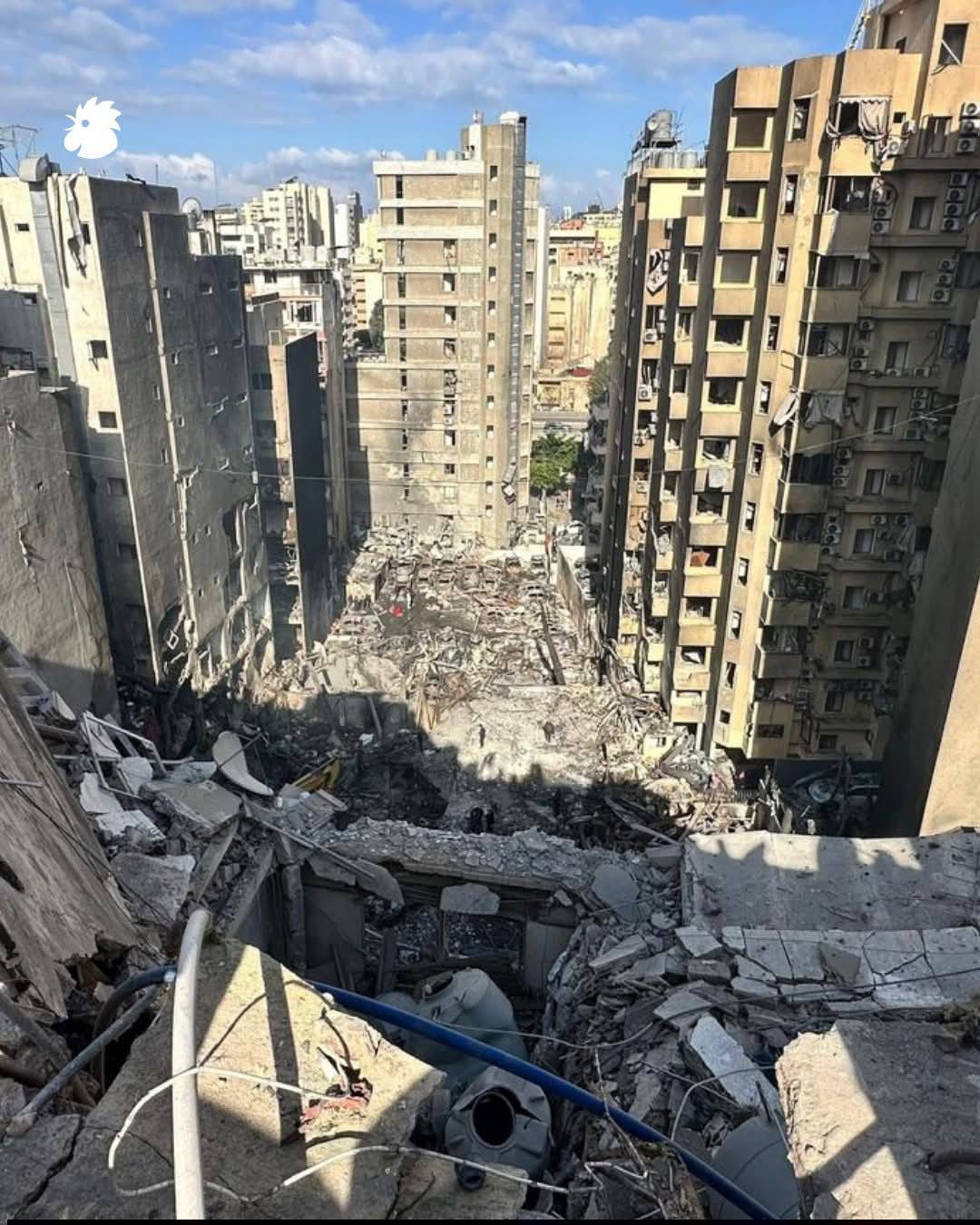
Amid this destruction, survival sometimes seems close to a miracle. Among those who experienced this is Sadek Mabrouk, who was in Syria at the time of the bombing while his family was inside the home. He admits, “God protected us… we never imagined this area would be bombed. We thought we were safe.”
But what remains the harshest, according to him, is the sight of families wandering through the area carrying photographs of loved ones, searching for answers.
Many of them worked in the warehouse and came from different nationalities, and since that fateful day on April 8, nothing has been heard about them. Their faces have turned into photographs, and their stories into an open-ended wait filled with every possibility.
Hussam Al-Khatib, who owns a small shop on the targeted street with his relative, recalls the first moments of the raid as though they are still unfolding before him. He says the sound of the first missile pierced everything before the scene dissolved into a muffled silence: “I couldn’t hear anything… a ringing in my ears drowned out all other sounds.”
He pauses briefly, then continues: “A black cloud of smoke covered the entire street, to the point that you couldn’t see your hand in front of you.” In those moments, cars in a nearby parking lot began catching fire one after another, while people’s screams filled the area.
He describes what happened in painful words: “It was a very severe strike… like Doomsday came.”
It was not easy for him to fully comprehend or accurately describe what he had seen. He points out that, for a moment, he thought the entire area had been erased, before the outlines of the targeted site gradually emerged amid the chaos and debris. One question lingers: why was it erased, and why did these Lebanese people die in a blink of an eye?