

Iraq’s new political era: Ali Al-Zaidi’s government between gulf outreach, U.S. support, and militia challenges
A finance-backed technocrat steps into Iraq’s premiership amid regional tensions, with urgent demands to balance relations between Washington, Tehran, and Gulf capitals while addressing armed factions at home.



 Messenger
 Whatsapp
 Threads
 Email
Email
 Print
Print
 X
X
 Facebook
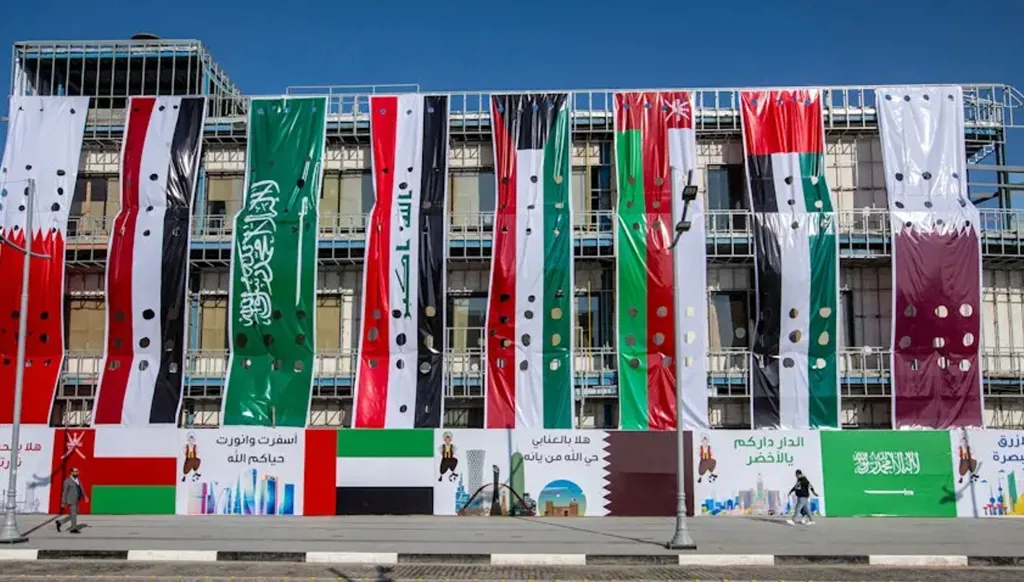


Urgent political and security files will be the responsibility of Ali Al-Zaidi's government, which is arriving at the helm of the Iraqi premiership from outside traditional party lines and populist leaderships, through an intersection between finance, politics, and internal networks.
Al-Zaidi’s selection, grounded in his financial and economic background, reflects the “Coordination Framework’s” need for a figure who does not provoke Washington, does not clash with Tehran, and can simultaneously open broader channels with Arab neighbors, particularly the Gulf Cooperation Council countries, Jordan, Egypt, and Syria.
American support
The quick call made by U.S. President Donald Trump to the designated Prime Minister Ali Al-Zaidi, along with his invitation to visit Washington after forming the government, gave the nomination political momentum, indicating that President Trump is ready to support Al-Zaidi if his government seeks to develop bilateral relations on the one hand and address necessary security and economic reforms on the other, particularly in the files of armed factions, money smuggling and laundering networks, and relations with Iran; issues that concern not only the United States but also the Arab Gulf states, which faced armed attacks originating from Iraqi territories in the last war, during which factions loyal to Iran targeted energy facilities with drones.
This security file related to the military activities of revolutionary factions is an urgent priority for the Gulf Cooperation Council, which will closely monitor how the upcoming Iraqi government handles it, whether it will limit itself to political statements or take practical steps to confine weapons exclusively to state institutions and prevent any external attacks originating from Iraqi territories.
Militia attacks
During the last war, Kuwait summoned the Iraqi chargé d'affaires to protest against attacks carried out by “armed factions,” and Saudi Arabia condemned the targeting of Kuwaiti sites by drones coming from Iraq, while Qatar linked the attacks on energy facilities to regional security and the global economy, indicating clear positions from Gulf capitals and making the initiative to address this issue essential to improving Baghdad’s relations with its Arab surroundings.
These realities place the designated Prime Minister Ali Al-Zaidi in a very clear, though complex, position: that a serious Gulf partnership cannot be built with an Iraqi government without control over weapons. Economic relations, electricity linkage, investment, and reconstruction all require security trust before anything else, and Baghdad cannot seek a broad Gulf opening while armed groups remain capable of threatening borders, installations, or energy lines outside the authority of the central state.
Historically, Saudi Arabia has focused on stabilizing Iraq and strengthening its state institutions, positively engaging with the administrations of Presidents Haider Al-Abadi, Mustafa Al-Kadhimi, and Mohammed Shia Al-Sudani. Riyadh has supported a gradual path to rebuilding relations through the “Saudi-Iraqi Coordination Council,” trade exchange, energy projects, and electrical linkage.
Moreover, the activities of the Saudi Ambassador to Baghdad, Abdulaziz Al-Shammari, his communication with various political, cultural, and religious components, and his visits to Najaf and Karbala, where he met with several religious authorities and seminary professors, reflect a Saudi policy that treats Iraq as a multi-component state, respecting all without favoring one over another.
For Iraq to be a stable state with strong institutions and an effective government possessing independent sovereign decision-making, free from subordination to Iran or others, avoiding alignment with axes that threaten regional stability, and not being fragmented by militias, this outcome would first and foremost serve the interests of the Iraqi people. It would also benefit neighboring countries, which would find in Baghdad a partner capable of offering support and cooperation.
Disclaimer: The opinions expressed by the writers are their own and do not necessarily represent the views of Annahar