Less than 7 hours after the ceasefire between Lebanon and Israel came into effect, announced by U.S. President Donald Trump at midnight on Thursday, April 16, following “excellent” talks with President Joseph Aoun and Israeli Prime Minister Benjamin Netanyahu, during which “the parties agreed to begin a 10-day ceasefire (...)”, as announced by Trump, the ground realities contradicted the Israeli commitment to the agreement, which was breached by the adversary shortly thereafter.
When the ceasefire began, Israeli Army spokesman Avichay Adraee wrote on “X” in an “urgent message to the residents of southern Lebanon” that “the Israeli army continues to position itself in its sites south of Lebanon against the ongoing activities by Hezbollah, and in the interest of your safety and the safety of your family members — until further notice — you are requested not to move south of the Litani River.”
However, it did not stop there, as Adraee issued a series of warnings covering dozens of Lebanese towns, calling for evacuations and instructing residents to move at least 1,000 meters away. These warnings were followed by strikes on several areas and the targeting of remaining inhabitants.
On Monday, Adraee directed the latest warnings to the towns of Nabatieh Al-Fawqa and Mayfadoun (Nabatieh District), Qlayaa and Burj Qlayaa (Bint Jbeil), Majadel (Marjayoun), and Srifa (Tyre). On the same day, additional threats were issued to the towns of Qana, Baal, Srifa (Tyre), and Qaaqaiyat Al-Jisr (Nabatieh).
On May 3, the occupation army issued a threat to the residents of 11 southern towns, namely: Al-Duwair, Arabsalim, Al-Sharqia, Jebchit, Braikeh, and Qaaqaiyat Al-Jisr, along with Qsaibe and Kfarsir (Nabatieh), Baraachit (Bint Jbeil), Srifa, and Dounin (Tyre).
Twenty-four hours prior, threats targeted the towns of Qaaqaiyat Al-Jisr, Adchit, Al-Shaqif, Jebchit, Ebba, Kfarjoz, Harouf, Al-Doueir, Deir Al-Zahrani, and Hboush (Nabatieh).
Before this, warnings were given to the residents of Kfarjoz, Houmin Al-Fawqa, Toul (Nabatieh), Maaroub, Hmairi (Tyre), and Kfar Dounine (Bint Jbeil), although Dounin was also listed.
Warnings had also previously included several towns in the Tyre District:
Al-Samaaiya, Al-Hanniye, Al-Qlailah, Wadi Jilou, Majdal Zoun, Al-Knaissah, Seddiqin, in addition to Kafra (Bint Jbeil).
Most of the Bint Jbeil towns outside the "Yellow Line" were also threatened:
Al-Ghandouriyeh, Burj Qalaouiyah, Qalaouiyah, Al-Sawwanah, Al-Jumayjimah, Safad Al-Batikh, Baraachit, Shaqra, Aaita Al-Jabal, Tebnine, Al-Sultaniyah, Bir El-Sanasel, Kfar Dounin, Kherbet Selem, Selaa, and Deir Kifa (Tyre).





 Messenger
 Whatsapp
 Threads
 Email
Email
 Print
Print
 X
X
 Facebook
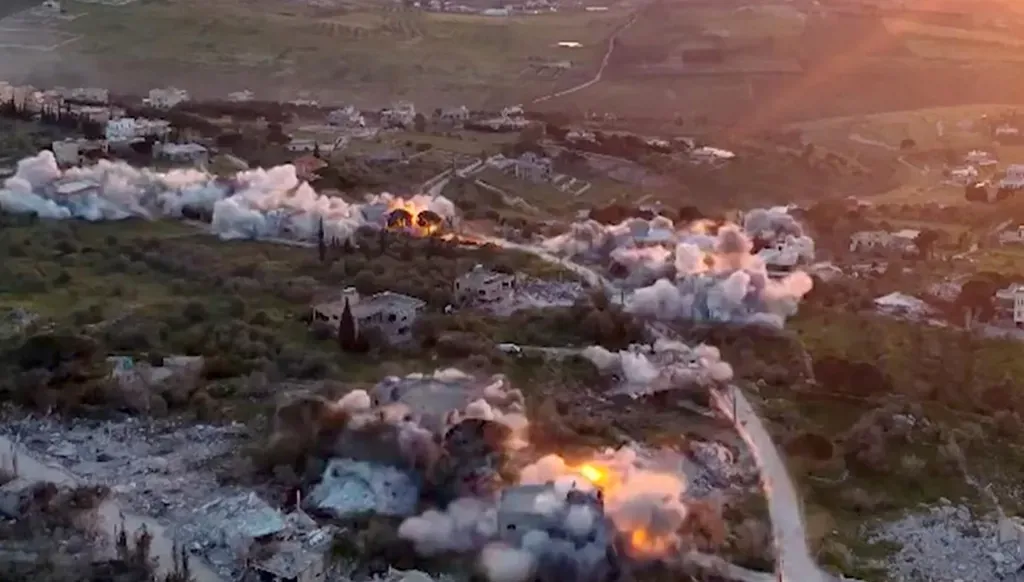


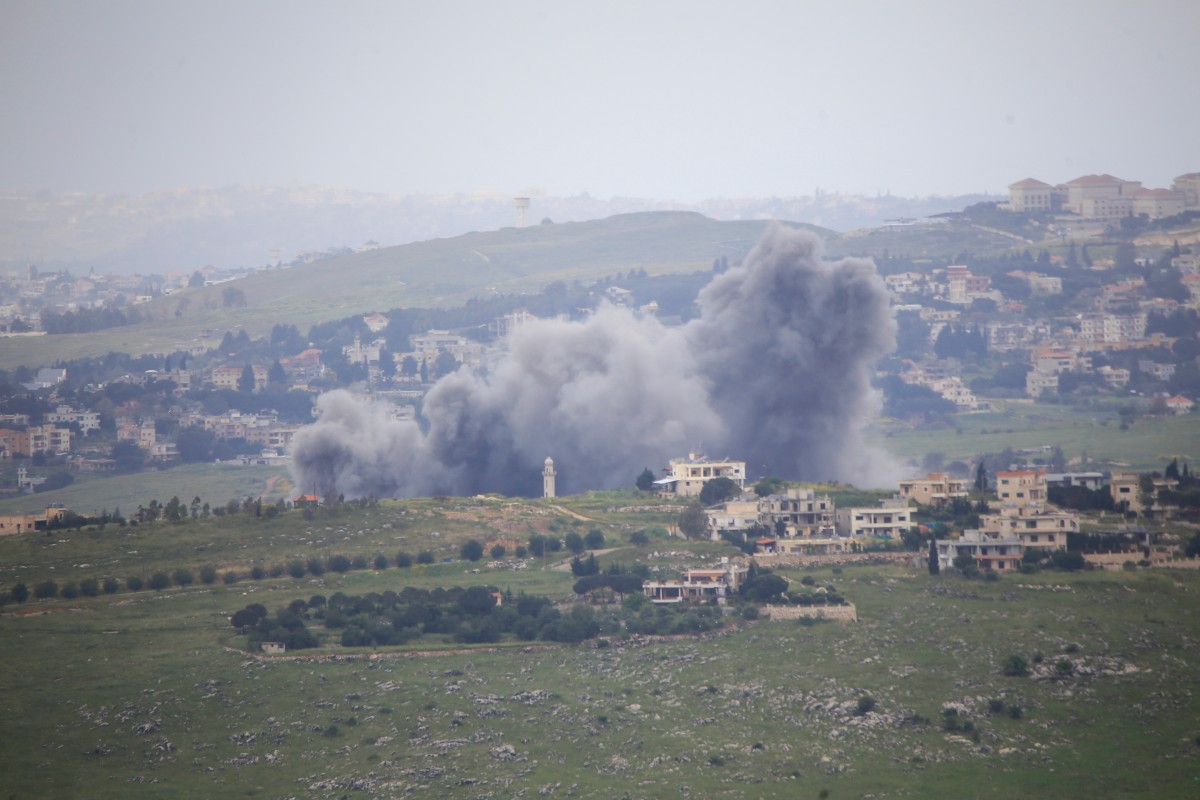 Raid on Kfar Tebnit, Southern Lebanon (AFP).