West Africa’s security crisis in Mali: Jihadist advances, regional rivalries, and great power competition

Opinion 06-05-2026 | 12:02

West Africa’s security crisis in Mali: Jihadist advances, regional rivalries, and great power competition

As militant groups expand their foothold in northern Mali, Maghreb divisions and external rivalries deepen uncertainty over the region’s security future.


West Africa’s security crisis in Mali: Jihadist advances, regional rivalries, and great power competition
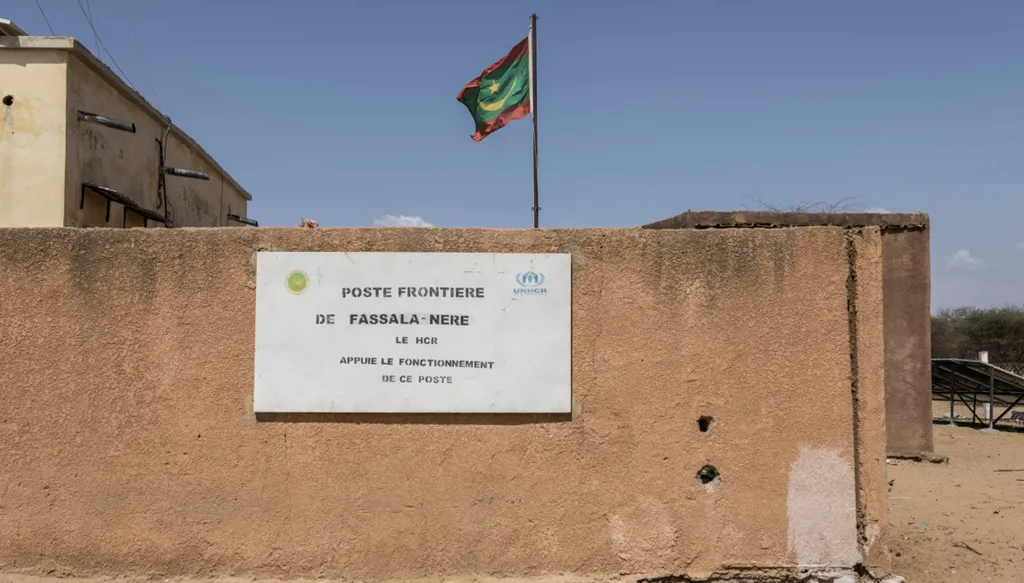
A Mauritanian flag flutters on a pole at the Fassala-Néré border point near the Mauritanian border with Mali on April 28, 2026. (AFP)
Smaller Bigger


The Maghreb countries are closely monitoring developments in Mali following attacks launched by the “Support of Islam and Muslims” group, affiliated with “Al-Qaeda,” in coordination with the “Azawad Liberation Front,” a separatist group seeking to establish a Tuareg state in the north of the country.


The separatists’ project is clear, but the pressing question concerns the future of Mali if fighters linked to al-Qaeda topple the existing military regime: will they follow in the footsteps of the Taliban in Afghanistan or take the path of the “Hayaat Tahrir al-Sham” in Syria?


Currently, the attackers are advancing in Mali by seizing a military base near the Algerian border, after the fall of the city of Kidal to the separatists and the blows suffered by government forces despite the support of the Russian “African Corps.”


The two groups, despite their ideological differences, have shown an ability to coordinate and overcome the challenge of vast territories. The “Group for the Support of Islam and Muslims”, in particular, has demonstrated a determination to maintain military pressure, which must be taken seriously by its immediate neighbors, including two Maghreb countries, Algeria and Mauritania.


Growing concern regarding migration and security


These two nations fear an influx of refugees and displaced persons across their long borders with Mali. Border security issues have been among the factors contributing to tensions between Mauritania and Mali since 2024.


Non-bordering Maghreb countries are also concerned about a potential influx of irregular migrants through the Algerian or Mauritanian borders.


But the greatest threat perceived by Maghreb countries is the possibility that extremists from the “Group for the Support of Islam and Muslims” group could emulate the Taliban in Afghanistan by exploiting any security vacuum to impose their religious extremism in Mali, turning the areas under their control into a hub of terrorism, smuggling, and cross-border crime, thereby reviving a terrorist threat that has been largely contained in recent years.


The ideological extremism of the “Group for the Support of Islam and Muslims” heightens these fears, as they have confirmed their intent to impose their interpretation of Sharia.


Pragmatism or fundamentalism?


The “Syrian scenario” seems distant in Mali, as this organization has not shown any revision of its strict approach to the application of Sharia or any willingness to abandon extortion and kidnapping as a means of financing. It is unlikely that its pragmatic relations with the Azawad separatists will soften its harsh methods.


Although the “Azawad Liberation Front” has a secular separatist background, its alliance with the jihadists last year was based on the application of Sharia in areas under its control. There is little basis for optimism among some analysts that Azawad’s control over vast areas in northern Mali will create a buffer zone preventing jihadist penetration to the north.


Relations with regional actors


Complicating matters is the difficulty of coordination among Maghreb countries due to differing policies toward Mali. While Morocco maintains good relations with Bamako, relations between Algeria and the Malian authorities are marked by significant tension.


Despite Morocco and Algeria issuing similar statements condemning the threats of terrorism and separatism and supporting Mali’s territorial integrity, the shadow of the Western Sahara conflict continues to influence their respective positions toward Bamako, which recently withdrew its recognition of the Polisario, aligning itself with Rabat.


The scene is further clouded by doubts about Moscow’s ability to protect the Bamako regime. Its “African Corps” has lost much of its credibility due to repeated withdrawals from battles, even if these are justified by its support for Ukraine and its training of rebels.


Meanwhile, the West’s room for maneuver appears limited, even as Washington intensifies its military cooperation with Maghreb countries to prevent the spread of instability from West Africa and to contain Russian and Chinese competition.


It is unlikely that power rivalry will help resolve the West African crises, in the absence of unified positions among Maghreb countries, despite the fact that what is unfolding on the fringes of the desert is part of their national security.


Disclaimer: The opinions expressed by the writers are their own and do not necessarily represent the views of Annahar.