

Rethinking security alliances in the Gulf
After a major regional war, Gulf states reassess the reliability and risks of their defense partnerships with global powers amid shifting alliances and growing strategic competition.



 Messenger
 Whatsapp
 Threads
 Email
Email
 Print
Print
 X
X
 Facebook
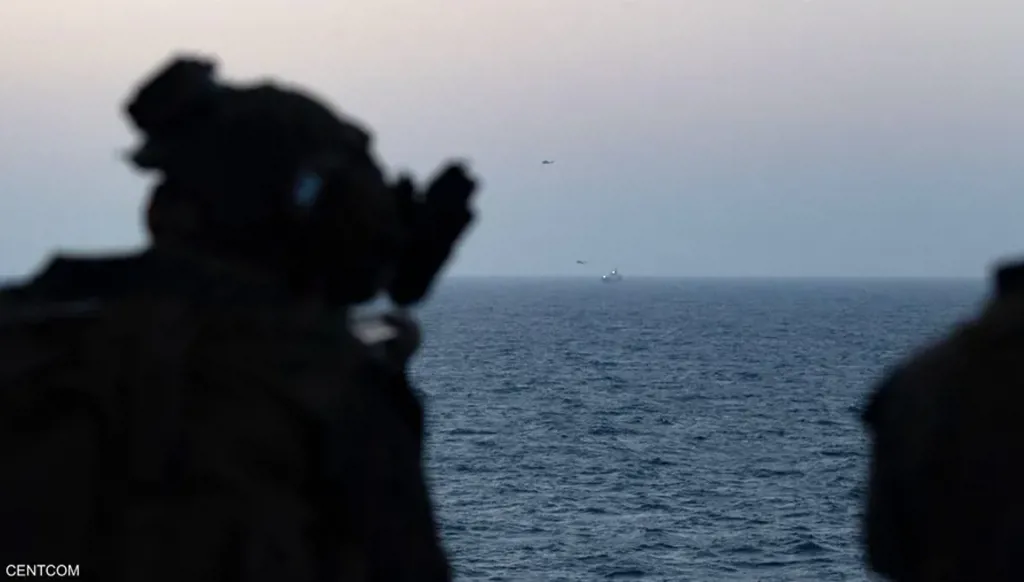


The military presence of the United States and other Western powers such as Britain and France in the Arab Gulf states has long raised many questions about the importance of these defense partnerships with host countries and their effectiveness when facing threats.
The debate becomes even more intense with the rising competition between the United States and China, especially with the growing capabilities of China in military, economic, and political fields. China has established very close relations, particularly in the economic sectors in the Arab Gulf states over the past two decades, such that the volume of trade between China and both the United Arab Emirates and the Kingdom of Saudi Arabia reached one hundred billion dollars in 2024. However, China does not have any military bases in the region, and the scale of defense relations with the Gulf states remains limited compared with those with the United States and other European countries.
In contrast, China has signed a strategic agreement with Iran, whose relations have long been tense with most Gulf states. Iran has recently turned into an opponent and an enemy of some of them after it launched, in its latest war with the United States, more than 5,000 missiles and kamikaze drones against the Gulf Cooperation Council countries. The Iranian regime justified these attacks by claiming that they targeted American and Western bases. However, the strikes in fact hit economic, civilian, oil facilities, and infrastructure.
Iranian regime officials are also threatening that if the war resumes, they will target energy and oil facilities in Arab Gulf states, as part of a strategy of blackmailing the international community by threatening a vital region for the global economy in order to force Washington to stop the war.
High-precision targets
China has important defense relations with Iran, which have developed further in recent years, particularly after the strategic cooperation agreement signed between them in 2021. According to a press statement by the former director of French external intelligence Alain Juillet, China helped Iran improve the accuracy of its ballistic missiles and Shahed drones by providing services from its BeiDou positioning system, known by the abbreviation BDS. This is the Chinese equivalent of the American GPS system and its competitor. China launched the BDS service in 2020, which gives its users independence from the GPS system. If the navigation systems of drones, aircraft, and missiles are connected to BDS, they can reach their targets with high precision without being affected by any American measures to block GPS or interfere with it.
Since Iranian leaders cannot target something they cannot see or whose coordinates they do not know, obtaining information from Beijing explains the ability of Iranian missiles and drones to reach many targets in the recent war, especially moving ones such as American destroyers and aircraft carriers, despite GPS jamming inside Iran.
The Washington Post reported, citing American officials, that Russia gave Tehran coordinates of American military sites that were targeted during the recent war. However, American officials told the Wall Street Journal that China played the greater role in improving the accuracy of ballistic missiles through the BDS system.
US air defense systems contributed to repelling Iranian missile attacks, while early warning systems and American, British, and French fighter jets helped protect the airspace of Gulf states from Iranian Shahed drone attacks. Therefore, the Western military presence in the region has played a significant role in defending it against Iranian attacks. However, the role of these bases has been questioned following the failure of US forces to protect the Abqaiq oil facilities in Saudi Arabia from Iranian attacks in 2019 and the lack of a response at that time.
It is worth noting that Western bases were established in the region after the First Gulf War to help provide security for these countries against external aggression. They have proven their usefulness and effectiveness in the recent war. Iranian officials’ statements and threats that they would target oil, energy, and other economic facilities in response to US attacks contradict the Iranian narrative that they only target American bases.
Reassessing Strategic Partnerships
The recent war has forced Gulf states to reconsider their defense partnerships and relations with major powers (the United States, Europe, China, and Russia) in order to determine whether they effectively serve their interests, especially since none of them contributed directly or indirectly to preventing the damage caused by Iranian attacks. These powers benefit from multibillion-dollar contracts with Gulf states, and therefore they should not provide any assistance to adversaries that attack them and cause harm.
China is also working on strengthening its defense relations with Gulf states. As a result, it has become aware of certain defense capabilities and installations in these countries, which could potentially lead to the leakage of some of this information to Iran, the strategic partner of the regime in Tehran, according to the agreement signed between the two sides.
Disclaimer: The opinions expressed by the writers are their own and do not necessarily represent the views of Annahar